Genome-edited Cells
Blood (peripheral blood)
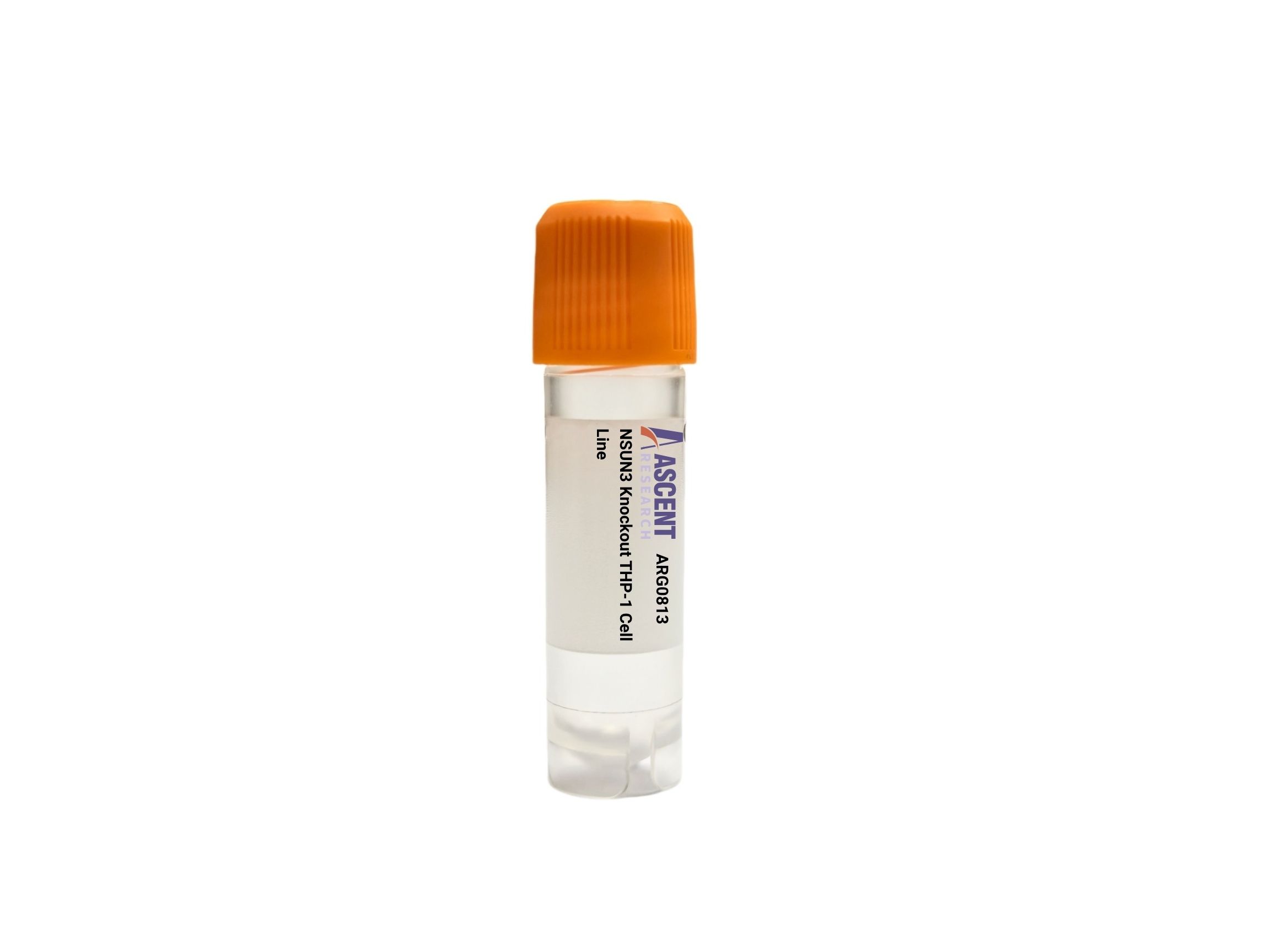
The NSUN3 Knockout THP-1 Cell Line is a CRISPR/Cas9-edited knockout cell line derived from THP-1 monocytic leukemia cells, engineered to disrupt the mitochondrial tRNA methyltransferase NSUN3. This loss-of-function model is designed for research into mitochondrial RNA modification and translation. NSUN3 catalyzes 5-methylcytosine formation at position 34 of mitochondrial tRNA(Met), a modification essential for codon recognition and protein synthesis, and is regulated by NRF1 and TFAM. The knockout line is suited for studying oxidative phosphorylation, mitochondrial disease, and leukemia biology using assays such as OCR, complex activity, and puromycin incorporation. Inquire at Ascent Research.
 CA1 Knockout HAP1 Polyclonal Cells
Cat. No. ARG22201
FGF18 Knockout UMUC-3 Polyclonal Cells
Cat. No. ARG11210
CRBN Knockout K562 Polyclonal Cells
Cat. No. ARG19453
EPS8L2 Knockout NCI-H1299 Polyclonal Cells
Cat. No. ARG17560
GSKIP Knockout NCI-H1975 Polyclonal Cells
Cat. No. ARG31578
CA1 Knockout HAP1 Polyclonal Cells
Cat. No. ARG22201
FGF18 Knockout UMUC-3 Polyclonal Cells
Cat. No. ARG11210
CRBN Knockout K562 Polyclonal Cells
Cat. No. ARG19453
EPS8L2 Knockout NCI-H1299 Polyclonal Cells
Cat. No. ARG17560
GSKIP Knockout NCI-H1975 Polyclonal Cells
Cat. No. ARG31578
 Pig Aortic Smooth Muscle Cells
Cat. No. ARP0908
Pig Aortic Smooth Muscle Cells
Cat. No. ARP0908
The NSUN3 Knockout THP-1 Cell Line is a CRISPR/Cas9-edited knockout cell line originating from the human THP-1 acute monocytic leukemia cell line, designed to disrupt the NSUN3 gene. This model enables investigation of NSUN3-dependent mitochondrial tRNA modification and its impact on cellular physiology. The knockout is generated via CRISPR/Cas9-mediated gene disruption, yielding a stable loss-of-function cell line suitable for detailed functional analyses.
THP-1 cells were established from a patient with acute monocytic leukemia and are widely used as a monocyte/macrophage model. They retain the ability to differentiate into macrophage-like cells upon phorbol ester stimulation, offering a versatile system for studying differentiation, immune signaling, and cancer biology. Their leukemic background additionally provides a context for exploring mitochondrial roles in tumorigenesis.
NSUN3 encodes a mitochondrial tRNA methyltransferase that catalyzes 5-methylcytosine (m5C) at cytosine-34 of mitochondrial tRNA(Met). This methylation is essential for proper codon-anticodon pairing and efficient mitochondrial translation. NSUN3 is transcriptionally controlled by NRF1 and TFAM, linking its expression to mitochondrial biogenesis. Downstream, NSUN3 activity is required for mitochondrial protein synthesis and the assembly of oxidative phosphorylation complexes, interacting with mitochondrial RNA modification enzymes and ribosome components.
In THP-1 monocytic cells, mitochondrial function is critical for energy production, differentiation, and immune effector functions. Disrupting NSUN3 provides a pertinent model to examine how defective mitochondrial translation alters monocyte/macrophage behavior. With NSUN3 mutations linked to combined oxidative phosphorylation deficiency and neurological disorders, this knockout line is valuable for mitochondrial disease research and for probing mitochondrial vulnerabilities in leukemia.
Typical applications include studying mitochondrial tRNA modification and translation using puromycin incorporation and oxygen consumption rate (OCR) assays, assessing respiratory complex activities, and examining mitochondrial morphology via MitoTracker staining. Expression analyses (RT-qPCR, Western blotting) and cell viability tests further characterize the knockout phenotype. For more information, contact Ascent Research.