Genome-edited Cells
Liver
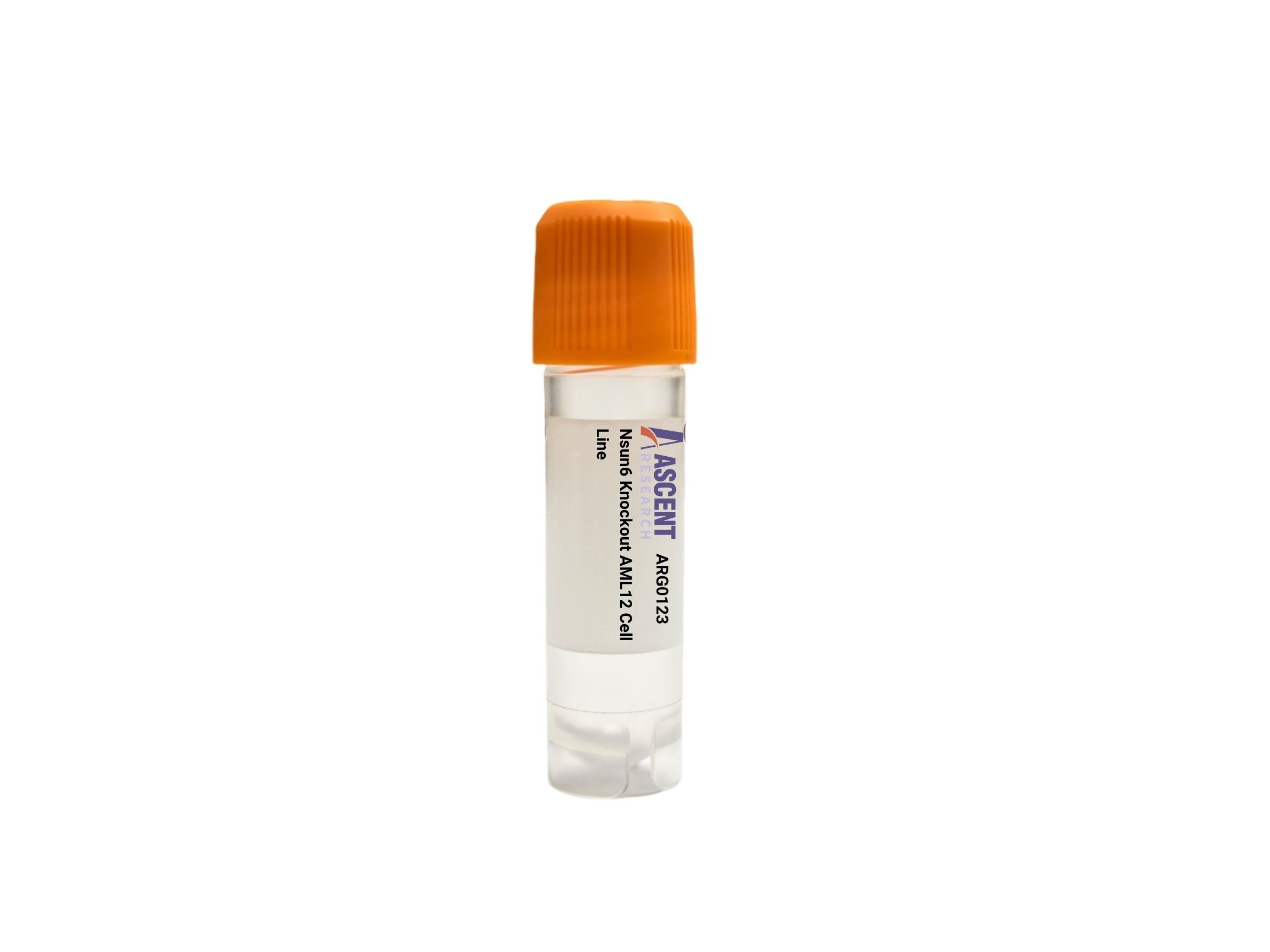
Nsun6 Knockout AML12 is a CRISPR/Cas9-engineered mouse hepatocyte cell line with disruption of the RNA m5C methyltransferase Nsun6 in the nontransformed AML12 liver epithelial background. NSUN6 modifies selected tRNAs and some mRNAs and functions within RNA metabolism networks that include TRDMT1/DNMT2, ALYREF, and YBX1, influencing RNA stability, translation efficiency, and stress adaptation. This model supports studies of hepatic RNA methylation, translational control, liver metabolic phenotyping, stress-response biology, and disease-relevant mechanisms using assays such as RNA bisulfite sequencing, LC-MS/MS, RNA-seq, ribosome profiling, and metabolic or stress-response readouts.
 CEACAM7 Knockout UMUC-3 Polyclonal Cells
Cat. No. ARG11272
MOB1A Knockout Hela Polyclonal Cells
Cat. No. ARG8895
ANKRD26 Knockout Hela Polyclonal Cells
Cat. No. ARG20831
ITIH2 Knockout AGS Polyclonal Cells
Cat. No. ARG27070
CASP6 Knockout A549 Polyclonal Cells
Cat. No. ARG42473
CEACAM7 Knockout UMUC-3 Polyclonal Cells
Cat. No. ARG11272
MOB1A Knockout Hela Polyclonal Cells
Cat. No. ARG8895
ANKRD26 Knockout Hela Polyclonal Cells
Cat. No. ARG20831
ITIH2 Knockout AGS Polyclonal Cells
Cat. No. ARG27070
CASP6 Knockout A549 Polyclonal Cells
Cat. No. ARG42473
 Rat Uterine Smooth Muscle Cells
Cat. No. ARP0293
Rat Uterine Smooth Muscle Cells
Cat. No. ARP0293
The Nsun6 Knockout AML12 Cell Line is a CRISPR/Cas9-engineered mouse hepatocyte model in which the Nsun6 gene has been disrupted to eliminate functional NSUN6 expression. This stable in vitro system is generated in AML12 cells, a nontransformed hepatic parenchymal epithelial cell line, and is intended for mechanistic studies of RNA epitranscriptomic regulation in a differentiated liver-cell background. The model enables investigation of how loss of an RNA 5-methylcytosine methyltransferase affects hepatocyte-associated gene-expression control, translational regulation, and stress-responsive cellular phenotypes.
AML12 is an immortalized mouse hepatocyte cell line widely used as a liver-relevant experimental platform because it retains many features of hepatocyte biology while remaining amenable to routine culture and genetic manipulation. As a model of hepatic parenchymal epithelial cells, AML12 is frequently applied to studies of liver metabolism, insulin signaling, lipid homeostasis, oxidative stress, and xenobiotic response pathways. Its differentiated hepatic context makes it well suited for dissecting gene-function relationships that influence metabolic adaptation and hepatocyte physiology, including processes relevant to hepatosteatosis and metabolic dysfunction-associated fatty liver disease research.
NSUN6 functions as an RNA 5-methylcytosine methyltransferase that deposits the m5C RNA mark on selected tRNAs and a subset of mRNAs. Through this catalytic activity, NSUN6 regulates RNA stability, RNA processing, translation efficiency, and codon-dependent protein synthesis. Its activity is integrated within broader RNA metabolism networks that include other m5C-related factors such as NSUN2 and TRDMT1/DNMT2, as well as m5C reader or effector proteins including ALYREF and YBX1. NSUN6 acts on RNA polymerase III-derived tRNA substrates and interfaces with mRNA-processing machinery, ribonucleoprotein complexes, the ribosome, and translation machinery. Expression and function of NSUN6 are regulated by transcriptional control of RNA-processing genes, cellular stress stimuli, nutrient status, and growth-state-dependent programs, placing it within pathways that couple RNA modification to cellular stress adaptation.
In AML12 hepatocytes, Nsun6 loss provides a relevant framework for evaluating how altered RNA methylation influences hepatic metabolic state and stress tolerance. Because hepatocytes rely on coordinated translational control to maintain lipid handling, detoxification capacity, and adaptive responses to nutrient and oxidative cues, disruption of NSUN6 can be used to examine RNA modification-dependent effects on hepatocyte function without the confounding features of a transformed liver cancer background. This is pertinent to studies linking RNA metabolism to liver disease biology, cancer-associated translational remodeling, and stress-response phenotypes.
This knockout cell line is suitable for integrated genotype-to-phenotype workflows. Editing outcomes can be confirmed by CRISPR genotyping, RT-qPCR, and western blotting, while NSUN6-dependent RNA methylation changes may be assessed by RNA bisulfite sequencing, LC-MS/MS nucleoside analysis, and targeted tRNA methylation assays. Downstream consequences on transcript abundance and translational output can be interrogated using RNA-seq, ribosome profiling, and polysome profiling. In parallel, immunofluorescence, metabolic assays, and stress-response assays can be used to define hepatocyte phenotypes under nutrient perturbation, oxidative challenge, or other growth-state-dependent conditions. This system is therefore useful for studies of hepatic RNA metabolism, epitranscriptomics, translational regulation, and functional analysis of m5C-dependent gene-expression control. Researchers may contact Ascent Research for additional technical information, product details, or related gene-edited cell models.