Genome-edited Cells
Kidney
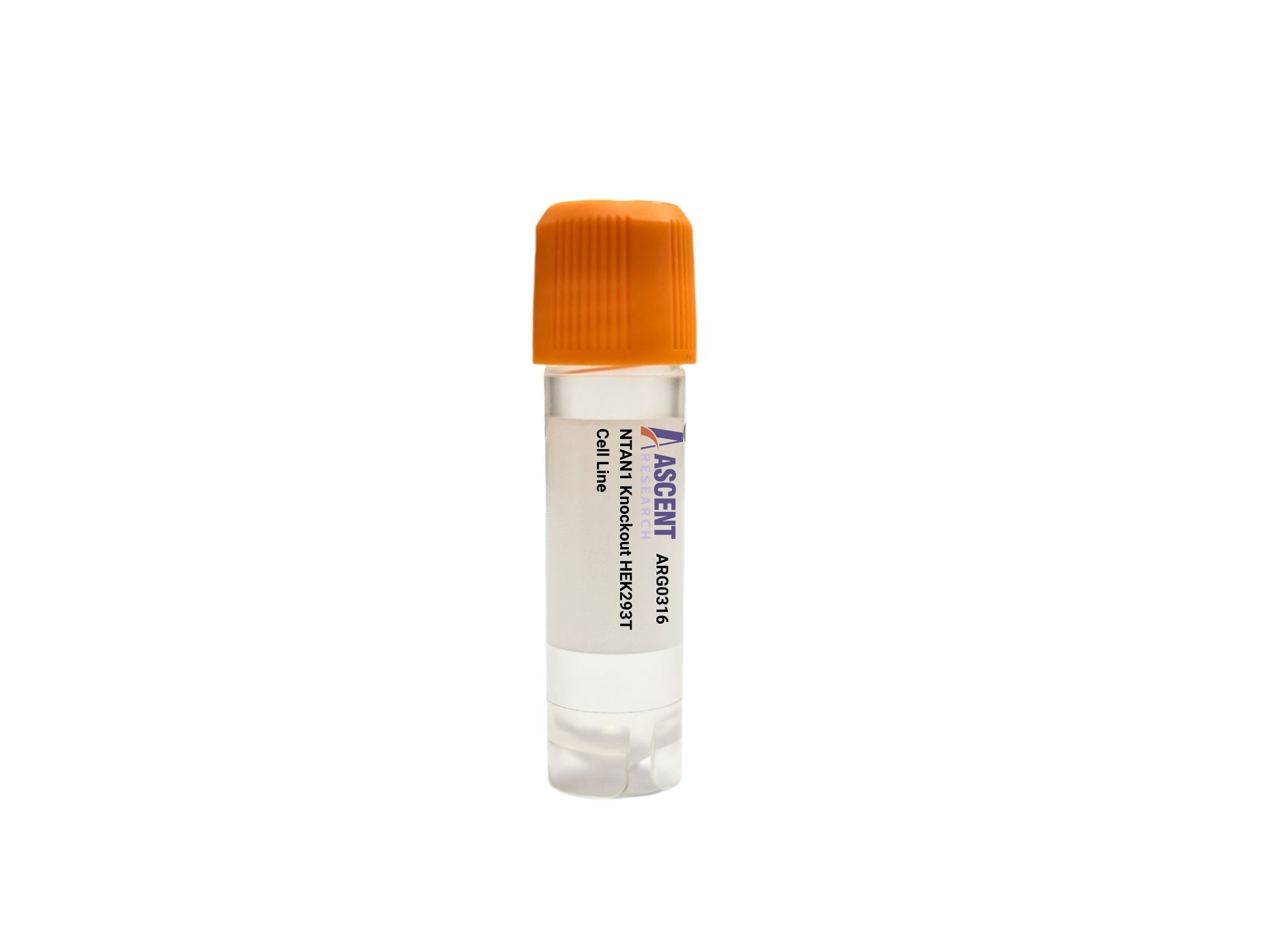
The NTAN1 Knockout HEK293T Cell Line is a CRISPR/Cas9-edited knockout cell line that eliminates NTAN1 expression in HEK293T human embryonic kidney cells. NTAN1 encodes an N-terminal asparagine amidohydrolase that deamidates N-terminal Asn to Asp, generating N-degrons recognized by E3 ligases such as UBR1 and UBR2, which target substrates for ubiquitin-proteasome degradation. This model enables study of the N-end rule pathway, protein degradation dynamics, and substrate identification using N-terminomics, cycloheximide chase, and N-end rule reporter assays. It is ideal for research on protein turnover and drug discovery.
 NCOA2 Knockout NCI-H1975 Polyclonal Cells
Cat. No. ARG16807
ENO2 Knockout jurkat Polyclonal Cells
Cat. No. ARG13517
AHSA1 Knockout HGC-27 Polyclonal Cells
Cat. No. ARG29462
ARMC8 Knockout NCI-H1299 Polyclonal Cells
Cat. No. ARG30421
AAK1 Knockout jurkat Polyclonal Cells
Cat. No. ARG33683
DNAJC6 Knockout A2780 Polyclonal Cells
Cat. No. ARG39320
NCOA2 Knockout NCI-H1975 Polyclonal Cells
Cat. No. ARG16807
ENO2 Knockout jurkat Polyclonal Cells
Cat. No. ARG13517
AHSA1 Knockout HGC-27 Polyclonal Cells
Cat. No. ARG29462
ARMC8 Knockout NCI-H1299 Polyclonal Cells
Cat. No. ARG30421
AAK1 Knockout jurkat Polyclonal Cells
Cat. No. ARG33683
DNAJC6 Knockout A2780 Polyclonal Cells
Cat. No. ARG39320
The NTAN1 Knockout HEK293T Cell Line is a genetically defined CRISPR/Cas9-edited knockout cell line that enables loss-of-function studies of the human NTAN1 gene. This engineered cell model is produced through CRISPR/Cas9-mediated disruption of the target gene, leading to ablation of NTAN1 protein expression and providing a clean genetic background for mechanistic investigations. By eliminating NTAN1, researchers can dissect its role in the N-end rule pathway and protein turnover without confounding endogenous activity. The cell line is suitable for a broad range of experimental applications, including functional genomics, proteomics, and drug discovery research.
The host cell line, HEK293T, is a widely used derivative of human embryonic kidney 293 cells that stably expresses the SV40 large T-antigen. This adherent epithelial cell line offers high transfection efficiency and supports episomal replication of plasmids containing the SV40 origin, making it versatile for recombinant protein expression and viral packaging. The HEK293T background provides a robust and reproducible system for studying gene function in a human kidney epithelial context.
NTAN1 encodes an N-terminal asparagine amidohydrolase that deamidates N-terminal asparagine residues to aspartate, a key step in the N-end rule pathway. This generates N-degrons recognized by E3 ubiquitin ligases UBR1 and UBR2, leading to ubiquitination and proteasomal degradation of substrate proteins. NTAN1 acts downstream of proteolytic events that expose N-terminal asparagine and upstream of the ubiquitin-proteasome system. It interacts with substrate proteins and cooperates with other N-terminal amidases such as NTAQ1. Key pathway components include NTAN1, NTAQ1, UBR1, UBR2, ubiquitin, and the proteasome. Although upstream regulators remain poorly characterized, NTAN1 expression is likely constitutive.
In HEK293T cells, NTAN1 knockout disrupts the Asn-degron branch of the N-end rule pathway, stabilizing proteins that would otherwise be degraded. This enables investigation of how loss of deamidation alters the proteome and protein quality control. The high transfection efficiency of HEK293T allows easy complementation with wild-type or mutant NTAN1 for structure-function studies. Moreover, the human kidney epithelial origin provides a relevant background for studying N-end rule components in a non-tumorigenic, immortalized setting.
This knockout cell line is valuable for identifying NTAN1 substrates via N-terminomic profiling and mass spectrometry. It can be used in cycloheximide chase assays to assess substrate stability and validate N-degron pathway dependencies. Ubiquitination assays and N-end rule reporter assays (e.g., Ub-X-??gal) enable direct pathway readouts. The model also supports drug discovery targeting protein turnover and characterization of N-terminal modifications. For further details, please contact Ascent Research.