Genome-edited Cells
Breast (mammary gland)
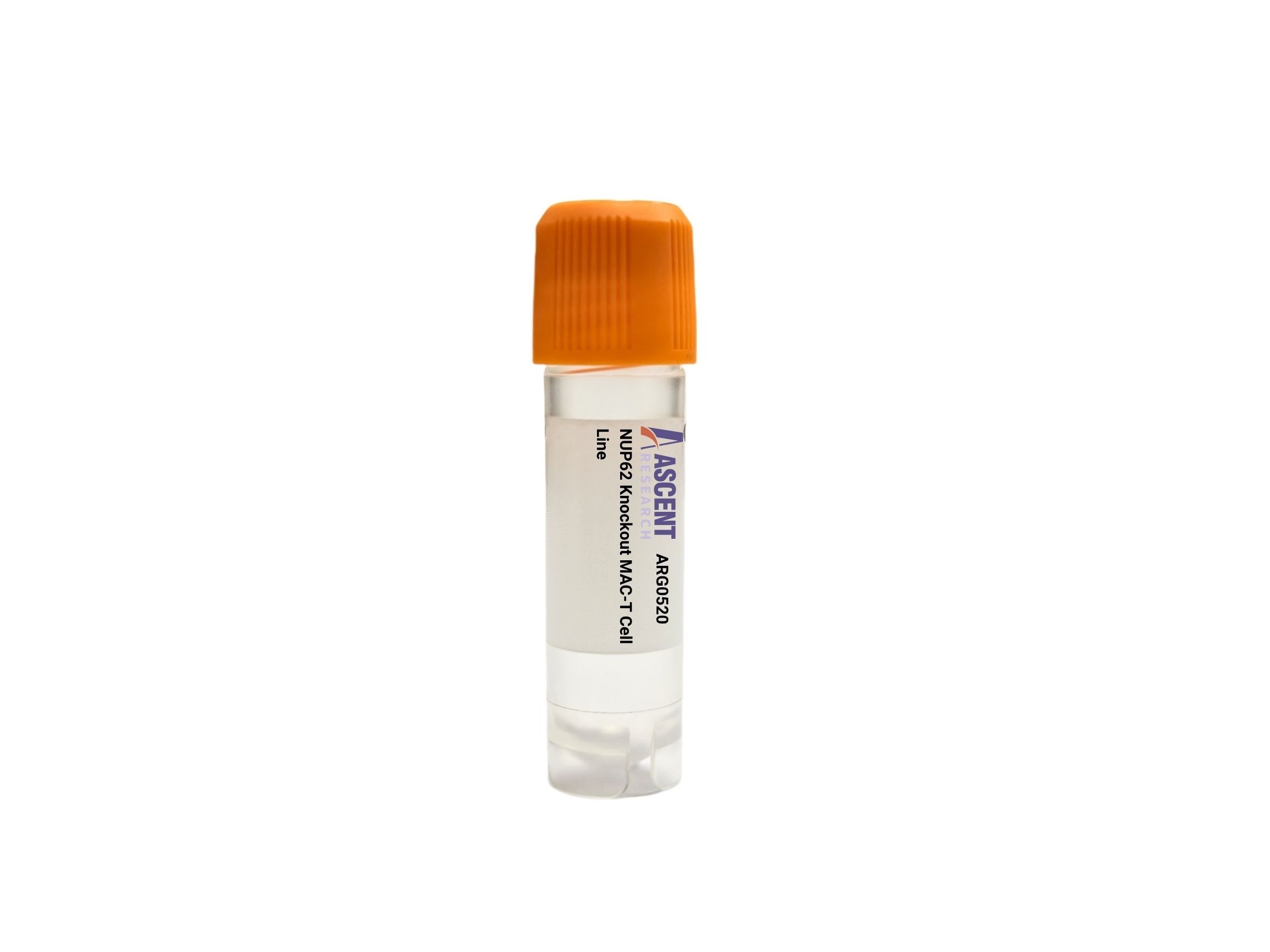
The NUP62 Knockout MAC-T Cell Line is a CRISPR/Cas9-edited bovine mammary epithelial cell model with targeted disruption of NUP62, a nuclear pore complex component critical for nucleocytoplasmic transport. This line enables investigation of NPC function in milk protein secretion, lactation, and viral nuclear import, with direct relevance to NF-??B and STAT3 signaling. Applications include mechanistic studies of nuclear transport, mammary gland development, and host-pathogen interactions, supported by validated assays such as immunofluorescence, nuclear import assays, and co-immunoprecipitation. For further information, contact Ascent Research.
 ACSL1 Knockout Hela Polyclonal Cells
Cat. No. ARG20417
FIZ1 Knockout NCI-H1975 Polyclonal Cells
Cat. No. ARG16451
MCCC1 Knockout NCI-H1975 Polyclonal Cells
Cat. No. ARG17269
CDKN1A Knockout HT29 Polyclonal Cells
Cat. No. ARG14593
GFPT2 Knockout HT29 Polyclonal Cells
Cat. No. ARG14537
IRF2BPL Knockout A549 Polyclonal Cells
Cat. No. ARG34147
ACSL1 Knockout Hela Polyclonal Cells
Cat. No. ARG20417
FIZ1 Knockout NCI-H1975 Polyclonal Cells
Cat. No. ARG16451
MCCC1 Knockout NCI-H1975 Polyclonal Cells
Cat. No. ARG17269
CDKN1A Knockout HT29 Polyclonal Cells
Cat. No. ARG14593
GFPT2 Knockout HT29 Polyclonal Cells
Cat. No. ARG14537
IRF2BPL Knockout A549 Polyclonal Cells
Cat. No. ARG34147
The NUP62 Knockout MAC-T Cell Line is a CRISPR/Cas9-edited bovine mammary epithelial cell model featuring targeted disruption of the NUP62 gene. This knockout cell line provides a defined loss-of-function system for studying nucleocytoplasmic transport mechanisms in a physiologically relevant background. By ablating NUP62 expression, the cell line enables detailed analysis of nuclear pore complex (NPC) integrity and selective cargo translocation without the confounding effects of transient depletion methods.
The host MAC-T cell line is an immortalized bovine mammary epithelial cell line widely used in lactation biology and mammary gland research. Derived from primary bovine mammary alveolar cells, MAC-T retains key features of differentiated mammary epithelium, including the ability to synthesize and secrete milk proteins. Its robust growth and stable phenotype make it an ideal platform for gene editing studies and long-term functional assays exploring mammary epithelial cell physiology.
NUP62 encodes a core component of the NPC central channel, where it plays an essential role in facilitating nucleocytoplasmic transport and anchoring other nucleoporins. The protein is regulated by CDK1/cyclin B phosphorylation during mitosis and transcriptional control by MYC and EGFR signaling. Downstream, NUP62 function directly impacts NF-??B nuclear translocation, STAT3 activation, and importin-mediated protein import. It physically interacts with NUP98, NUP153, importin ??/??, HIV-1 capsid protein, and CRM1, positioning it as a critical node in the Ran GTPase cycle and NPC assembly. Loss of NUP62 compromises NPC integrity, impairing selective transport of proteins and RNAs, which can dysregulate cell cycle progression and stress responses, particularly affecting nuclear import of key transcription factors and viral capsids.
In the mammary epithelial context, NUP62 disruption has profound implications for milk production and secretion pathways that rely on tightly controlled nuclear-cytoplasmic shuttling of transcription factors such as STAT3 and NF-??B. This knockout cell line enables researchers to dissect how compromised nucleocytoplasmic transport alters lactation-associated gene expression programs, protein secretion dynamics, and mammary gland remodeling. Additionally, it offers a unique system to study viral nuclear import mechanisms relevant to bovine pathogens and zoonotic viruses, as well as cancer-related signaling in epithelial cells.
This model is suited for a wide range of assays including immunofluorescence to visualize NPC localization, nuclear import/export assays, co-immunoprecipitation for protein interaction studies, western blotting, RNA sequencing for transcriptomic profiling, milk protein expression analysis, and viral infection assays. It accelerates mechanistic research in nuclear transport, lactation biology, mammary development, viral host-pathogen interactions, and cancer cell biology. For additional technical details or experimental support, please contact Ascent Research.