Genome-edited Cells
Liver
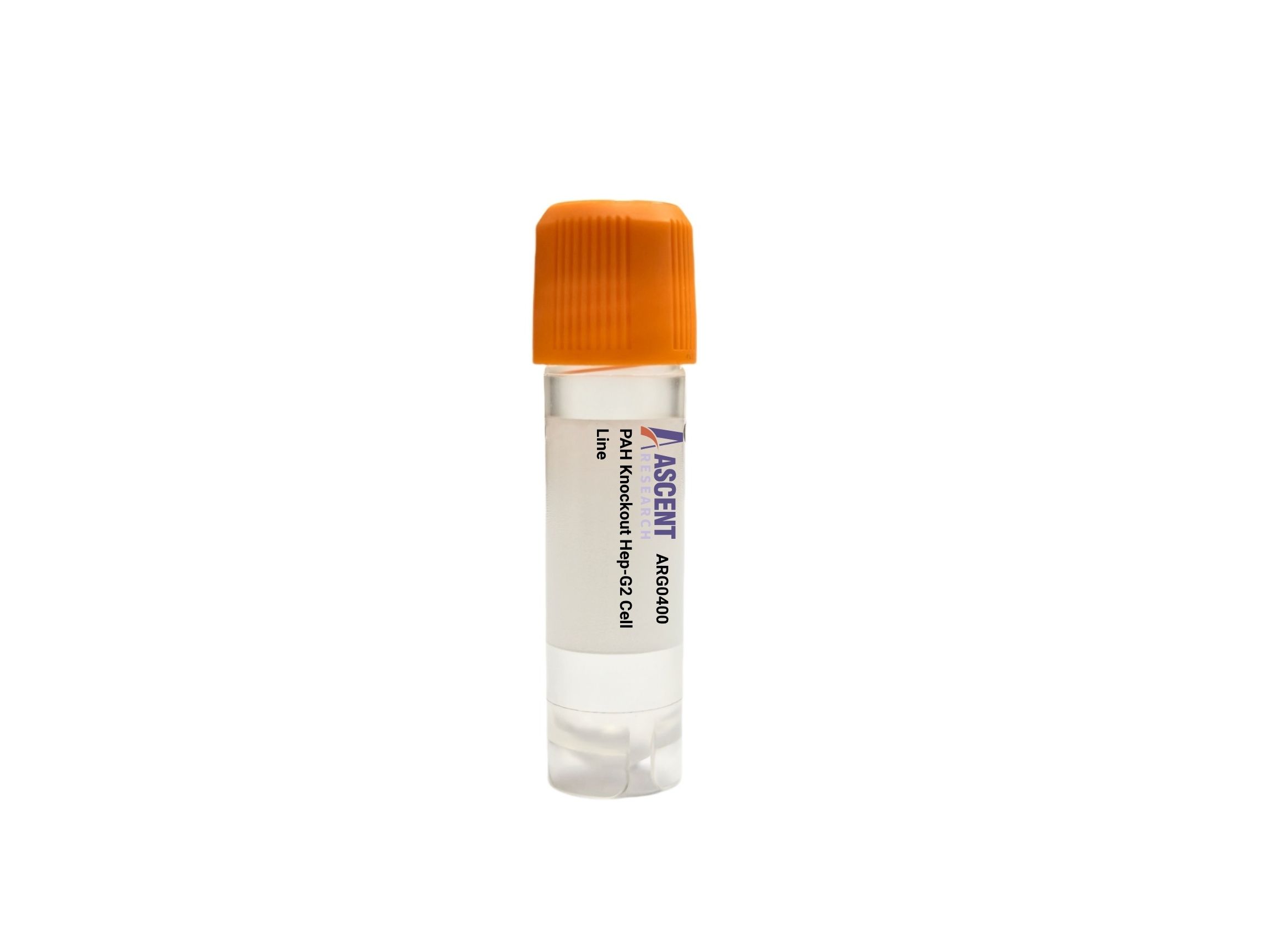
The PAH Knockout Hep-G2 Cell Line is a CRISPR/Cas9-edited human hepatocellular carcinoma cell line with a targeted disruption of the PAH gene, eliminating phenylalanine hydroxylase function. This enzyme is essential for converting phenylalanine to tyrosine, using tetrahydrobiopterin (BH4) as a cofactor, and its activity is modulated by regulators such as PKA, HNF4A, and BH4 availability. By abolishing phenylalanine hydroxylase in a hepatic epithelial background, the model reproduces the metabolic block characteristic of phenylketonuria and hyperphenylalaninemia. It enables investigation of phenylalanine accumulation, screening of BH4-responsive mutants, gene therapy evaluation, and metabolomic profiling via enzyme assays or LC-MS analysis.
 OTUD4 Knockout NCI-H1975 Polyclonal Cells
Cat. No. ARG16615
EPHX1 Knockout SK-HEP-1 Polyclonal Cells
Cat. No. ARG15612
EVL Knockout NCI-H1299 Polyclonal Cells
Cat. No. ARG17480
Fzd5 Knockout 143B Polyclonal Cells
Cat. No. ARG11810
OTUD4 Knockout NCI-H1975 Polyclonal Cells
Cat. No. ARG16615
EPHX1 Knockout SK-HEP-1 Polyclonal Cells
Cat. No. ARG15612
EVL Knockout NCI-H1299 Polyclonal Cells
Cat. No. ARG17480
Fzd5 Knockout 143B Polyclonal Cells
Cat. No. ARG11810
 RAW 264.7
Cat. No. ARC0750
RAW 264.7
Cat. No. ARC0750
 Human Prostate Epithelial Cells
Cat. No. ARP0074
Human Prostate Epithelial Cells
Cat. No. ARP0074
The PAH Knockout Hep-G2 Cell Line is a CRISPR/Cas9-edited knockout cell line derived from the Hep-G2 human hepatocellular carcinoma model. It features targeted disruption of the PAH gene, which encodes phenylalanine hydroxylase, the enzyme responsible for the hepatic conversion of phenylalanine to tyrosine. This loss-of-function model eliminates PAH protein expression, creating a powerful system for dissecting phenylalanine metabolism and its role in disease. The cell line is supplied as an adherent, epithelial culture, maintaining the characteristic morphology of the parental Hep-G2 line while providing a stable, genetically defined background for reproducible experimental studies.
The host Hep-G2 cell line originates from a liver biopsy of a 15-year-old male with hepatocellular carcinoma and is widely employed in research on liver metabolism, toxicology, and drug transport. As a hepatic epithelial cell model with parenchymal features, Hep-G2 cells retain numerous liver-specific metabolic functions, including expression of key enzymes and transporters. Their robust growth in standard culture conditions and compatibility with a range of molecular and biochemical assays make them an advantageous platform for generating gene knockouts to investigate hepatocyte biology and metabolic disorders.
Phenylalanine hydroxylase functions as a homotetrameric enzyme requiring molecular oxygen, iron, and the cofactor tetrahydrobiopterin (BH4) for activity. PAH activity is regulated upstream by substrate phenylalanine levels, BH4 availability, and phosphorylation by protein kinase A (PKA) in response to glucagon and insulin signaling. Key transcriptional regulators include hepatocyte nuclear factors HNF4A and HNF1A. The immediate product, tyrosine, serves as a precursor for catecholamine, melanin, and thyroid hormone synthesis. In the broader pathway, PAH cooperates with BH4-synthesizing and recycling enzymes such as GTP cyclohydrolase I (GCH1), pyruvoyl-tetrahydropterin synthase (PTPS), sepiapterin reductase (SR), and dihydropteridine reductase (DHPR), as well as downstream tyrosine aminotransferase (TAT). Disruption of PAH in the Hep-G2 background uncouples this network.
Because Hep-G2 cells provide a liver-like environment, knockout of PAH in this context recapitulates the hepatic metabolic defect observed in phenylketonuria (PKU) and hyperphenylalaninemia. The model allows researchers to examine the cellular consequences of phenylalanine accumulation, including neurotoxic metabolite formation and altered amino acid flux, within an adherent hepatic framework. It also facilitates the study of liver-specific adaptations to PAH loss and the evaluation of therapeutic strategies that aim to restore phenylalanine catabolism or bypass the defective step.
This cell line supports a broad range of research applications, including modeling PKU and related hyperphenylalaninemia, screening for BH4-responsive pharmacological chaperones, performing metabolic flux analysis using stable isotope tracing, and testing gene therapy vectors or enzyme replacement approaches. Validation can be performed via western blotting for PAH protein, RT-qPCR for transcript levels, and Sanger or next-generation sequencing to confirm editing. Phenylalanine hydroxylase enzyme activity assays and HPLC- or LC-MS-based quantification of the phenylalanine-to-tyrosine ratio offer direct functional readouts. Additional studies may employ cell viability assays under phenylalanine challenge, immunofluorescence to assess PAH localization, or reporter-based promoter analyses to investigate transcriptional regulation. For further information or assistance with this product, please contact Ascent Research.