Genome-edited Cells
Large intestine (colon)
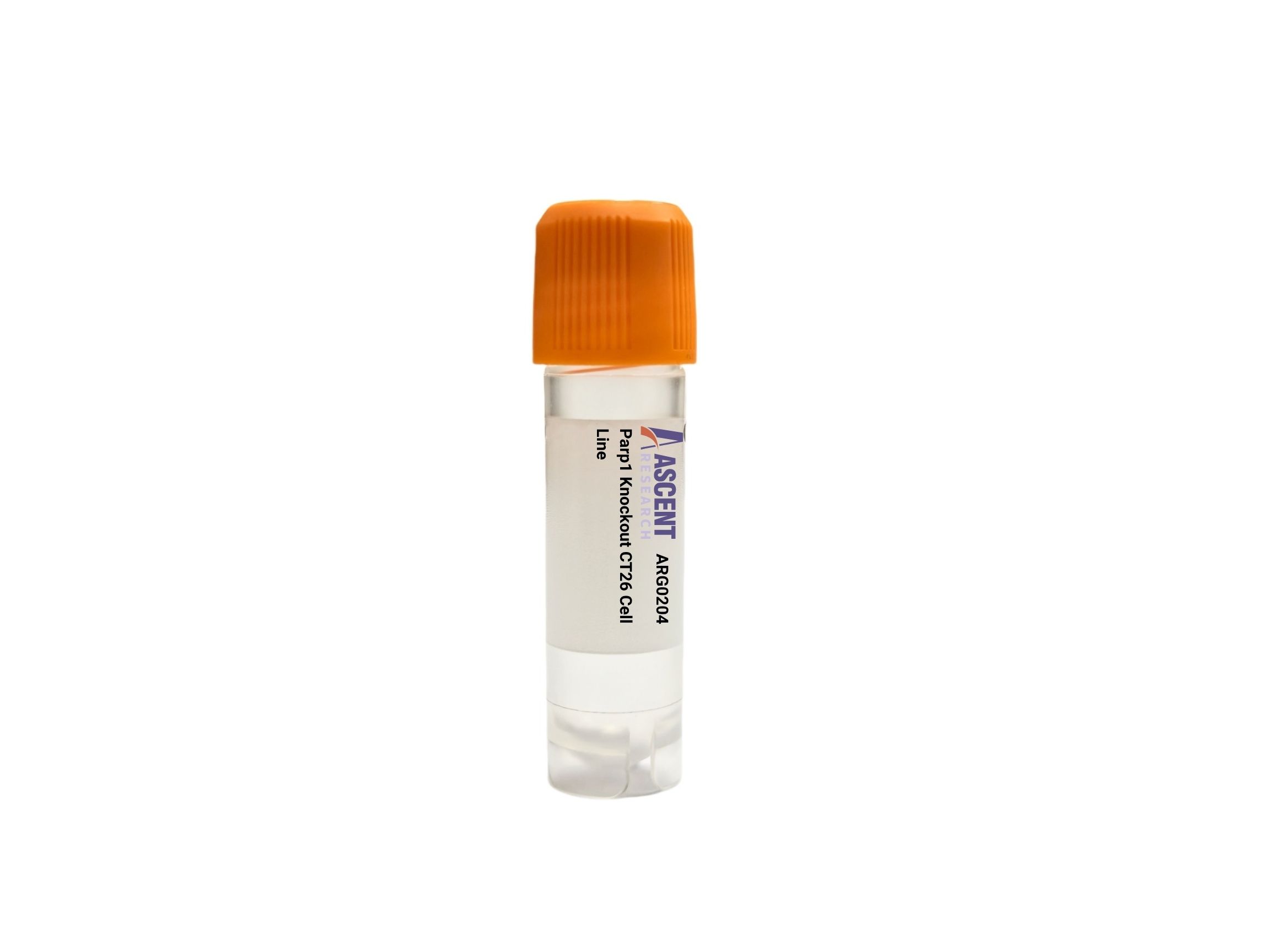
The Parp1 Knockout CT26 Cell Line is a CRISPR/Cas9-edited knockout cell line generated from BALB/c mouse colon carcinoma CT26 cells, featuring targeted disruption of the Parp1 gene. PARP1 is a DNA damage-responsive enzyme that catalyzes PARylation of nuclear proteins, including histones, XRCC1, and NF-??B, orchestrating DNA repair, chromatin remodeling, and cell death decisions. This knockout model serves as a powerful tool for investigating PARP inhibitor sensitivity, synthetic lethality, and DNA repair mechanisms in colorectal cancer. It is suitable for in vitro assays such as Western blotting, viability assays, and comet assays, as well as in vivo syngeneic tumor studies, aiding research on tumorigenesis and inflammatory signaling.
 MRM1 Knockout SK-HEP-1 Polyclonal Cells
Cat. No. ARG15084
BLOC1S5 Knockout NCI-H1299 Polyclonal Cells
Cat. No. ARG30539
HDDC3 Knockout A549 Polyclonal Cells
Cat. No. ARG33629
C2CD3 Knockout jurkat Polyclonal Cells
Cat. No. ARG41385
MRPL40 Knockout HEK293T Polyclonal Cells
Cat. No. ARG3429
DCUN1D3 Knockout Raji Polyclonal Cells
Cat. No. ARG972
MRM1 Knockout SK-HEP-1 Polyclonal Cells
Cat. No. ARG15084
BLOC1S5 Knockout NCI-H1299 Polyclonal Cells
Cat. No. ARG30539
HDDC3 Knockout A549 Polyclonal Cells
Cat. No. ARG33629
C2CD3 Knockout jurkat Polyclonal Cells
Cat. No. ARG41385
MRPL40 Knockout HEK293T Polyclonal Cells
Cat. No. ARG3429
DCUN1D3 Knockout Raji Polyclonal Cells
Cat. No. ARG972
The Parp1 Knockout CT26 Cell Line is a CRISPR/Cas9-edited knockout cell line derived from the murine CT26 colon carcinoma line, designed for targeted disruption of the Parp1 gene. This stable loss-of-function model enables investigation of PARP1-dependent processes in a well-characterized colorectal tumor background. The cell line is supplied as a population with confirmed Parp1 gene disruption, facilitating studies of DNA damage response, cell death mechanisms, and preclinical evaluation of PARP inhibitors.
CT26 cells originate from BALB/c mouse colon carcinoma and represent a widely used syngeneic tumor model for colorectal cancer research. They exhibit aggressive tumorigenic properties and are immunocompetent in BALB/c hosts, allowing for both in vitro mechanistic studies and in vivo tumor xenograft experiments. The CT26 line carries relevant oncogenic mutations and serves as a standard platform for evaluating novel therapeutics targeting colorectal signaling pathways.
PARP1 is a nuclear enzyme activated by DNA strand breaks, including those induced by reactive oxygen species (ROS) and genotoxic insults. It catalyzes poly(ADP-ribosyl)ation (PARylation) of itself and multiple acceptor proteins, including histones, XRCC1, NF-??B, and p53, thereby regulating chromatin structure, DNA repair, and transcriptional programs. Upstream kinases ATM and ATR phosphorylate PARP1, while calcium-activated calpain mediates its cleavage. In the base excision repair pathway, PARP1 interacts with XRCC1 and DNA ligase III to facilitate single-strand break resolution. Excessive PARP1 activation, however, triggers NAD+ depletion and promotes parthanatos, a caspase-independent cell death involving AIF translocation from mitochondria to the nucleus. PARP1 also influences NF-??B signaling and inflammatory gene expression, linking DNA damage to immune responses.
Disruption of Parp1 in CT26 cells ablates a central node in the DNA damage response network, sensitizing cells to genotoxic agents and PARP inhibitors. This knockout model is particularly suited for exploring synthetic lethality paradigms in colorectal cancer, where PARP inhibition shows promise in BRCA-mutated contexts and beyond. Moreover, the CT26 background enables assessment of tumor-immune interactions, as PARP1 modulates NF-??B-dependent cytokine production and cell death pathways that influence anti-tumor immunity. The model thus bridges fundamental DNA repair biology with translational oncology research.
Researchers can employ the Parp1 Knockout CT26 Cell Line for a variety of assays, including Western blotting to confirm loss of PARP1 and PARylation, immunofluorescence for ??H2AX foci as a marker of DNA damage, and comet assays to evaluate DNA strand break accumulation. Cell viability assays in the presence of PARP inhibitors (e.g., olaparib) allow quantification of synthetic lethality, while RT-qPCR profiling of downstream targets such as NF-??B, p53, and AIF provides mechanistic insight. Flow cytometry enables apoptosis detection after genotoxic challenge, and tumor xenograft models in BALB/c mice facilitate in vivo pharmacodynamic studies. Colony formation assays further support clonogenic survival analysis. For additional technical details and ordering information, please contact Ascent Research.