Genome-edited Cells
Lung
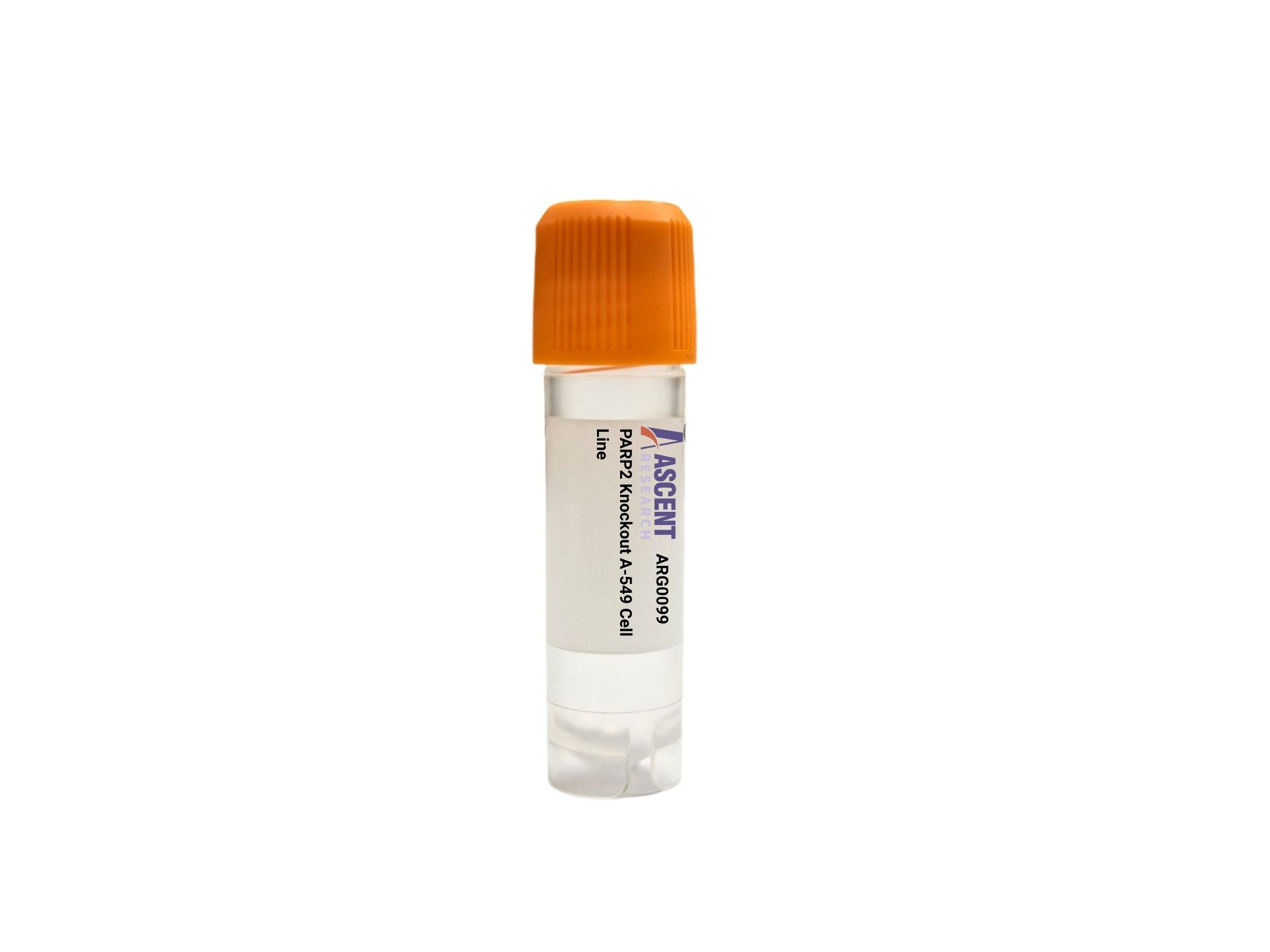
PARP2 Knockout A-549 Cell Line is a human CRISPR/Cas9-edited lung alveolar epithelial carcinoma model with disruption of PARP2, a nuclear ADP-ribosyltransferase involved in PARylation, base excision repair, and single-strand break repair. In A-549 lung adenocarcinoma cells, PARP2 functions with PARP1, HPF1, and XRCC1 to support damaged chromatin signaling, DNA ligase III complex assembly, replication stress responses, and cell survival after genotoxic injury. This knockout model is useful for studying DNA damage response mechanisms, genomic instability, PARP inhibitor response, chemotherapy sensitization, and lung cancer functional genomics using assays such as ??H2AX imaging, comet assay, clonogenic survival, and RNA-seq.
 NPC1 Knockout HepG2 Polyclonal Cells
Cat. No. ARG12418
CCNDBP1 Knockout HAP1 Polyclonal Cells
Cat. No. ARG43238
DCAF15 Knockout HCT116 Polyclonal Cells
Cat. No. ARG7130
NISCH Knockout HEK293T Polyclonal Cells
Cat. No. ARG4620
GNB2 Knockout HEK293T Polyclonal Cells
Cat. No. ARG3596
NPC1 Knockout HepG2 Polyclonal Cells
Cat. No. ARG12418
CCNDBP1 Knockout HAP1 Polyclonal Cells
Cat. No. ARG43238
DCAF15 Knockout HCT116 Polyclonal Cells
Cat. No. ARG7130
NISCH Knockout HEK293T Polyclonal Cells
Cat. No. ARG4620
GNB2 Knockout HEK293T Polyclonal Cells
Cat. No. ARG3596
 DV90
Cat. No. ARC0178
DV90
Cat. No. ARC0178
PARP2 Knockout A-549 Cell Line is a human CRISPR/Cas9-engineered knockout model in which the PARP2 gene has been disrupted to eliminate functional PARP2 expression. The edited host is A-549, a human lung alveolar epithelial carcinoma cell line, generating a stable in vitro system for analysis of PARP2-dependent DNA repair and stress-response mechanisms in a pulmonary epithelial tumor background. This product is intended for mechanistic studies requiring a defined loss-of-function context in a widely used cancer cell model.
A-549 cells are derived from human lung adenocarcinoma and exhibit alveolar type II-like epithelial features. They are broadly used as a barrier-forming airway/alveolar tumor model in studies of pulmonary epithelial biology, lung cancer signaling, and therapeutic response. Because A-549 cells are frequently used to investigate DNA damage responses, oxidative injury, replication-associated stress, and drug sensitivity, they provide a relevant cellular framework for examining how specific repair factors influence survival and genome maintenance in solid tumor cells.
PARP2 encodes a nuclear ADP-ribosyltransferase that functions at damaged chromatin during the DNA damage response. Activated by DNA single-strand breaks, alkylating damage, oxidative stress, replication stress, and other genotoxic agents, PARP2 contributes to poly(ADP-ribose) synthesis at DNA lesions and cooperates with PARP1 and HPF1 in PARylation signaling. PARP2 promotes recruitment of XRCC1 and organization of the DNA ligase III complex, with functional links to POLB, APEX1, PNKP, and TDP1 in base excision repair and single-strand break repair. It also contributes to replication fork stability and interfaces with ATM, ATR, CHK1, p53, and ??H2AX-associated stress signaling. Under severe genotoxic conditions, PARP2 activity is connected to AIFM1-dependent cell death pathways. Loss of PARP2 can therefore reduce repair efficiency, alter chromatin-associated DNA repair dynamics, and modify cellular responses to replication stress and DNA-damaging agents.
In the A-549 context, PARP2 disruption provides a useful model for investigating DNA repair dependency in lung adenocarcinoma cells and for studying how epithelial tumor cells tolerate endogenous and treatment-induced genotoxic stress. This system is relevant to research on genomic instability, cancer therapy response, chemotherapy sensitization, and PARP inhibitor sensitivity, particularly where the contribution of PARP2 must be distinguished from overlapping functions of PARP1.
Applications include western blotting or RT-qPCR to confirm pathway-level consequences of gene loss; immunofluorescence for ??H2AX or 53BP1 foci to quantify DNA damage accumulation; comet assays and poly(ADP-ribose) detection assays to assess strand-break repair and PARylation output; and cell viability, clonogenic survival, apoptosis, and flow-cytometric cell-cycle assays following exposure to alkylating agents, oxidative stressors, replication stress inducers, or PARP-targeted compounds. The model is also suitable for RNA-seq and co-immunoprecipitation studies examining compensatory signaling, XRCC1/LIG3-associated repair complexes, and broader functional dependencies in lung cancer cells. Researchers may contact Ascent Research for additional technical information, product details, or related gene-edited cell models.