Genome-edited Cells
Large intestine (colon)
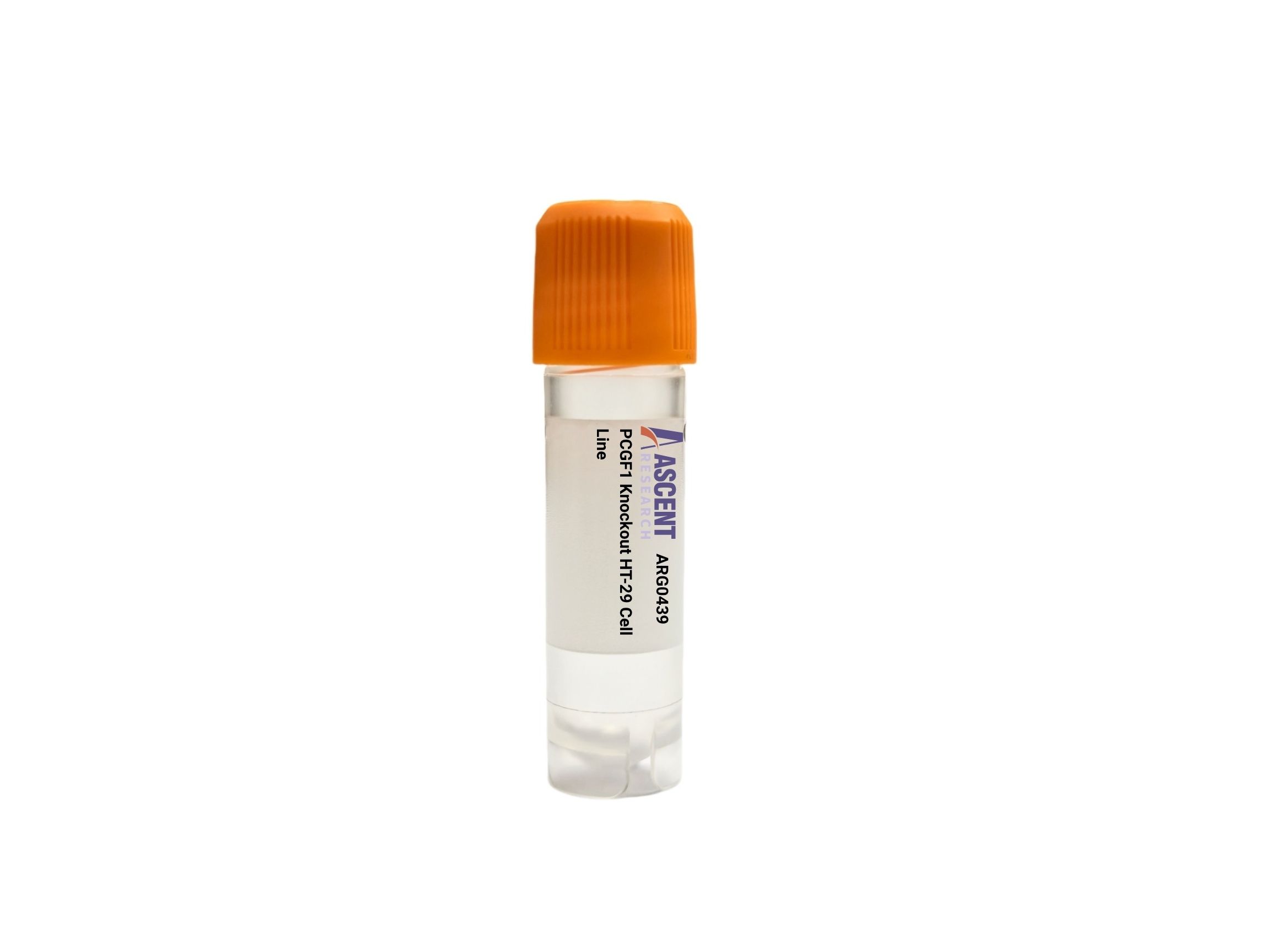
The PCGF1 Knockout HT-29 Cell Line is a CRISPR/Cas9-edited knockout model targeting the PCGF1 gene in human colorectal adenocarcinoma HT-29 cells. PCGF1 encodes a core PRC1 subunit that catalyzes histone H2A monoubiquitination (H2AK119ub1), mediating transcriptional repression of tumor suppressors such as CDKN2A and CDKN1A under the control of upstream regulators including Wnt/??-catenin, MYC, and E2F. This loss-of-function tool enables investigation of Polycomb-mediated gene silencing, colorectal cancer proliferation, and epigenetic drug responses. It is compatible with diverse assays such as ChIP-seq for H2AK119ub1 profiling, western blotting, RT-qPCR, BrdU proliferation analysis, and colony formation studies.
 Pten Knockout LLC Cell Line
Cat. No. ARG44059
Pten Knockout LLC Cell Line
Cat. No. ARG44059
 EEF2K Knockout huh-7 Polyclonal Cells
Cat. No. ARG40594
DcpS Knockout HT29 Polyclonal Cells
Cat. No. ARG40231
DVL3 Knockout Raji Polyclonal Cells
Cat. No. ARG40120
EEF2K Knockout huh-7 Polyclonal Cells
Cat. No. ARG40594
DcpS Knockout HT29 Polyclonal Cells
Cat. No. ARG40231
DVL3 Knockout Raji Polyclonal Cells
Cat. No. ARG40120
 Mouse Renal Tubular Epithelial Cell Medium
Cat. No. ARM0493
Mouse Renal Tubular Epithelial Cell Medium
Cat. No. ARM0493
 RBP4 Knockout Hep-G2 Cell Line
Cat. No. ARG0393
RBP4 Knockout Hep-G2 Cell Line
Cat. No. ARG0393
The PCGF1 Knockout HT-29 Cell Line is a CRISPR/Cas9-edited loss-of-function model in which the PCGF1 gene has been disrupted in the human colorectal adenocarcinoma HT-29 cell background. This knockout cell line provides a stable platform for investigating the biological functions of Polycomb group RING finger protein PCGF1, enabling detailed studies of chromatin-mediated transcriptional repression and its impact on colorectal cancer cell behavior. The product is supplied as a ready-to-use cell line suitable for a wide array of molecular and cellular assays.
The host cell line, HT-29, is a well-characterized human colon adenocarcinoma epithelial cell line originally isolated from a primary colorectal tumor. HT-29 cells exhibit an epithelial morphology and retain key features of colorectal adenocarcinoma, making them a widely used model for studying cancer cell proliferation, differentiation, and drug responses. Their robust growth characteristics and genetic background provide a reliable context for interrogating gene function in colorectal cancer biology.
PCGF1 functions as a core component of Polycomb repressive complex 1 (PRC1), interacting with RING1B (RNF2) and other subunits including CBX, PHC, SCMH1, RYBP, and YAF2 to catalyze monoubiquitination of histone H2A at lysine 119 (H2AK119ub1). This histone modification promotes chromatin compaction and transcriptional silencing of target genes such as the tumor suppressors CDKN2A (p16INK4a) and CDKN1A (p21), as well as HOX gene clusters, PTEN, and BIM. PCGF1 activity is regulated by upstream signals including Wnt/??-catenin, Notch, MYC, and E2F transcription factors, and it operates in concert with PRC2-mediated H3K27me3 deposition. Within the signaling network, PCGF1 acts downstream of ??-catenin/TCF/LEF complexes and contributes to the repression of genes that would otherwise block cell cycle progression and promote differentiation.
In the context of HT-29 colorectal adenocarcinoma cells, disruption of PCGF1 provides a powerful tool for dissecting PRC1-dependent silencing mechanisms and their contribution to tumor cell proliferation. Loss of PCGF1 is expected to reduce H2AK119ub1 at PRC1 target loci, leading to derepression of CDKN2A and CDKN1A, induction of cell cycle arrest, and possible re-activation of differentiation programs. This model is therefore highly relevant for studying the epigenetic underpinnings of colorectal cancer, as well as for exploring connections to other diseases where PCGF1 dysregulation has been implicated, including neurodevelopmental disorders, acute myeloid leukemia, breast cancer, and glioma.
Researchers can employ this knockout cell line in a broad spectrum of experimental applications, including Polycomb-mediated silencing studies, colorectal cancer proliferation research, epigenetic drug validation, and differentiation induction assays. Compatible representative techniques include western blotting for PCGF1, RING1B, and H2AK119ub1; RT-qPCR profiling of CDKN2A and CDKN1A expression; ChIP-qPCR and ChIP-seq for genome-wide H2AK119ub1 mapping; BrdU proliferation assays; flow cytometric cell cycle analysis; colony formation assays; immunofluorescence staining of H2AK119ub1; RNA-seq transcriptional profiling; and EZH2 inhibitor sensitivity assays. For further technical inquiries or to place an order, please contact Ascent Research.