Genome-edited Cells
Breast (mammary gland)
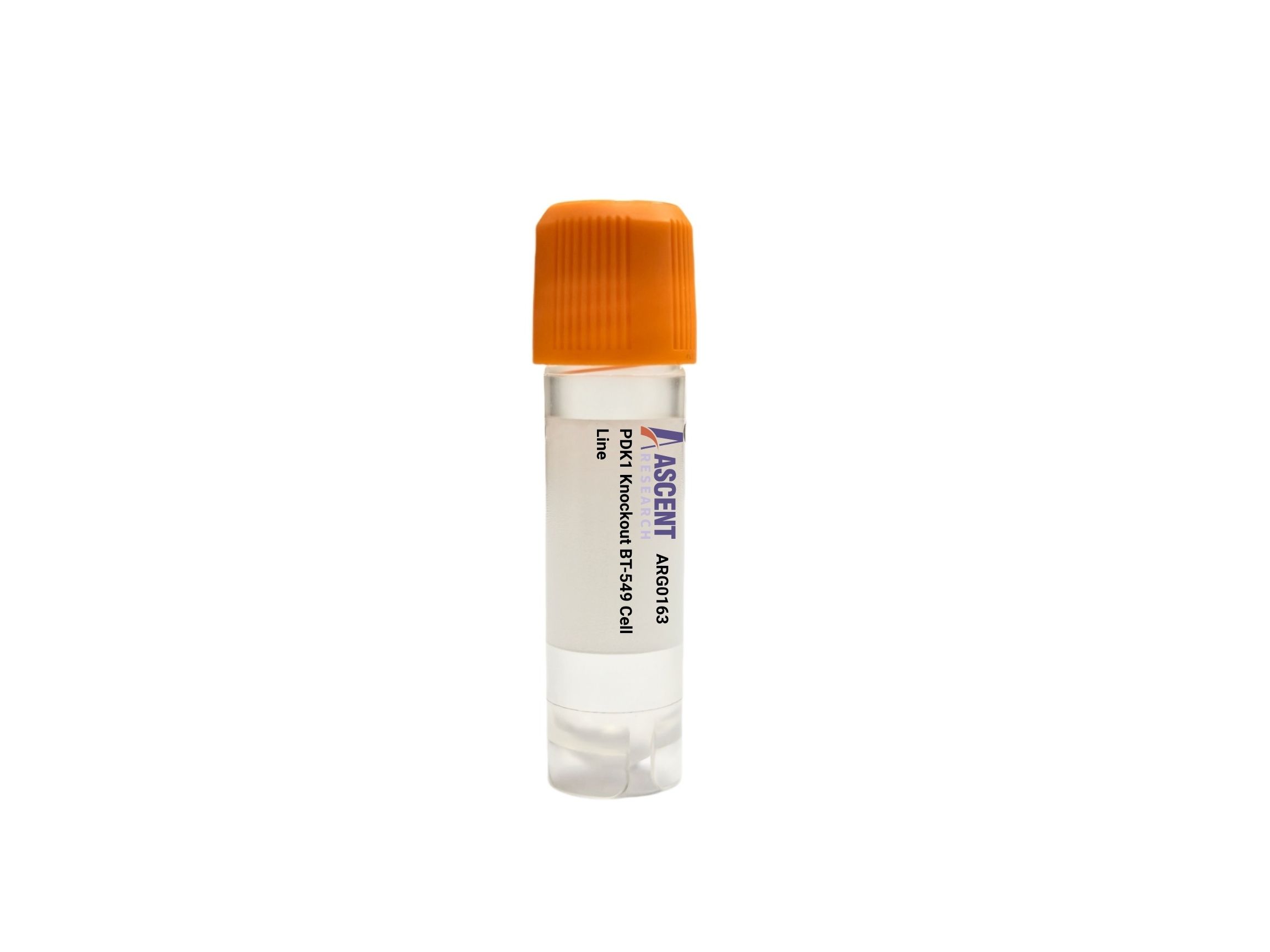
PDK1 Knockout BT-549 is a human CRISPR/Cas9-edited triple-negative breast cancer cell model generated in the invasive ductal carcinoma-derived BT-549 background. PDK1 normally phosphorylates PDHA1 to inhibit the pyruvate dehydrogenase complex, limiting pyruvate conversion to acetyl-CoA and promoting glycolytic metabolism downstream of hypoxia and HIF1A. Disruption of PDK1 in BT-549 cells supports studies of pyruvate metabolism, mitochondrial glucose oxidation, hypoxia-responsive metabolic reprogramming, and tumor bioenergetics using assays such as phospho-PDHA1 western blotting, Seahorse analysis, lactate measurement, PDH activity assays, metabolomics, and drug sensitivity testing.
 A1CF Knockout HAP1 Polyclonal Cells
Cat. No. ARG21519
CAMSAP1 Knockout Hela Polyclonal Cells
Cat. No. ARG42070
FKBP15 Knockout MES-OV Polyclonal Cells
Cat. No. ARG6509
FZD6 Knockout MES-OV Polyclonal Cells
Cat. No. ARG6075
GNAS Knockout 786-O Polyclonal Cells
Cat. No. ARG5619
GCC2 Knockout HEK293T Polyclonal Cells
Cat. No. ARG4139
A1CF Knockout HAP1 Polyclonal Cells
Cat. No. ARG21519
CAMSAP1 Knockout Hela Polyclonal Cells
Cat. No. ARG42070
FKBP15 Knockout MES-OV Polyclonal Cells
Cat. No. ARG6509
FZD6 Knockout MES-OV Polyclonal Cells
Cat. No. ARG6075
GNAS Knockout 786-O Polyclonal Cells
Cat. No. ARG5619
GCC2 Knockout HEK293T Polyclonal Cells
Cat. No. ARG4139
The PDK1 Knockout BT-549 Cell Line is a human CRISPR/Cas9-engineered breast cancer model in which the PDK1 gene (pyruvate dehydrogenase kinase 1) has been disrupted to abolish functional gene expression. This stable knockout cell line was generated in BT-549 cells, an epithelial-derived human breast ductal carcinoma cell line, to provide an in vitro system for investigating the consequences of PDK1 loss on cancer cell metabolism, mitochondrial function, and pathway-dependent phenotypes relevant to triple-negative breast cancer.
BT-549 cells were derived from invasive ductal carcinoma and are widely used as a triple-negative breast cancer model with mesenchymal-like and invasive characteristics. The line is frequently applied to studies of tumor cell signaling, invasion, metabolic adaptation, and drug response in aggressive breast cancer. Because BT-549 cells recapitulate important features of epithelial-derived tumor biology while also exhibiting strong relevance to metabolic stress and invasive behavior, they provide a useful background for examining how metabolic enzymes influence cancer cell state, survival, and therapeutic sensitivity.
PDK1 is a key negative regulator of pyruvate dehydrogenase complex activity. At the molecular level, PDK1 phosphorylates PDHA1, the E1 alpha subunit of the pyruvate dehydrogenase complex, thereby inhibiting pyruvate conversion to acetyl-CoA and restricting carbon flux into the tricarboxylic acid cycle. Through this mechanism, PDK1 acts upstream of reduced mitochondrial pyruvate oxidation, increased lactate-producing flux, and altered oxygen consumption. Its function is integrated with PDH complex-associated factors including PDHB, DLAT, PDHX, and the phosphatases PDP1 and PDP2, which counteract inhibitory phosphorylation. PDK1 expression and activity are regulated by hypoxia and HIF1A, and it is linked indirectly to growth factor- and PI3K-AKT-mTOR-driven metabolic stress through HIF1A-dependent metabolic reprogramming. Additional pathway components relevant to this axis include MPC1, MPC2, LDHA, SLC2A1, PC, and CS.
In the BT-549 background, PDK1 knockout provides a mechanistically informative model for interrogating the balance between aerobic glycolysis and mitochondrial glucose oxidation in triple-negative breast cancer cells. Loss of PDK1 is expected to decrease inhibitory PDHA1 phosphorylation and shift pyruvate utilization toward mitochondrial metabolism, making this system useful for studying hypoxia-responsive metabolic plasticity, bioenergetic adaptation, and metabolic dependencies associated with invasive breast tumor cells.
This cell line can support western blot and phospho-signaling studies focused on PDHA1 phosphorylation, pyruvate dehydrogenase activity assays, Seahorse extracellular flux analysis, ATP and lactate measurements, glucose uptake assays, metabolomics, and mitochondrial membrane potential analysis. It is also suitable for RT-qPCR or RNA-seq studies of HIF1A-linked metabolic programs, as well as proliferation, apoptosis, colony formation, migration/invasion, and drug sensitivity assays designed to define how PDK1 loss modifies phenotype or therapeutic response. Researchers may contact Ascent Research for additional technical information, product details, or related gene-edited cell models.