Genome-edited Cells
Liver
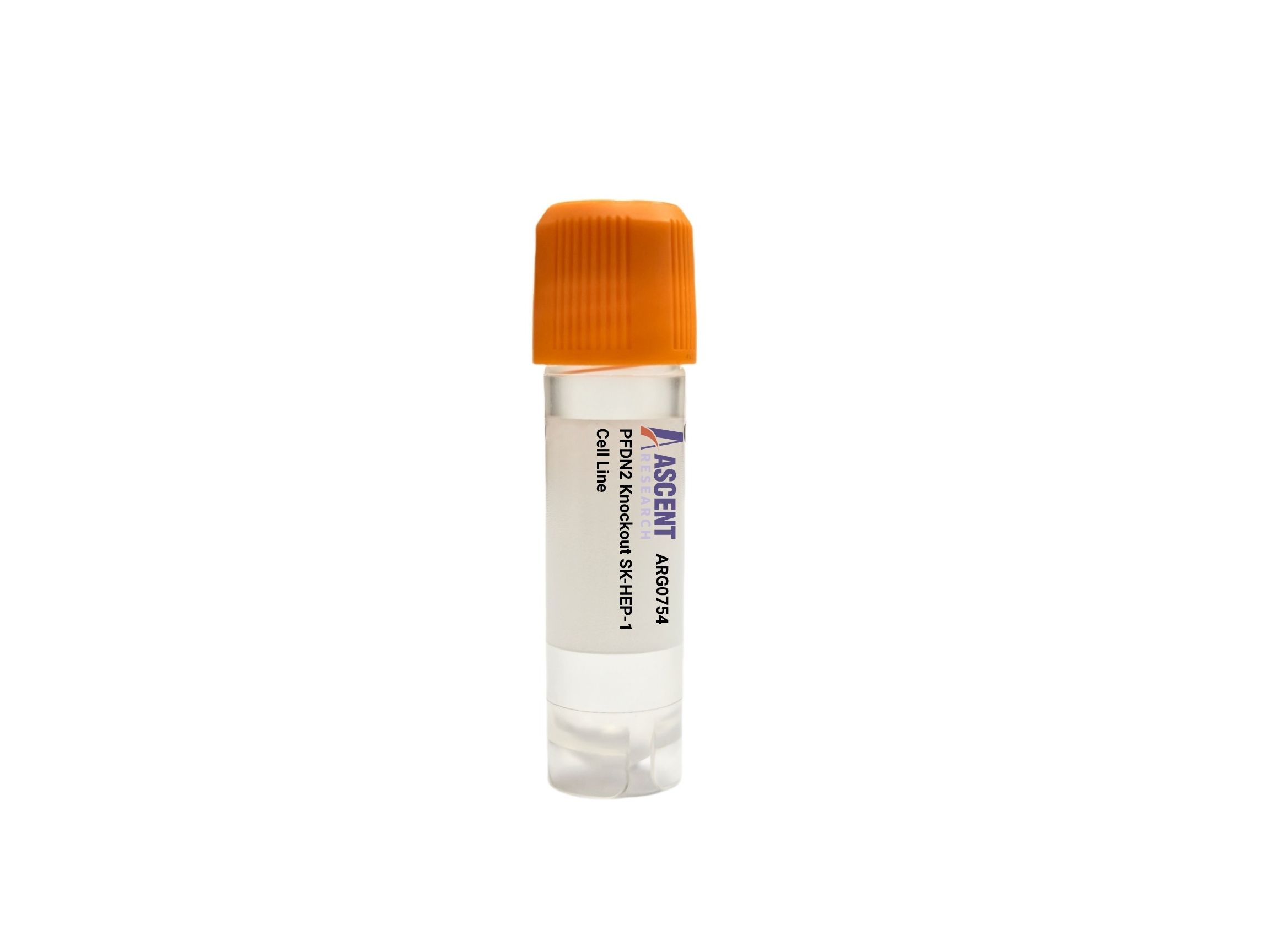
The PFDN2 Knockout SK-HEP-1 Cell Line is a CRISPR/Cas9-edited knockout cell line targeting the PFDN2 gene in human SK-HEP-1 liver adenocarcinoma cells. This loss-of-function model disrupts prefoldin subunit 2, which normally facilitates actin and tubulin folding via the chaperonin CCT and inhibits c-Myc transcriptional activity, thereby regulating cell proliferation and cytoskeletal integrity. By eliminating PFDN2, researchers can explore its dual roles in protein folding and oncogenic signaling, particularly in the context of hepatocellular carcinoma. The cell line supports applications such as cytoskeletal analysis, c-Myc activity assays, and drug screening for chaperone-targeted therapies. For details, contact Ascent Research.
 LRP1 Knockout UMUC-3 Polyclonal Cells
Cat. No. ARG11247
MAPKAPK2 Knockout HT29 Polyclonal Cells
Cat. No. ARG14204
GRPEL2 Knockout Raji Polyclonal Cells
Cat. No. ARG23630
CCNT2 Knockout MES-OV Polyclonal Cells
Cat. No. ARG43275
AHCYL2 Knockout A549 Polyclonal Cells
Cat. No. ARG38709
FAT1 Knockout Raji Polyclonal Cells
Cat. No. ARG1917
LRP1 Knockout UMUC-3 Polyclonal Cells
Cat. No. ARG11247
MAPKAPK2 Knockout HT29 Polyclonal Cells
Cat. No. ARG14204
GRPEL2 Knockout Raji Polyclonal Cells
Cat. No. ARG23630
CCNT2 Knockout MES-OV Polyclonal Cells
Cat. No. ARG43275
AHCYL2 Knockout A549 Polyclonal Cells
Cat. No. ARG38709
FAT1 Knockout Raji Polyclonal Cells
Cat. No. ARG1917
The PFDN2 Knockout SK-HEP-1 Cell Line is a CRISPR/Cas9-edited knockout cell line engineered to disrupt the PFDN2 gene in the human SK-HEP-1 liver adenocarcinoma cell line. This loss-of-function model is optimized for reproducible studies of prefoldin 2??s roles in chaperone-mediated protein folding, actin and tubulin cytoskeleton organization, and negative regulation of c-Myc oncoprotein activity. By ablating PFDN2 expression, it provides a stable genetic tool for dissecting these pathways in hepatocellular carcinoma research.
SK-HEP-1 cells were established from ascitic fluid of a male patient with adenocarcinoma of the liver and display an epithelial phenotype. They are widely utilized as an in vitro model for liver sinusoidal endothelium, possessing features of hepatic microvasculature and retaining liver-specific gene expression. This background is particularly appropriate for examining how PFDN2 knockout impacts liver cancer cell biology and endothelial-like behaviors.
Mechanistically, PFDN2 encodes a subunit of the heterohexameric prefoldin complex, which functions as a cochaperone that intercepts nascent, unfolded actin and tubulin molecules and facilitates their transfer to the cytosolic chaperonin CCT for ATP-dependent folding. Beyond protein folding, PFDN2 directly interacts with the c-Myc transcription factor, forming a complex that inhibits c-Myc DNA binding and transcriptional activation while promoting its ubiquitin-mediated proteasomal degradation. Consequently, PFDN2 suppresses c-Myc target genes including CCND1 (cyclin D1) and CDKN1A (p21), thereby curbing cell cycle progression. Upstream regulators of PFDN2 include the transcription factors Sp1 and heat shock factor 1 (HSF1), which are activated by cellular stress, positioning PFDN2 at the intersection of proteostatic control and oncogenic signaling.
Within the SK-HEP-1 liver adenocarcinoma framework, PFDN2 knockout is expected to produce dual pathological outcomes: impaired folding of actin and tubulin leads to defective cytoskeletal architecture, potentially disrupting cell morphology, migration, and division, while the relief of c-Myc repression may drive unchecked proliferation and tumorigenic progression. This unique combination renders the knockout line a critical model for investigating how chaperone system failure contributes to liver cancer and for exploring chaperonopathies implicated in neurological disorders where prefoldin mutations are pathogenic.
Researchers can employ this cell line in a variety of assays: western blotting and immunofluorescence microscopy to assess actin/tubulin abundance and organization, cell proliferation assays to measure growth changes, co-immunoprecipitation to detect altered c-Myc-PFDN interactions, luciferase reporters for c-Myc transcriptional activity, and RNA-seq for global expression profiling. It is also applicable in high-throughput screens for compounds targeting chaperone function or c-Myc-driven oncogenic pathways. For product inquiries and technical support, please contact Ascent Research.