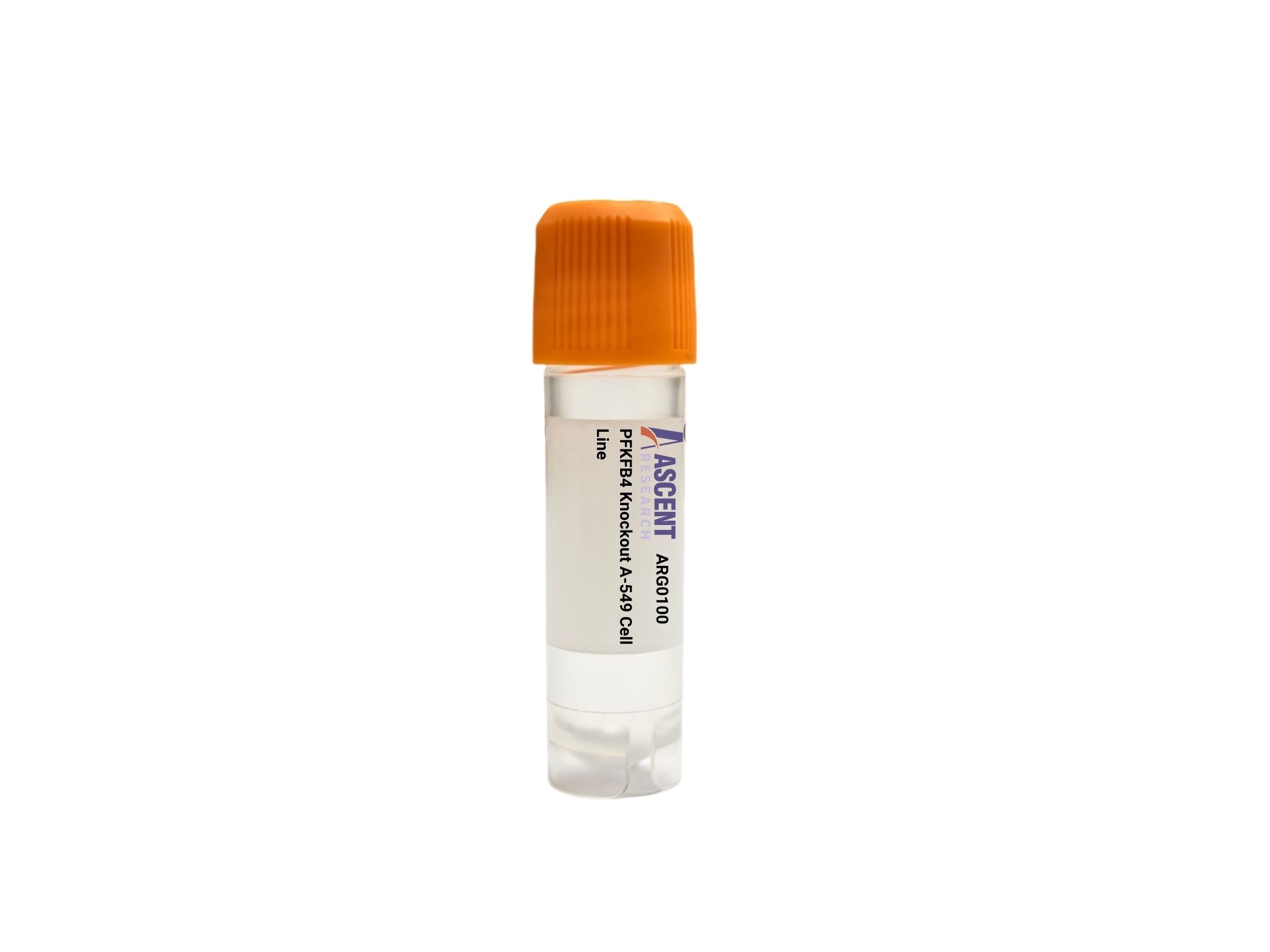
Genome-edited Cells
Lung
PFKFB4 Knockout A-549 is a human CRISPR/Cas9-edited alveolar epithelial adenocarcinoma cell line with disruption of PFKFB4, a bifunctional regulator of fructose-2,6-bisphosphate, PFK1 activity, and glycolytic flux. In the NSCLC-relevant A-549 background, this model supports studies of cancer metabolic reprogramming, hypoxia adaptation, and redox homeostasis downstream of HIF1A, PI3K-AKT-mTOR, and AMPK signaling. Representative applications include metabolic flux and Seahorse analysis, targeted metabolomics, glucose uptake and lactate assays, ATP and ROS measurements, hypoxia-response experiments, proliferation and apoptosis assays, and metabolic drug sensitivity or synthetic lethality studies.
 Cynomolgus Monkey CD20+ B Cells
Cat. No. ARP1046
Cynomolgus Monkey CD20+ B Cells
Cat. No. ARP1046
 HBEGF Knockout HAP1 Polyclonal Cells
Cat. No. ARG22461
JAK2 Knockout A2780 Polyclonal Cells
Cat. No. ARG35268
EHHADH Knockout AGS Polyclonal Cells
Cat. No. ARG40839
OAF Knockout Hela Polyclonal Cells
Cat. No. ARG7676
NNT Knockout MES-OV Polyclonal Cells
Cat. No. ARG6563
HBEGF Knockout HAP1 Polyclonal Cells
Cat. No. ARG22461
JAK2 Knockout A2780 Polyclonal Cells
Cat. No. ARG35268
EHHADH Knockout AGS Polyclonal Cells
Cat. No. ARG40839
OAF Knockout Hela Polyclonal Cells
Cat. No. ARG7676
NNT Knockout MES-OV Polyclonal Cells
Cat. No. ARG6563
The PFKFB4 Knockout A-549 Cell Line is a human CRISPR/Cas9-engineered cell model in which the PFKFB4 gene has been disrupted to eliminate functional PFKFB4 expression. This stable in vitro knockout model is generated in the A-549 background, a human alveolar epithelial adenocarcinoma cell line, and is intended for mechanistic studies of tumor metabolism, stress adaptation, and pathway-dependent phenotypes. The model is particularly relevant for experiments examining how loss of a key fructose-2,6-bisphosphate regulator alters metabolic signaling and cellular responses in lung cancer cells.
A-549 cells are derived from non-small cell lung cancer and exhibit alveolar type II-like epithelial features, making them a widely used system for studies of pulmonary epithelial biology, lung adenocarcinoma, cancer metabolism, and therapeutic response. Because A-549 cells are extensively applied in analyses of epithelial tumor growth, nutrient utilization, hypoxic adaptation, and signal transduction, they provide a useful host context for interrogating metabolic liabilities in solid tumors. Their established use in NSCLC research also supports integration of this knockout line into comparative studies of proliferation, survival, and drug sensitivity under defined environmental stress conditions.
PFKFB4 encodes a bifunctional 6-phosphofructo-2-kinase/fructose-2,6-bisphosphatase that controls intracellular fructose-2,6-bisphosphate abundance and thereby modulates PFK1 activity, glycolytic flux, and coupling between glycolysis and biosynthetic or redox pathways. In cancer cells, PFKFB4 is regulated by HIF1A, hypoxia, glucose limitation, PI3K-AKT signaling, mTOR signaling, AMPK, and MYC. It functions within a metabolic network that includes SLC2A1, HK2, PFKP, PFKFB3, ALDOA, PKM, and LDHA, and it is mechanistically linked to downstream outputs including glucose consumption, lactate production, ATP balance, NADPH homeostasis, ROS levels, and survival under hypoxia. Through these relationships, PFKFB4 contributes to cancer metabolic reprogramming and adaptation to nutrient or oxidative stress.
Disruption of PFKFB4 in A-549 cells provides a relevant system for defining how lung adenocarcinoma cells balance glycolytic throughput with redox and biosynthetic demands. In this host-cell background, PFKFB4 loss can be used to examine pathway dependence downstream of HIF1A, AKT1, MTOR, or PRKAA1-centered metabolic signaling, as well as functional interplay with PFKFB3, HK2, LDHA, or TIGAR. The model is suitable for studying mechanisms associated with NSCLC progression, solid tumor hypoxia, and therapy resistance, particularly where metabolic adaptation is suspected to support survival.
This knockout cell line can support western blotting, RT-qPCR, and RNA-seq analyses of glycolytic and hypoxia-responsive gene programs; targeted metabolomics to quantify fructose-2,6-bisphosphate-associated metabolic effects; glucose uptake and lactate production assays to assess glycolytic output; Seahorse extracellular flux analysis for bioenergetic profiling; and ATP, ROS, and NADPH/NADP+ measurements to evaluate metabolic stress and redox homeostasis. It is also applicable to cell proliferation, colony formation, apoptosis, hypoxia-response, and drug sensitivity studies designed to identify context-specific metabolic vulnerabilities or synthetic lethal interactions in NSCLC cells. Researchers may contact Ascent Research for additional technical information, product details, or related gene-edited cell models.