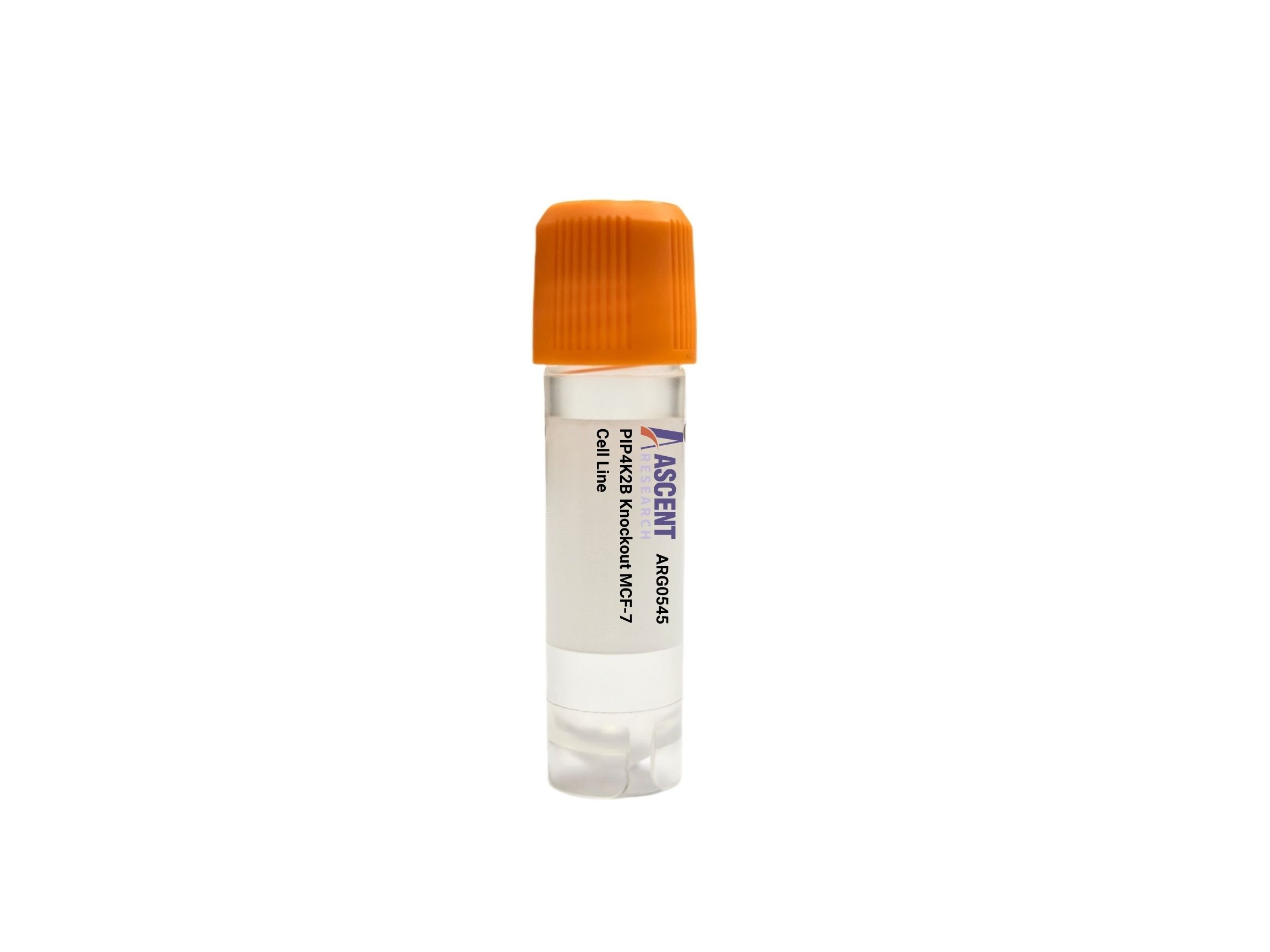
Genome-edited Cells
Breast (mammary gland)
The PIP4K2B Knockout MCF-7 Cell Line is a CRISPR/Cas9-edited human breast cancer model with targeted disruption of the PIP4K2B lipid kinase gene. Derived from ER+, PR+, HER2- MCF-7 cells, this knockout eliminates PIP4K2B-mediated conversion of PI5P to PIP2, impairing PIP2-dependent AKT/mTORC1 signaling and cytoskeletal regulation. This loss-of-function cell line is ideal for investigating phosphoinositide signaling, autophagy, and tumor suppressor mechanisms in luminal breast cancer. Applications include Western blotting, PIP2 quantification, proliferation assays, and drug target validation. For more information, contact Ascent Research.
 CRADD Knockout SK-HEP-1 Polyclonal Cells
Cat. No. ARG15348
ACBD5 Knockout Raji Polyclonal Cells
Cat. No. ARG21030
KDM3A Knockout HAP1 Polyclonal Cells
Cat. No. ARG22989
HDGF Knockout A549 Polyclonal Cells
Cat. No. ARG33630
BMAL2 Knockout HEK293T Polyclonal Cells
Cat. No. ARG37986
DYRK3 Knockout Hela Polyclonal Cells
Cat. No. ARG40207
CRADD Knockout SK-HEP-1 Polyclonal Cells
Cat. No. ARG15348
ACBD5 Knockout Raji Polyclonal Cells
Cat. No. ARG21030
KDM3A Knockout HAP1 Polyclonal Cells
Cat. No. ARG22989
HDGF Knockout A549 Polyclonal Cells
Cat. No. ARG33630
BMAL2 Knockout HEK293T Polyclonal Cells
Cat. No. ARG37986
DYRK3 Knockout Hela Polyclonal Cells
Cat. No. ARG40207
The PIP4K2B Knockout MCF-7 Cell Line is a CRISPR/Cas9-edited human cell line with targeted disruption of the PIP4K2B gene in the MCF-7 breast cancer model. This stable loss-of-function system provides a consistent genetic background for dissecting PIP4K2B-dependent signaling pathways. The knockout cell line is supplied as a ready-to-use tool for reproducible cellular and molecular assays in cancer research.
The MCF-7 host cell line is a well-established human mammary epithelial adenocarcinoma model derived from the pleural effusion of a patient with metastatic breast adenocarcinoma. These cells are estrogen receptor-positive, progesterone receptor-positive, and HER2-negative, representing a luminal A breast cancer subtype. Widely used in estrogen-responsive breast cancer research, MCF-7 cells provide a biologically relevant context for studying hormone-dependent signaling, proliferation, and therapeutic resistance.
PIP4K2B is a lipid kinase that converts phosphatidylinositol 5-phosphate (PI5P) to phosphatidylinositol 4,5-bisphosphate (PIP2). Transcriptionally activated by TP53, PIP4K2B is also regulated upstream by growth factor receptors such as EGFR and IGFR and cellular stress signals via PI5P substrate availability. PIP2 generated by PIP4K2B serves as a substrate for PLC?? to produce IP3 and DAG, which activate PKC and downstream AKT/mTORC1 signaling. Additionally, PIP2 binds actin-regulatory proteins cofilin and profilin, modulating cytoskeletal dynamics. Interacting factors include TP53, phosphoinositide-binding proteins, PI5P kinases/phosphatases, and small GTPases involved in membrane trafficking. Disruption of PIP4K2B eliminates this PIP2 synthesis route, attenuating AKT/mTORC1 activation and altering actin organization, with potential enhancement of autophagy.
In the MCF-7 ER+ breast cancer context, PIP4K2B functions as a p53-regulated tumor suppressor. Knocking out PIP4K2B reduces PIP2 levels, impairing PIP2-dependent oncogenic signaling through AKT/mTORC1 and potentially enhancing autophagy. This leads to decreased proliferation and altered cytoskeletal dynamics, affecting migration and invasion. The model thus enables investigation of phosphoinositide-mediated tumor suppression and autophagy regulation in luminal breast cancer.
This knockout cell line supports diverse applications, including studies of phosphoinositide metabolism, PIP2-dependent signaling, autophagy, tumor suppressor mechanisms, and cancer drug target validation. Representative assays include Western blotting for PIP4K2B loss, PIP2 quantification, proliferation assays (MTT, BrdU), autophagy flux (LC3-II turnover), AKT/mTOR phosphorylation analysis, PIP2 immunofluorescence, migration/invasion assays, and RNA-seq. For further information or to order this product, contact Ascent Research.