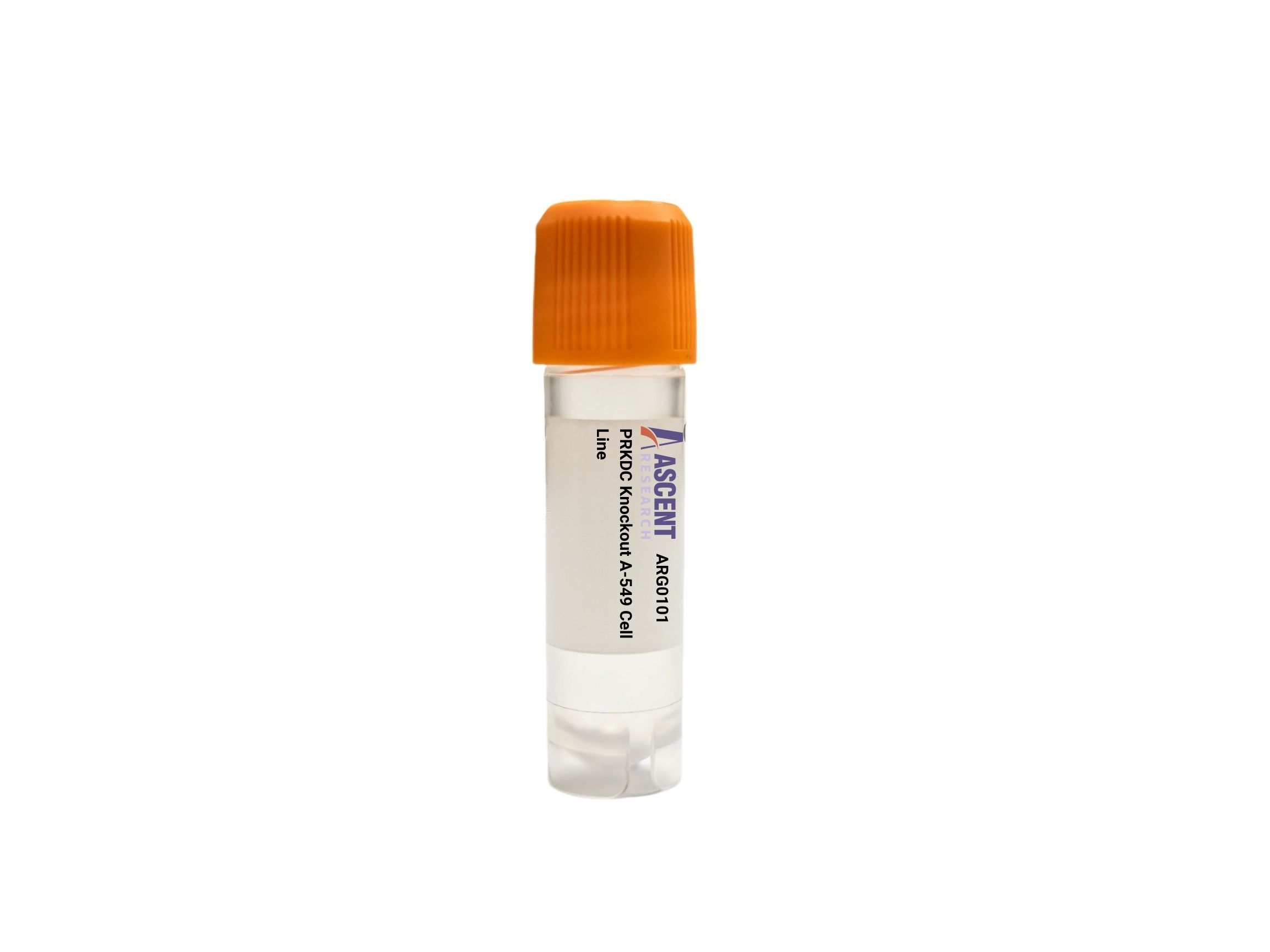
Genome-edited Cells
Lung
PRKDC Knockout A-549 is a human CRISPR/Cas9-edited alveolar epithelial adenocarcinoma cell line with disruption of PRKDC, which encodes DNA-PKcs, a key kinase in non-homologous end joining. In A-549 lung cancer cells, loss of PRKDC provides a relevant model for studying DNA double-strand break repair, ATM/ATR crosstalk, and damage signaling downstream of the KU70/KU80 complex, H2AX, and TP53. This cell line is useful for radiation response studies, NHEJ deficiency analysis, genome stability research, and anticancer drug sensitivity testing using assays such as gamma-H2AX/53BP1 imaging, clonogenic survival, comet assay, phospho-signaling, and NHEJ reporter assays.
 ARF5 Knockout huh-7 Polyclonal Cells
Cat. No. ARG27950
GRAMD1A Knockout A549 Polyclonal Cells
Cat. No. ARG33594
DNAJC15 Knockout Raji Polyclonal Cells
Cat. No. ARG39218
DNAJB11 Knockout Hela Polyclonal Cells
Cat. No. ARG39085
KLF12 Knockout HAP1 Polyclonal Cells
Cat. No. ARG27696
DNAL1 Knockout HT29 Polyclonal Cells
Cat. No. ARG39356
ARF5 Knockout huh-7 Polyclonal Cells
Cat. No. ARG27950
GRAMD1A Knockout A549 Polyclonal Cells
Cat. No. ARG33594
DNAJC15 Knockout Raji Polyclonal Cells
Cat. No. ARG39218
DNAJB11 Knockout Hela Polyclonal Cells
Cat. No. ARG39085
KLF12 Knockout HAP1 Polyclonal Cells
Cat. No. ARG27696
DNAL1 Knockout HT29 Polyclonal Cells
Cat. No. ARG39356
The PRKDC Knockout A-549 Cell Line is a human CRISPR/Cas9-engineered cell model in which the PRKDC gene has been disrupted to eliminate functional DNA-dependent protein kinase catalytic subunit (DNA-PKcs) expression. This stable knockout model is generated in the A-549 background, a human alveolar epithelial adenocarcinoma cell line, and is intended for in vitro studies of DNA repair, stress signaling, and therapeutic response. Because PRKDC is a central mediator of DNA double-strand break repair, this edited cell line provides a defined system for interrogating non-homologous end joining (NHEJ) deficiency in a pulmonary epithelial cancer context.
A-549 cells are derived from human lung adenocarcinoma and exhibit alveolar type II-like epithelial characteristics, making them a widely used model in respiratory biology, lung cancer research, and drug response studies. Their epithelial barrier-forming phenotype and relevance to pulmonary tumor biology support investigation of cancer-associated stress responses, genotoxic injury, and treatment sensitivity. In experimental settings, A-549 cells are frequently used to examine mechanisms linked to radiation exposure, oxidative stress, and cytotoxic drug action, providing a useful host background for studying how DNA repair defects influence tumor cell behavior.
PRKDC encodes DNA-PKcs, a serine/threonine kinase that is recruited to DNA double-strand breaks by the XRCC6/KU70-XRCC5/KU80 DNA end-binding complex. DNA-PKcs functions with XRCC4, LIG4, XLF/NHEJ1, DCLRE1C/Artemis, PAXX, and TP53BP1 to promote DNA end synapsis, end processing, and ligation during NHEJ. PRKDC is activated downstream of DNA double-strand breaks induced by ionizing radiation, radiomimetic agents, and reactive oxygen species, and it participates in signaling crosstalk with ATM and ATR. Loss of PRKDC can alter phosphorylation-associated damage signaling involving H2AX, CHEK2, and TP53, reduce DNA end joining efficiency, and shift cellular outcomes toward cell-cycle arrest or apoptosis. These processes are directly relevant to lung cancer biology, solid tumor radioresistance, genomic instability, and therapeutic response.
In the A-549 host background, PRKDC knockout creates a mechanistically informative model for examining how impaired NHEJ modifies epithelial tumor cell responses to DNA damage and replication stress. The combination of a clinically relevant lung adenocarcinoma cell context with disruption of a core repair kinase is useful for studying pathway dependence, compensatory DNA damage signaling, and determinants of sensitivity to radiation or DNA-damaging compounds. This system can also support analysis of p53-associated stress signaling and broader genome stability phenotypes in pulmonary cancer cells.
Applications include western blotting or RT-qPCR to assess PRKDC pathway disruption; immunofluorescence analysis of gamma-H2AX and 53BP1 foci after irradiation; phospho-signaling studies examining ATM, ATR, CHEK2, H2AX, and TP53 pathway responses; comet assays to quantify DNA break persistence; and reporter assays measuring NHEJ activity. The model is also suited to clonogenic survival assays following ionizing radiation, apoptosis measurements, flow cytometric cell-cycle profiling, co-immunoprecipitation of repair complexes, RNA-seq-based transcriptional analysis, and drug sensitivity studies designed to identify synthetic lethal interactions or genotype-dependent responses to genotoxic therapies. Researchers may contact Ascent Research for additional technical information, product details, or related gene-edited cell models.