Genome-edited Cells
Lung
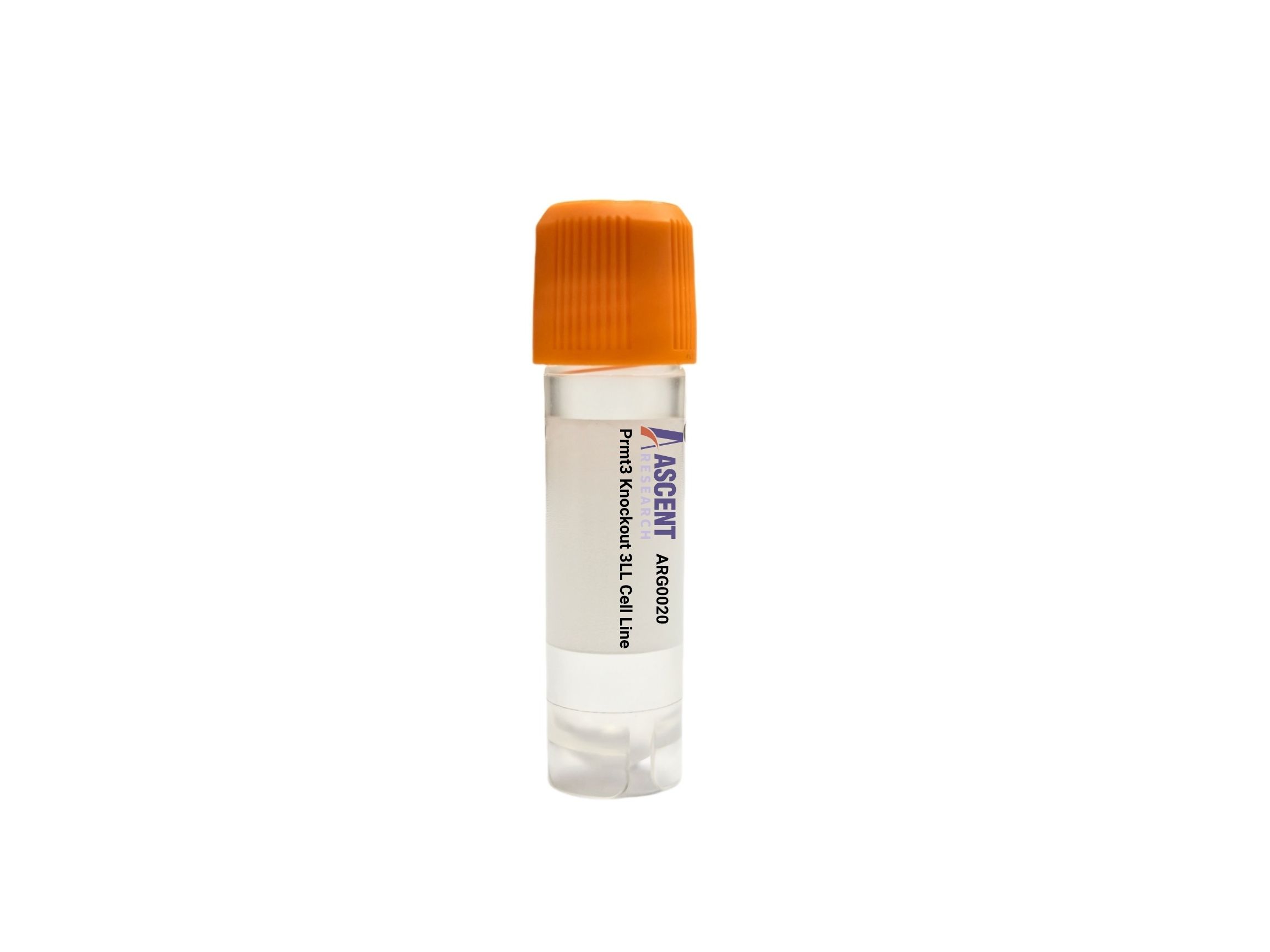
Prmt3 Knockout 3LL is a CRISPR/Cas9-engineered mouse Lewis lung carcinoma cell line with disruption of Prmt3, a cytoplasmic type I arginine methyltransferase involved in RPS2 methylation, 40S ribosomal subunit maturation, and translational control. In the syngeneic 3LL lung cancer background, this model supports studies of ribosome biogenesis, protein synthesis, tumor cell proliferation, metastasis-related phenotypes, and metabolic dependency. It is well suited for western blotting, RNA-seq, ribosome or polysome profiling, methyl-protein immunoprecipitation, mass spectrometry, proliferation and invasion assays, and drug sensitivity or synthetic lethal screening.
 CDKN1A Knockout NCI-H1975 Polyclonal Cells
Cat. No. ARG16955
ETFDH Knockout HT29 Polyclonal Cells
Cat. No. ARG14071
COQ8B Knockout HEK293 Polyclonal Cells
Cat. No. ARG12723
C15orf39 Knockout jurkat Polyclonal Cells
Cat. No. ARG34042
ALKBH3 Knockout A549 Polyclonal Cells
Cat. No. ARG38668
ARHGAP39 Knockout HAP1 Polyclonal Cells
Cat. No. ARG27308
CDKN1A Knockout NCI-H1975 Polyclonal Cells
Cat. No. ARG16955
ETFDH Knockout HT29 Polyclonal Cells
Cat. No. ARG14071
COQ8B Knockout HEK293 Polyclonal Cells
Cat. No. ARG12723
C15orf39 Knockout jurkat Polyclonal Cells
Cat. No. ARG34042
ALKBH3 Knockout A549 Polyclonal Cells
Cat. No. ARG38668
ARHGAP39 Knockout HAP1 Polyclonal Cells
Cat. No. ARG27308
The Prmt3 Knockout 3LL Cell Line is a CRISPR/Cas9-engineered mouse Lewis lung carcinoma model in which the Prmt3 gene has been disrupted to eliminate functional PRMT3 expression. This stable edited cell line provides an in vitro system for examining the consequences of PRMT3 loss in a tumor epithelial-like background. Because PRMT3 is a type I protein arginine methyltransferase linked to cytoplasmic ribosome-associated functions, this model is suited for mechanistic studies of arginine methylation, translational regulation, and cancer cell fitness.
3LL is a murine lung carcinoma cell line syngeneic to C57BL/6 mice and is widely used in transplantable tumor studies of lung cancer biology and immuno-oncology. The line is commonly applied to investigations of tumor growth, metastatic dissemination, and tumor-immune interactions, making it a relevant host context for evaluating gene-dependent effects on malignant phenotypes. As a robust experimental model of solid tumor progression, 3LL supports studies spanning intrinsic cancer cell proliferation programs through host-relevant questions related to microenvironmental adaptation and therapeutic response.
PRMT3 functions as a cytoplasmic arginine methyltransferase that catalyzes asymmetric dimethylation of substrate arginine residues, with ribosomal protein RPS2 representing a well-established interacting factor and downstream target. Through methylation of RPS2, PRMT3 supports 40S ribosomal subunit maturation, ribosome biogenesis, and translational control. Its activity is embedded within a broader methylation network that includes S-adenosylmethionine as methyl donor, 40S ribosomal proteins, ribosomal assembly factors, and pre-rRNA processing machinery. PRMT3 expression is regulated by oncogenic transcriptional programs, nutrient status, cellular stress, and growth factor signaling, while its functional output intersects with translational regulators such as eIF4E, eIF4G, and mTOR. Consequently, loss of PRMT3 is expected to alter arginine methylation-dependent ribosome assembly, global protein synthesis, and translation of growth-associated mRNAs, with implications for tumor cell proliferation, survival, and metabolic reprogramming.
Within the 3LL background, Prmt3 knockout offers a relevant approach for studying how ribosome-associated methylation supports aggressive lung tumor cell behavior. This model can help define how disruption of RPS2 methylation and 40S maturation reshapes translational output in cancer cells that are frequently used to study growth and metastasis. It is also useful for examining pathway dependencies linking ribosome biogenesis to solid tumor progression, translational dysregulation, and metabolic stress adaptation.
Researchers can apply this cell line in western blot, RT-qPCR, and RNA-seq workflows to characterize compensatory gene expression changes after Prmt3 loss; in ribosome profiling and polysome profiling to quantify altered translational output; and in immunoprecipitation or mass spectrometry experiments to assess changes in arginine methylation signatures and methylated protein complexes. Functional studies may include cell proliferation, colony formation, apoptosis, migration, and invasion assays to connect molecular defects to tumor phenotypes, as well as metabolic assays, drug sensitivity studies, and synthetic lethal screening to identify liabilities associated with impaired PRMT3-dependent ribosome function. Co-immunoprecipitation analysis of RPS2 or related 40S assembly components can further support pathway-focused investigation in this model. Researchers may contact Ascent Research for additional technical information, product details, or related gene-edited cell models.