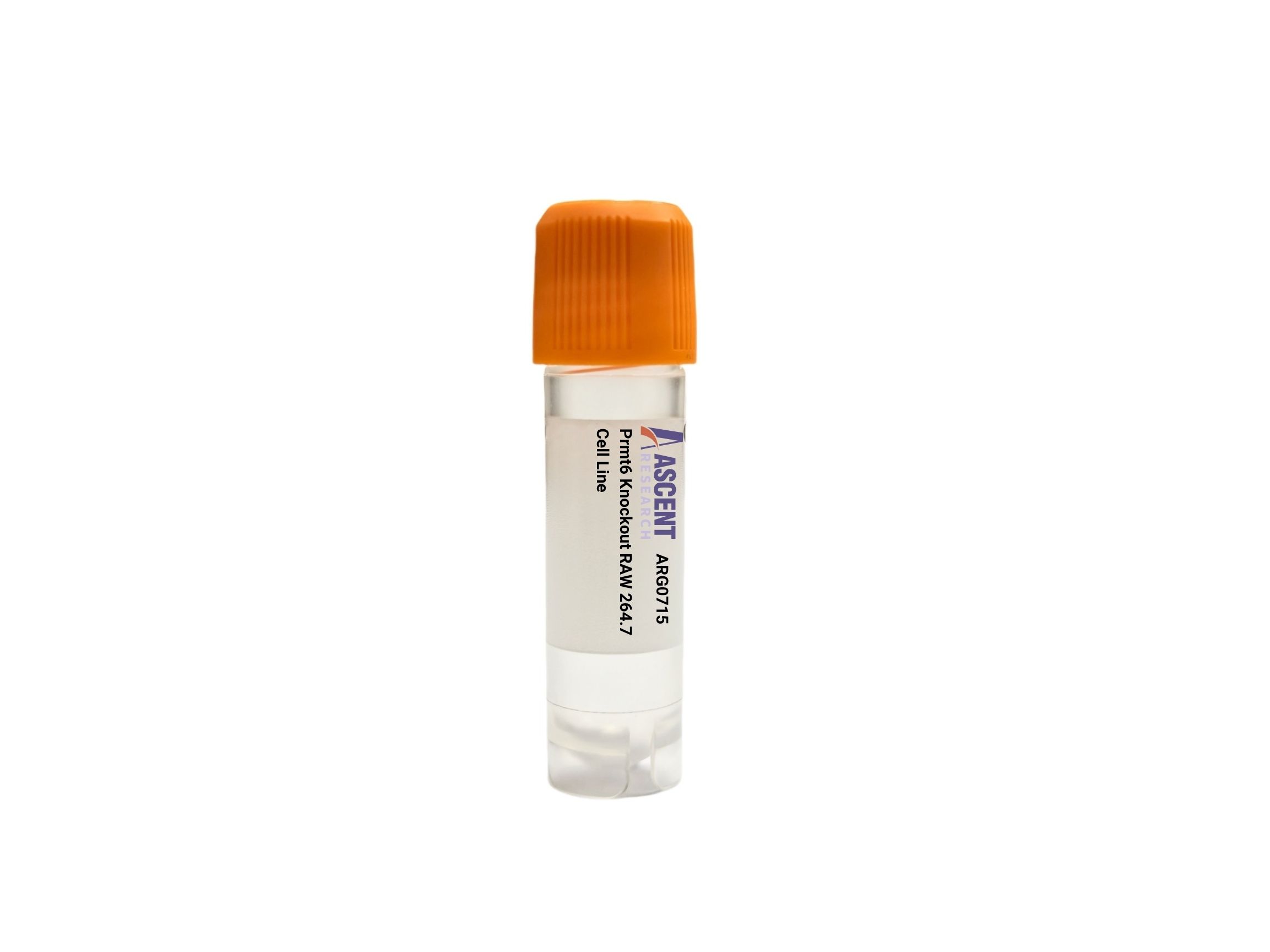
Genome-edited Cells
Ascites
The Prmt6 Knockout RAW 264.7 Cell Line is a CRISPR/Cas9-edited macrophage model with targeted disruption of Protein Arginine Methyltransferase 6 (PRMT6). This cell line enables investigation of PRMT6-dependent epigenetic regulation, including H3R2me2a deposition and downstream effects on p53 signaling and DNA repair. Ideal for studying macrophage polarization, inflammatory responses, and tumor microenvironment interactions, this knockout tool supports assays such as western blot, ChIP-qPCR, and RNA-seq. It is suited for drug target validation and mechanistic studies in cancer and immune-related diseases.
 PGM5 Knockout SK-HEP-1 Polyclonal Cells
Cat. No. ARG15518
CSPP1 Knockout jurkat Polyclonal Cells
Cat. No. ARG13591
ADGRF3 Knockout HAP1 Polyclonal Cells
Cat. No. ARG21679
IMPACT Knockout A2780 Polyclonal Cells
Cat. No. ARG29219
HMGN3 Knockout jurkat Polyclonal Cells
Cat. No. ARG34261
COQ9 Knockout 786-O Polyclonal Cells
Cat. No. ARG5616
PGM5 Knockout SK-HEP-1 Polyclonal Cells
Cat. No. ARG15518
CSPP1 Knockout jurkat Polyclonal Cells
Cat. No. ARG13591
ADGRF3 Knockout HAP1 Polyclonal Cells
Cat. No. ARG21679
IMPACT Knockout A2780 Polyclonal Cells
Cat. No. ARG29219
HMGN3 Knockout jurkat Polyclonal Cells
Cat. No. ARG34261
COQ9 Knockout 786-O Polyclonal Cells
Cat. No. ARG5616
The Prmt6 Knockout RAW 264.7 Cell Line is a CRISPR/Cas9-edited knockout cell line designed for targeted disruption of the Prmt6 gene in a murine macrophage background. This cell-based model provides a powerful tool for dissecting PRMT6-mediated epigenetic regulation and its impact on immune cell function. The knockout is generated using CRISPR/Cas9-mediated gene disruption, resulting in loss of PRMT6 protein expression and abrogation of its associated enzymatic activities. This stable knockout cell line is suitable for a wide range of in vitro assays to investigate PRMT6-dependent pathways in macrophage biology.
The parental RAW 264.7 cell line is a transformed murine macrophage line originally derived from an Abelson murine leukemia virus-induced tumor. These cells exhibit characteristic macrophage properties, including phagocytosis, antigen presentation, and cytokine production, making them a widely used model for studying innate immune responses, inflammation, and tumor microenvironment interactions. The immortalized nature of RAW 264.7 cells allows for facile genetic manipulation and consistent experimental reproducibility, providing a robust platform for loss-of-function studies.
PRMT6 is a type I protein arginine N-methyltransferase that catalyzes the asymmetric dimethylation of arginine residues, notably generating the H3R2me2a histone mark. This epigenetic modification influences chromatin structure and regulates transcription, DNA repair, and RNA splicing. In response to upstream signals such as E2F1 transcription factor activation or DNA damage, PRMT6 dynamically modifies key substrates including histone H3R2, p53, and TAF15. PRMT6 interacts with p53, E2F1, and DNA damage response proteins, integrating signals into critical pathways like p53-mediated transcription and DNA repair cascades. Through these molecular interactions, PRMT6 modulates cell proliferation, apoptosis, and genome stability.
In the RAW 264.7 macrophage context, Prmt6 knockout leads to alterations in the epigenetic landscape, particularly at promoters marked by H3R2me2a. This disrupts normal gene expression programs involved in macrophage polarization, inflammatory cytokine production, and responses to genotoxic stress. Consequently, Prmt6-null macrophages exhibit impaired DNA damage responses and altered transcriptional regulation of immune mediators, offering insights into how PRMT6-dependent chromatin remodeling shapes innate immunity and cellular resilience. The model enables dissection of macrophage-specific PRMT6 functions that may differ from other cell types.
This knockout cell line is invaluable for a broad spectrum of research applications. It can be used to study epigenetic regulation of immune responses, including macrophage polarization toward pro- or anti-inflammatory phenotypes. Researchers can employ western blotting for H3R2me2a, RT-qPCR for cytokine genes (e.g., Tnf, Il6), flow cytometry for surface markers (CD86, CD206), and ChIP-qPCR to map histone modification changes. Functional assays such as apoptosis detection, phospho-signaling analysis, and RNA-seq enable comprehensive profiling of signaling rewiring. Additionally, co-immunoprecipitation studies can probe altered PRMT6 interactomes. This cell line is particularly suited for drug target validation in cancer, inflammatory diseases, and neurodegenerative disorders. Contact Ascent Research for additional technical details.