Genome-edited Cells
Liver
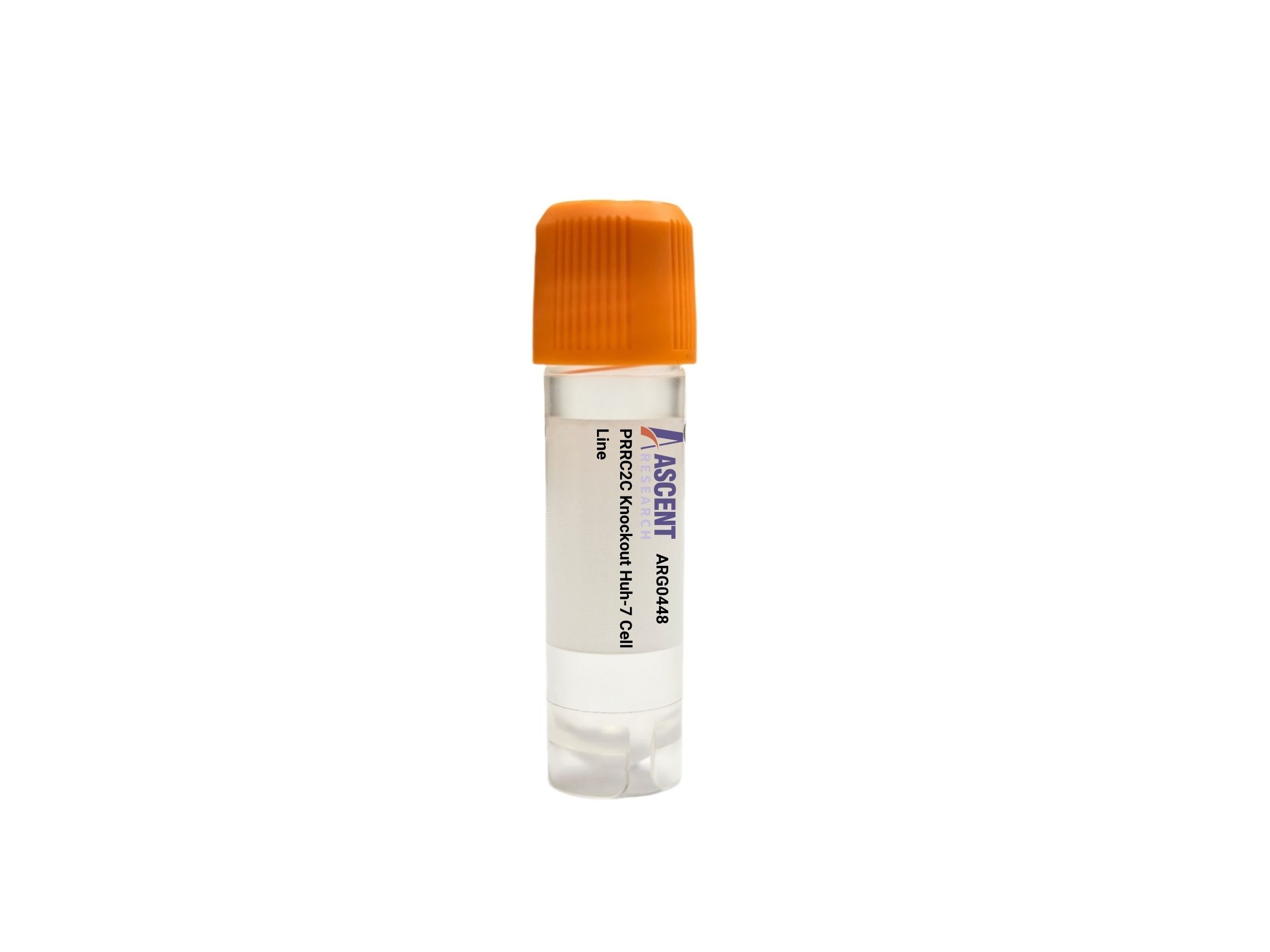
The PRRC2C Knockout Huh-7 Cell Line is a CRISPR/Cas9-edited knockout cell line generated from Huh-7 hepatocellular carcinoma cells. PRRC2C, an RNA-binding protein and component of the TREX complex, facilitates mRNA export and splicing of innate immune transcripts downstream of interferon/STAT3 signaling and interacts with factors such as ALYREF and UAP56. This model is ideal for studying mRNA processing, innate immunity, and hepatocellular carcinoma progression. Applications include antiviral response profiling, drug target validation, and mechanistic assays like RNA-seq, RT-qPCR, and interferon luciferase reporters.
 MYO1B Knockout A2780 Polyclonal Cells
Cat. No. ARG19028
PEX16 Knockout SK-HEP-1 Polyclonal Cells
Cat. No. ARG15866
MYO1E Knockout NCI-H1299 Polyclonal Cells
Cat. No. ARG17784
GKAP1 Knockout NCI-H1299 Polyclonal Cells
Cat. No. ARG17710
CRIP1 Knockout Hela Polyclonal Cells
Cat. No. ARG7514
MAFB Knockout Hela Polyclonal Cells
Cat. No. ARG7540
MYO1B Knockout A2780 Polyclonal Cells
Cat. No. ARG19028
PEX16 Knockout SK-HEP-1 Polyclonal Cells
Cat. No. ARG15866
MYO1E Knockout NCI-H1299 Polyclonal Cells
Cat. No. ARG17784
GKAP1 Knockout NCI-H1299 Polyclonal Cells
Cat. No. ARG17710
CRIP1 Knockout Hela Polyclonal Cells
Cat. No. ARG7514
MAFB Knockout Hela Polyclonal Cells
Cat. No. ARG7540
The PRRC2C Knockout Huh-7 Cell Line is a CRISPR/Cas9-mediated gene-disrupted cell model engineered to abolish PRRC2C expression in the Huh-7 hepatocellular carcinoma background. This stable knockout cell line provides a powerful loss-of-function tool to dissect the molecular functions of PRRC2C, an RNA-binding protein implicated in mRNA export, splicing, and innate immune regulation. The product is supplied as a viable, expanded cell population optimized for immediate experimental use in cell signaling, cancer biology, and antiviral research workflows.
Huh-7 cells were originally established from the hepatocellular carcinoma of a 57-year-old Japanese male and exhibit adherent epithelial morphology. This cell line is a widely accepted model for hepatocyte biology, liver cancer pathogenesis, and hepatitis virus infection studies. The Huh-7 background retains key features of hepatic differentiation and tumorigenicity, making it an ideal host for examining how PRRC2C knockout modulates hepatocellular carcinoma progression and innate immune responses in a disease-relevant human system.
PRRC2C is a constituent of the transcription/export (TREX) complex and functions as a critical adaptor for coupling mRNA processing to nuclear export. It interacts directly with core TREX components including the THO complex, UAP56, and ALYREF, and associates with spliceosomal factors such as SF3B1. PRRC2C is transcriptionally and post-translationally regulated by type I interferons and proinflammatory cytokines through STAT3 signaling. Downstream, it promotes the expression and export of interferon-stimulated genes and cytokine mRNAs by engaging the NXF1 nuclear export receptor. Within antiviral signaling cascades, PRRC2C facilitates the maturation and trafficking of transcripts induced by the RIG-I/MAVS/TBK1/IRF3 axis, linking viral nucleic acid sensing to effector gene output.
Disruption of PRRC2C in Huh-7 cells impairs the coordinated expression of innate immune transcripts, attenuating antiviral defense programs and potentially altering hepatocellular carcinoma cell behavior. Given the role of chronic inflammation and viral hepatitis in liver carcinogenesis, this knockout model enables dissection of the mechanisms by which RNA export and splicing factors contribute to tumor progression, immune evasion, and response to interferon-based therapies. The loss of PRRC2C may also affect cell proliferation and migration, providing a platform to study RNA-binding protein dependencies in liver cancer.
Researchers can employ this cell line to investigate mRNA export and splicing dynamics, map innate immune signaling pathways, and validate PRRC2C as a therapeutic target in hepatocellular carcinoma. The model is compatible with a range of assays including western blotting, RT-qPCR, RNA sequencing, immunofluorescence, cell proliferation and migration assays, and luciferase reporter assays for interferon signaling. These applications enable detailed mechanistic studies of post-transcriptional gene regulation in liver disease contexts. For further technical specifications or purchasing inquiries, please contact Ascent Research.