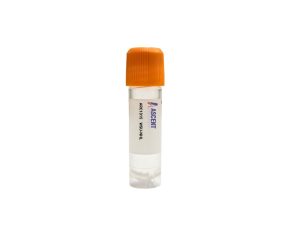
In Stock Cell Lines
Mus musculus (Mouse)
Skin
Adherent
The Psme3 Knockout B16 Cell Line is a CRISPR/Cas9-edited murine melanoma model lacking functional PA28??/PSME3, a key proteasome activator. Derived from the C57BL/6 B16 melanoma line, this knockout disrupts proteasome-dependent regulation of p53 and cell cycle inhibitors, impacting MDM2 degradation and p21/p16 turnover. Applications include proteasome biology, p53 signaling studies, cell cycle and apoptosis analysis, and drug sensitivity screening. Assays such as Western blotting, flow cytometry, and proteasome activity measurements enable precise dissection of melanoma progression mechanisms.
 NAV2 Knockout A2780 Polyclonal Cells
Cat. No. ARG18316
ACAP1 Knockout HEK293T Polyclonal Cells
Cat. No. ARG37720
CBX8 Knockout AGS Polyclonal Cells
Cat. No. ARG42802
CALD1 Knockout HT29 Polyclonal Cells
Cat. No. ARG41831
MAU2 Knockout HEK293T Polyclonal Cells
Cat. No. ARG4230
GALNT2 Knockout AGS Polyclonal Cells
Cat. No. ARG2589
NAV2 Knockout A2780 Polyclonal Cells
Cat. No. ARG18316
ACAP1 Knockout HEK293T Polyclonal Cells
Cat. No. ARG37720
CBX8 Knockout AGS Polyclonal Cells
Cat. No. ARG42802
CALD1 Knockout HT29 Polyclonal Cells
Cat. No. ARG41831
MAU2 Knockout HEK293T Polyclonal Cells
Cat. No. ARG4230
GALNT2 Knockout AGS Polyclonal Cells
Cat. No. ARG2589
The product is the Psme3 Knockout B16 Cell Line, a CRISPR/Cas9-edited knockout cell line derived from the B16 murine melanoma cell line. The Psme3 gene has been disrupted using CRISPR/Cas9 technology, resulting in loss of functional PA28?? protein. This cell line serves as a defined loss-of-function model for studying proteasome regulation, p53 signaling, and melanoma biology.
The B16 cell line is a widely used syngeneic tumor model originating from C57BL/6 mouse melanoma. It exhibits aggressive tumorigenic properties and is a standard system for melanoma research, including studies of tumor progression, metastasis, and immunogenicity. The B16 background provides a genetically homogenous and experimentally tractable platform to assess the impact of Psme3 disruption in a melanocyte-derived tumor context.
PSME3 encodes PA28??, a proteasome activator that binds the 20S core particle to enhance trypsin-like activity. PA28?? is induced by interferon-gamma/STAT1 signaling and promotes MDM2 degradation, stabilizing p53. Stabilized p53 transcriptionally regulates p21 and BAX. Conversely, PA28?? also targets p21 and p16 for degradation, thereby facilitating CDK2/Cyclin E-mediated cell cycle progression and inhibiting apoptosis. PA28?? interacts with SRC-3/NCOA3, linking proteasomal activity to transcriptional regulation. Thus, Psme3 integrates signals from the ubiquitin-proteasome system, p53 pathway, and cell cycle machinery.
In B16 melanoma, Psme3 knockout disrupts proteasome-mediated turnover of MDM2, likely reducing p53 stabilization and altering downstream targets. Loss of PA28?? may impair degradation of p21 and p16, leading to cell cycle arrest or apoptosis. This model therefore permits investigation of how proteasome activation influences melanoma cell proliferation, survival, and drug sensitivity.
Researchers can use this cell line for proteasome activity assays, Western blotting of p53, MDM2, p21, and flow cytometry for cell cycle and apoptosis. RT-qPCR analyses further elucidate transcriptional changes. Drug sensitivity testing with bortezomib reveals Psme3-dependent vulnerabilities, while proliferation assays quantify growth effects. These tools support dissection of proteasome-mediated pathways in melanoma and identification of therapeutic targets. For additional details or custom projects, contact Ascent Research.