
In Stock Cell Lines
The Pvr Knockout MC38 Cell Line is a CRISPR/Cas9-edited knockout cell line derived from the C57BL/6 MC38 colon adenocarcinoma line, featuring a targeted disruption of the Pvr gene encoding the CD155 immunoregulatory receptor. PVR interacts with activating DNAM-1 and inhibitory TIGIT and CD96 on immune cells, controlling NK and T cell cytotoxicity, and is regulated by IFNG, TNF, and NFKB. By eliminating PVR, this model enables dissection of immune checkpoint signaling and the PVR?CTIGIT/DNAM-1 axis in a syngeneic colorectal tumor microenvironment. It is ideal for cancer immunotherapy studies, immune evasion mechanisms, and NK cell biology using assays such as co-culture killing and cytokine profiling.
 ATG14 Knockout Hela Polyclonal Cells
Cat. No. ARG20941
IMPDH Knockout Jurkat Polyclonal Cells
Cat. No. ARG23378
BRK1 Knockout NCI-H1975 Polyclonal Cells
Cat. No. ARG31366
GALT Knockout A549 Polyclonal Cells
Cat. No. ARG9964
PGP Knockout Hela Polyclonal Cells
Cat. No. ARG7678
ATG14 Knockout Hela Polyclonal Cells
Cat. No. ARG20941
IMPDH Knockout Jurkat Polyclonal Cells
Cat. No. ARG23378
BRK1 Knockout NCI-H1975 Polyclonal Cells
Cat. No. ARG31366
GALT Knockout A549 Polyclonal Cells
Cat. No. ARG9964
PGP Knockout Hela Polyclonal Cells
Cat. No. ARG7678
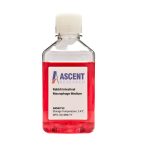 Rabbit Intestinal Macrophage Medium
Cat. No. ARM0733
Rabbit Intestinal Macrophage Medium
Cat. No. ARM0733
The Pvr Knockout MC38 Cell Line is a CRISPR/Cas9-edited knockout cell line derived from the murine MC38 colon adenocarcinoma cell line, engineered to disrupt the Pvr gene encoding the immunoregulatory receptor CD155. This loss-of-function model enables precise interrogation of PVR-mediated signaling in a syngeneic tumor context. The knockout cell line is generated using CRISPR/Cas9-mediated gene disruption, providing a stable and heritable ablation of target gene expression without introducing exogenous sequences. It serves as a robust tool for dissecting the role of PVR in immune checkpoint signaling, cell adhesion, and natural killer cell mediated cytotoxicity within the tumor microenvironment.
The host MC38 cell line is a well-characterized C57BL/6-derived colon adenocarcinoma line frequently employed as a syngeneic tumor model in immunocompetent mice. MC38 cells form aggressive tumors that recapitulate key features of human colorectal cancer, including an immunosuppressive microenvironment. Their fully immunocompetent host background makes them especially valuable for evaluating immunotherapies, as they allow the study of complex host?Ctumor interactions without the confounding factors of xenograft models. The MC38 line is extensively used in preclinical cancer research for investigating immune evasion mechanisms, tumor-infiltrating lymphocyte function, and the efficacy of immune checkpoint inhibitors.
PVR (CD155) is a cell adhesion molecule and immune checkpoint ligand that critically modulates innate and adaptive immune responses. It interacts with the activating receptor DNAM-1 (CD226) and the inhibitory receptors TIGIT and CD96 on natural killer (NK) cells and T cells, thereby balancing immune activation and suppression. Engagement of PVR by TIGIT or CD96 recruits phosphatases SHP-1 and SHP-2 to dampen cytotoxicity, while DNAM-1 binding activates downstream PI3K?CAKT and Src kinase pathways to promote cell killing. PVR expression is upregulated by inflammatory stimuli such as IFNG and TNF via NFKB signaling, linking its regulation to the tumor inflammatory milieu. Additionally, PVR interacts with Nectin-3, contributing to cell?Ccell adhesion and migration. In the tumor context, PVR overexpression drives immune evasion by preferentially engaging inhibitory receptors.
In the MC38 syngeneic model, PVR plays a pivotal role in shaping the antitumor immune response. As a colorectal carcinoma line, MC38 cells express PVR, which binds TIGIT and CD96 on tumor-infiltrating lymphocytes, suppressing their effector functions and facilitating immune escape. Ablation of Pvr in this cell line creates a powerful system to study how loss of this checkpoint ligand reshapes the tumor microenvironment, restores NK and T cell cytotoxicity, and alters downstream signaling cascades involving PIK3CA, AKT, and Src family kinases. This knockout model thus provides a direct means to evaluate the therapeutic potential of targeting the PVR?CTIGIT/DNAM-1 axis in colorectal cancer and other malignancies reliant on immune checkpoint dysregulation.
The Pvr Knockout MC38 Cell Line is optimally suited for a broad spectrum of functional and mechanistic studies. Researchers can employ it in co-culture killing assays to assess NK cell and T cell cytolytic activity, flow cytometry to confirm loss of PVR surface expression, and western blotting to monitor signaling through AKT or Src pathways. Migration and adhesion assays further enable investigation of PVR??s role in cell motility and Nectin-3 interactions. Additionally, cytokine profiling of immune cells exposed to knockout versus wild-type tumors can elucidate changes in the secretory milieu. This product is indispensable for advancing cancer immunotherapy, immune checkpoint biology, and colorectal cancer research. For additional information or technical support, please contact Ascent Research.

