Genome-edited Cells
Liver
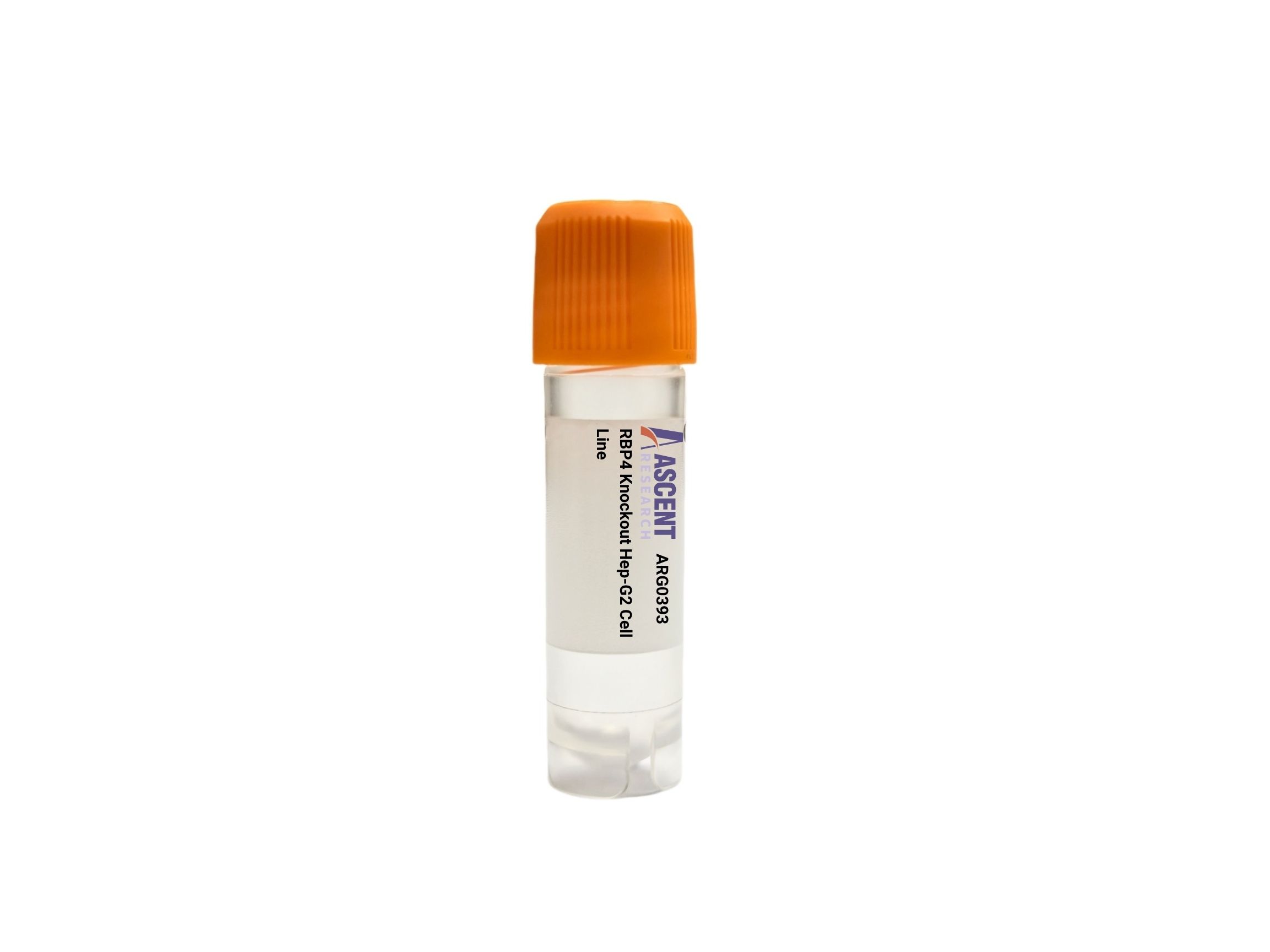
The RBP4 Knockout Hep-G2 Cell Line is a CRISPR/Cas9-edited loss-of-function model based on human hepatocellular carcinoma Hep-G2 cells. This cell line disrupts the gene encoding retinol binding protein 4 (RBP4), a hepatic secretory protein that transports retinol and is implicated in insulin resistance and metabolic inflammation. RBP4 interacts with transthyretin (TTR) and signals via the STRA6 receptor, linking vitamin A metabolism to insulin signaling through TLR4/NF-??B and cytokine pathways. Applications include retinol secretion assays, insulin resistance studies, metabolic disorder modeling, and drug screening using techniques such as Western blotting, ELISA, and glucose uptake assays.
 CAPNS1 Knockout A2780 Polyclonal Cells
Cat. No. ARG28997
JADE2 Knockout HT29 Polyclonal Cells
Cat. No. ARG33491
GUF1 Knockout HT29 Polyclonal Cells
Cat. No. ARG33307
GOT1 Knockout HT29 Polyclonal Cells
Cat. No. ARG33261
DUS1L Knockout A2780 Polyclonal Cells
Cat. No. ARG39975
GAA Knockout 786-O Polyclonal Cells
Cat. No. ARG4854
CAPNS1 Knockout A2780 Polyclonal Cells
Cat. No. ARG28997
JADE2 Knockout HT29 Polyclonal Cells
Cat. No. ARG33491
GUF1 Knockout HT29 Polyclonal Cells
Cat. No. ARG33307
GOT1 Knockout HT29 Polyclonal Cells
Cat. No. ARG33261
DUS1L Knockout A2780 Polyclonal Cells
Cat. No. ARG39975
GAA Knockout 786-O Polyclonal Cells
Cat. No. ARG4854
The RBP4 Knockout Hep-G2 Cell Line is a CRISPR/Cas9-edited knockout cell line that targets the retinol binding protein 4 (RBP4) gene. Supplied as a cell line, this product offers a stable loss-of-function model for dissecting RBP4?mediated pathways in a human hepatic context. The CRISPR/Cas9-mediated gene disruption ensures consistent knockout, making it suitable for reproducible downstream analyses in liver biology and metabolic research.
The Hep-G2 host cell line originates from a human hepatocellular carcinoma and is extensively used as a model for human hepatocytes. These cells faithfully replicate hepatic protein secretion, metabolic functions, and drug metabolism, providing a relevant platform for studying liver-specific biological processes. Hep-G2 cells are particularly valued for investigations of endocrine factors secreted by the liver and their roles in systemic metabolism.
RBP4 is the principal carrier of retinol (vitamin A) in the circulation, forming a complex with transthyretin (TTR) for delivery to target tissues via the STRA6 receptor. Beyond its canonical role in retinol transport, RBP4 functions as an adipokine that promotes insulin resistance. Mechanistically, elevated RBP4 activates TLR4-mediated innate immune signaling, leading to NF-??B-driven expression of pro-inflammatory cytokines such as TNF?? and IL-6. These cytokines impair insulin signaling by inhibiting IRS1 and AKT phosphorylation. Upstream regulators of RBP4 include retinoic acid, PPAR??, HNF4??, and C/EBP??, while downstream, retinol uptake and retinoic acid synthesis influence RAR/RXR transcriptional activity. Thus, RBP4 sits at the intersection of vitamin A metabolism, insulin sensitivity, and inflammatory pathways.
In the Hep-G2 model, RBP4 knockout disrupts hepatic retinol secretion, providing a clean system to study liver-derived RBP4 in insulin resistance. This cell line is especially valuable for examining adipose-liver crosstalk, as hepatocyte-secreted RBP4 acts as an endocrine signal. Researchers can investigate how loss of RBP4 affects glucose uptake, insulin signaling phospho-cascades, and inflammatory profiles, directly linking hepatic RBP4 to metabolic dysfunction.
Applications include hepatic retinol secretion assays, insulin resistance studies, metabolic disorder modeling, and drug screening for type 2 diabetes and obesity. Compatible techniques encompass Western blotting for phospho-IRS1/AKT, RT-qPCR for cytokines, ELISA, retinol binding assays, glucose uptake measurements, and cytokine arrays. Co-culture with adipocyte cell lines enables analysis of organ crosstalk, while RNA-seq provides transcriptomic insights. This CRISPR-edited Hep-G2 knockout line is a powerful tool for metabolic disease research. For further information, please contact Ascent Research.