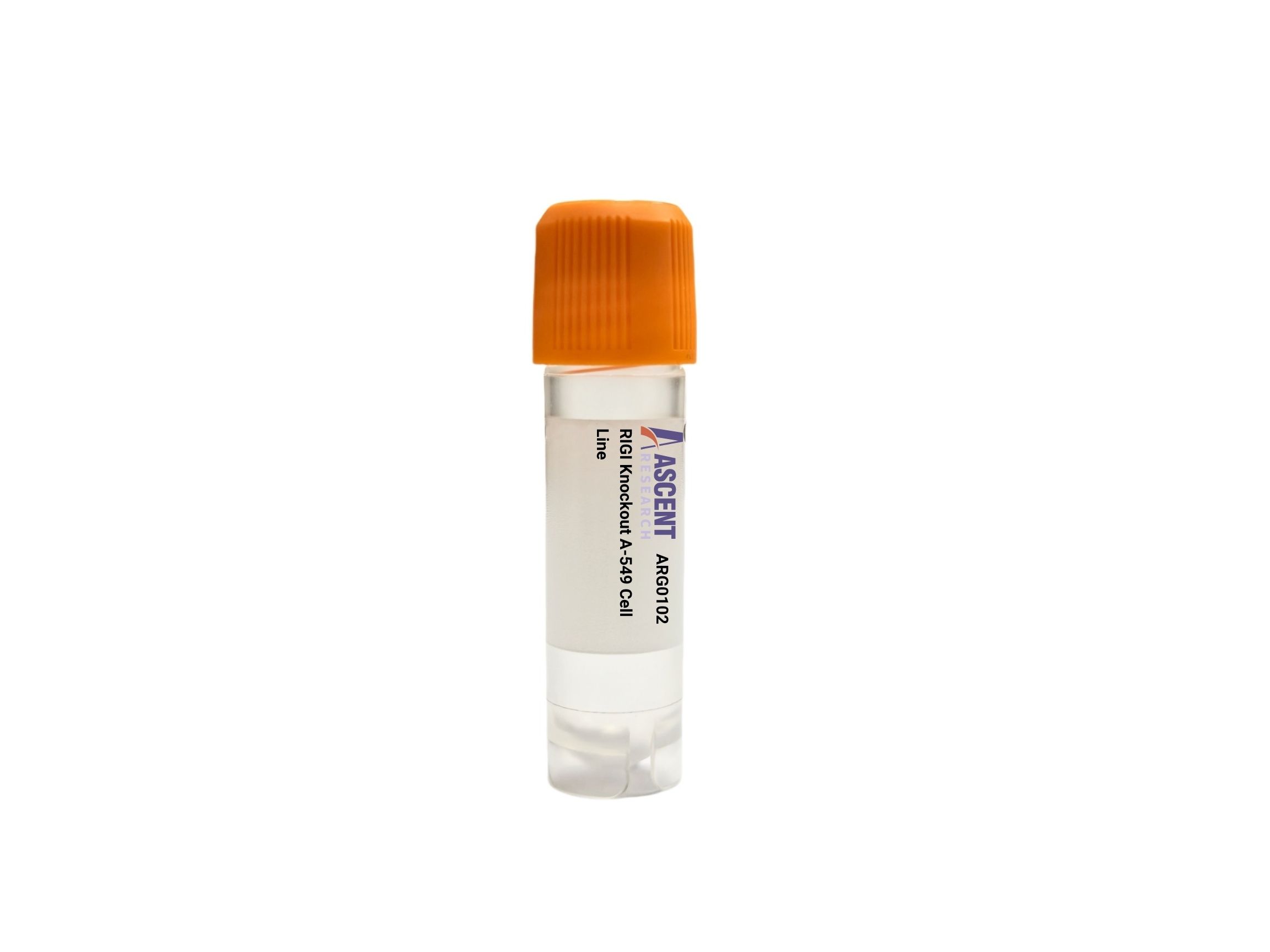
Genome-edited Cells
Lung
RIGI Knockout A-549 is a human CRISPR/Cas9-engineered alveolar epithelial adenocarcinoma cell line with disruption of RIGI, a key cytosolic RNA sensor encoded by DDX58. In A-549 cells, RIG-I normally detects 5'-triphosphate and short double-stranded viral RNA and signals through MAVS, TBK1, IRF3, and NF-kB to induce IFNB1, IFNL1, CXCL10, CCL5, and downstream ISGs. This knockout model supports mechanistic studies of respiratory virus-host interactions, interferon induction, MAVS pathway dependency, epithelial inflammatory signaling, comparison with MDA5-dependent sensing, and antiviral drug or synthetic RNA agonist evaluation using RT-qPCR, western blotting, ELISA, reporter assays, and infection-based workflows.
 Human Hepatic Non-parenchymal Cell Culture Medium
Cat. No. ARM1053
Human Hepatic Non-parenchymal Cell Culture Medium
Cat. No. ARM1053
 NDUFV2 Knockout jurkat Polyclonal Cells
Cat. No. ARG12927
AXL Knockout A2780 Polyclonal Cells
Cat. No. ARG28855
GRAMD1A Knockout NCI-H1299 Polyclonal Cells
Cat. No. ARG30669
ALDH1B1 Knockout 143B Polyclonal Cells
Cat. No. ARG35647
DNAJC10 Knockout NCI-H1299 Polyclonal Cells
Cat. No. ARG39188
NDUFV2 Knockout jurkat Polyclonal Cells
Cat. No. ARG12927
AXL Knockout A2780 Polyclonal Cells
Cat. No. ARG28855
GRAMD1A Knockout NCI-H1299 Polyclonal Cells
Cat. No. ARG30669
ALDH1B1 Knockout 143B Polyclonal Cells
Cat. No. ARG35647
DNAJC10 Knockout NCI-H1299 Polyclonal Cells
Cat. No. ARG39188
The RIGI Knockout A-549 Cell Line is a human CRISPR/Cas9-engineered cell model in which the RIGI gene has been disrupted to eliminate functional RIG-I expression. Generated in the A-549 background, this stable knockout line provides an in vitro system for investigating RIG-I-dependent innate immune signaling in epithelial cells. A-549 cells are derived from human alveolar epithelial adenocarcinoma and are broadly used as a respiratory epithelial model for studies of antiviral defense, inflammatory signaling, and host-pathogen interactions.
A-549 cells are widely used in respiratory biology because they retain many features relevant to airway and alveolar epithelial responses to infection and cytokine exposure. This host background is especially valuable for analysis of respiratory virus infection, interferon production, chemokine secretion, and epithelial signal transduction in the lung environment. As a human lung epithelial carcinoma line, A-549 has been extensively applied in influenza, SARS-CoV-2, paramyxovirus, inflammatory lung disease, and lung cancer microenvironment research, making it a practical platform for evaluating epithelial contributions to innate immunity and antiviral defense programs.
RIG-I, encoded by DDX58, is a cytosolic pattern-recognition receptor activated by viral 5′-triphosphate RNA, short double-stranded RNA, and synthetic RIG-I agonists. Following RNA recognition, RIG-I interacts with cofactors including TRIM25, RIPLET/RNF135, HSP90, and 14-3-3epsilon (YWHAE), and signals through MAVS to promote TBK1 and IKBKE activation. These events drive IRF3 and IRF7 activation together with NF-kB pathway engagement involving NFKB1 and RELA, resulting in transcriptional induction of IFNB1, IFNL1, CXCL10, CCL5, and interferon-stimulated genes such as ISG15, MX1, and OAS1. DDX58 itself is regulated by IFN-beta, IFN-alpha, IFN-lambda, IRF1, and STAT1, linking RIG-I to feed-forward amplification through JAK-STAT signaling. Loss of RIG-I is therefore expected to attenuate MAVS-TBK1-IRF3 axis signaling and reduce antiviral cytokine responses to RIG-I-dependent ligands or viruses.
In the A-549 context, RIGI knockout enables direct analysis of how epithelial antiviral sensing contributes to respiratory innate immune phenotypes. This model is useful for distinguishing RIG-I-dependent responses from signaling mediated by related RNA sensors such as IFIH1/MDA5 and DHX58/LGP2, and for examining pathway dependence in virus-induced interferon and chemokine expression. It is particularly relevant for defining host determinants of susceptibility, inflammatory output, and transcriptional remodeling in respiratory infection models.
Applications include RT-qPCR or RNA-seq analysis of IFNB1, IFNL1, ISG15, MX1, OAS1, CXCL10, and CCL5 after viral RNA stimulation or infection; western blotting and phospho-signaling studies of TBK1, IKBKE, and IRF3 activation; ELISA-based quantification of secreted IFN-beta, CXCL10, and CCL5; and luciferase reporter assays for IFNB1, ISRE, or NF-kB activity. The line is also applicable to viral infection assays, plaque or viral titer measurements, immunofluorescence, flow cytometry, and co-immunoprecipitation studies to dissect MAVS-centered signaling complexes or evaluate antiviral compounds and synthetic RNA agonists in a RIG-I-deficient epithelial background. Researchers may contact Ascent Research for additional technical information, product details, or related gene-edited cell models.