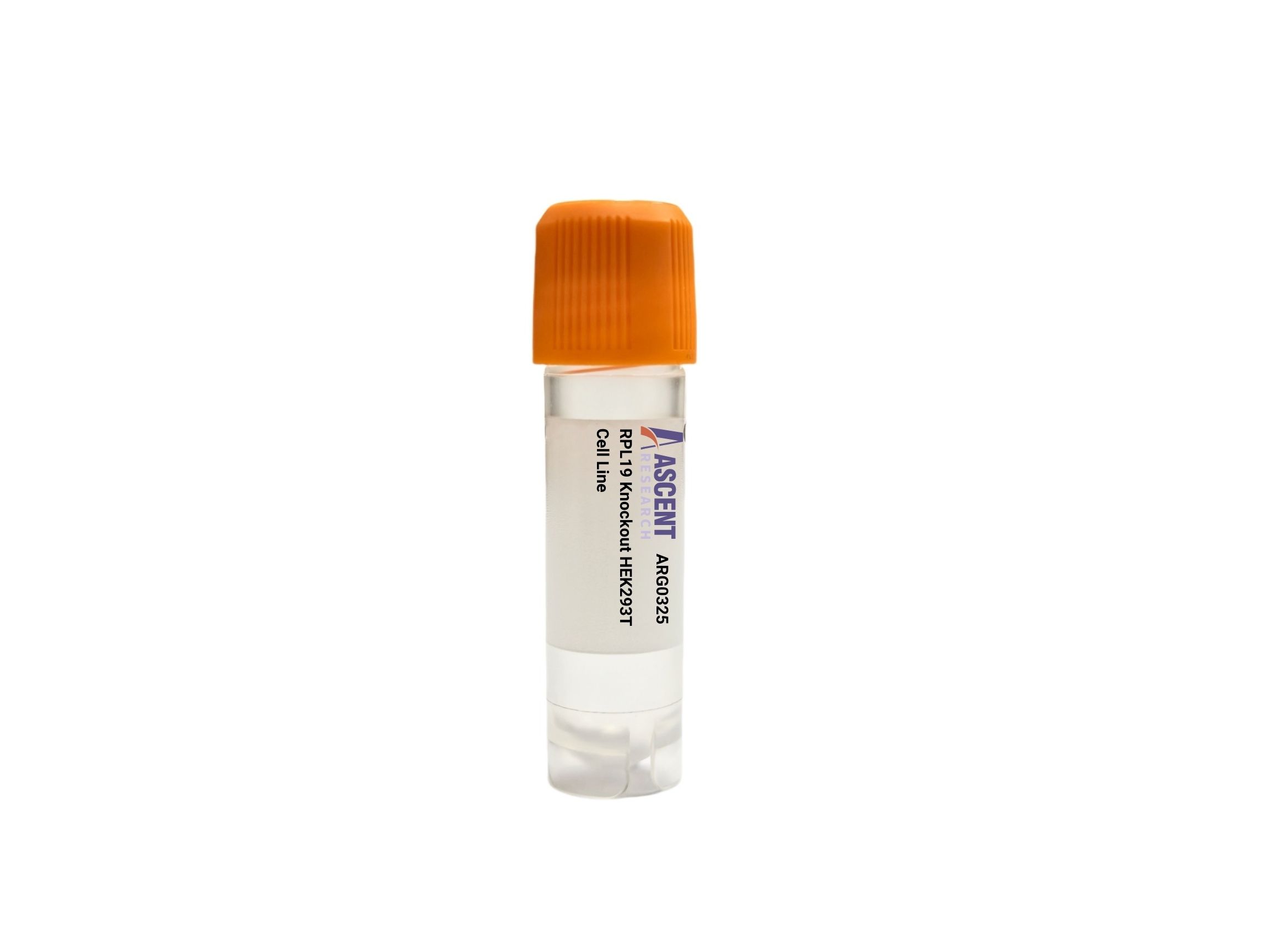
Genome-edited Cells
Kidney
The RPL19 Knockout HEK293T Cell Line is a CRISPR/Cas9-edited knockout cell line targeting the human RPL19 gene in HEK293T cells. RPL19 encodes a 60S ribosomal protein that interacts with rRNA and other ribosomal proteins to facilitate ribosome assembly and translation, acting downstream of mTORC1 and MYC signaling. Knockout of RPL19 impairs protein synthesis and induces nucleolar stress, providing a model for ribosomopathies, translational regulation, and cancer. Key applications include polysome profiling, puromycin incorporation, and western blotting for ribosomal components, making it ideal for investigating mTOR and translation-related pathways.
 PHC1 Knockout SK-HEP-1 Polyclonal Cells
Cat. No. ARG15961
PHC1 Knockout SK-HEP-1 Polyclonal Cells
Cat. No. ARG15961
 ERG28 Knockout Hela Cell Line
Cat. No. ARG43840
MAU2 Knockout Hela Polyclonal Cells
Cat. No. ARG8680
KPNA5 Knockout A549 Polyclonal Cells
Cat. No. ARG34497
PGPEP1 Knockout MES-OV Polyclonal Cells
Cat. No. ARG6411
ERG28 Knockout Hela Cell Line
Cat. No. ARG43840
MAU2 Knockout Hela Polyclonal Cells
Cat. No. ARG8680
KPNA5 Knockout A549 Polyclonal Cells
Cat. No. ARG34497
PGPEP1 Knockout MES-OV Polyclonal Cells
Cat. No. ARG6411
 Mouse Renal Collecting Duct Epithelial Cells
Cat. No. ARP0508
Mouse Renal Collecting Duct Epithelial Cells
Cat. No. ARP0508
The RPL19 Knockout HEK293T Cell Line is a CRISPR/Cas9-edited knockout cell line engineered to disrupt the human RPL19 gene, which encodes a component of the 60S ribosomal subunit. This targeted gene disruption provides a loss-of-function model to investigate the role of RPL19 in ribosome biogenesis and protein synthesis. The cell line is generated using CRISPR/Cas9-mediated genome editing in the HEK293T background and represents a stable knockout cell line suitable for a wide range of functional studies.
The host cell line, HEK293T, is an SV40 large T antigen-expressing derivative of the adenovirus type 5-transformed human embryonic kidney epithelial cell line HEK293. HEK293T cells are widely utilized in biomedical research due to their high transfectability, robust protein expression capacity, and ease of manipulation, making them an ideal platform for studying fundamental cellular processes such as translation and ribosome function. The epithelial kidney origin provides a physiologically relevant context for investigating the impact of ribosomal protein defects.
RPL19 is a structural constituent of the large 60S ribosomal subunit and plays a critical role in ribosome assembly and mRNA translation. Its expression is regulated by upstream factors including mTORC1 and MYC, which sense nutrient availability and growth signals to coordinate protein synthesis. RPL19 interacts with other 60S ribosomal proteins, ribosomal RNA (rRNA), and translation factors to facilitate peptide bond formation. Disruption of RPL19 impairs ribosome biogenesis, leading to reduced global translation, nucleolar stress, and altered cellular growth and proliferation.
In the HEK293T context, RPL19 knockout allows dissection of ribosome-related cellular stresses and the molecular consequences of impaired protein synthesis. This model is particularly relevant for studying ribosomopathies such as Diamond-Blackfan anemia, as well as the role of aberrant translation in cancer. The loss of RPL19 may activate compensatory signaling pathways and affect downstream targets involved in protein synthesis machinery, providing insights into the mTOR signaling network and its cross-talk with ribosome function.
This knockout cell line is suitable for a variety of research applications, including investigations of ribosome biogenesis, translational control, and cancer biology. Representative assays that can be performed include western blotting to assess ribosomal protein levels, RT-qPCR to measure rRNA expression, polysome profiling to evaluate translation efficiency, cell proliferation assays, and puromycin incorporation to quantify protein synthesis rates. For additional technical details or to inquire about custom cell line services, please contact Ascent Research.