Genome-edited Cells
Kidney
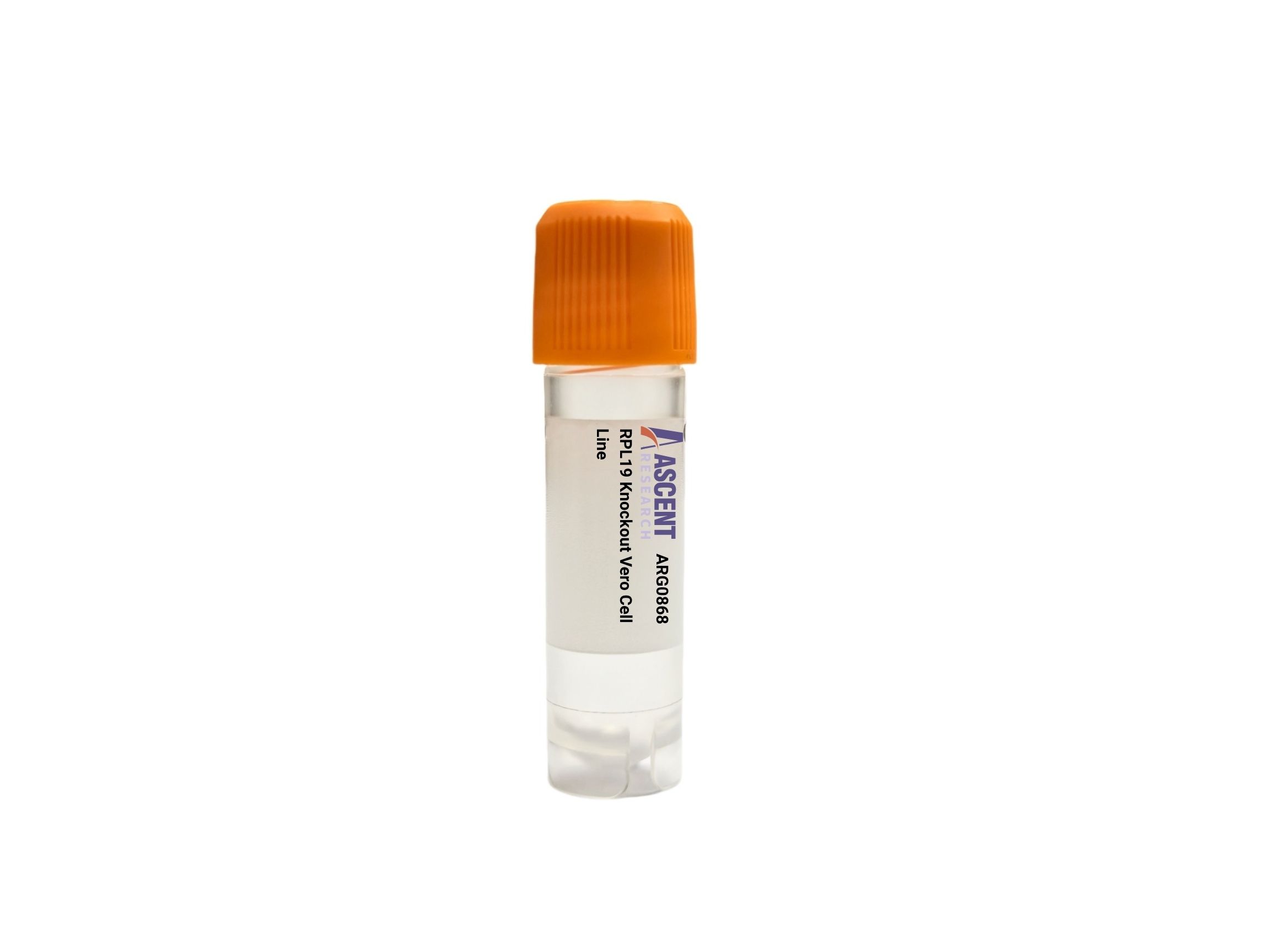
The RPL19 Knockout Vero Cell Line is a CRISPR/Cas9-edited knockout cell line abolishing ribosomal protein L19, a 60S subunit constituent critical for ribosome biogenesis and translation. Hosted in Vero cells, an interferon-deficient African green monkey kidney epithelial line, it provides a tractable system for dissecting translational regulation. RPL19 disruption impairs mTORC1-MYC-driven ribosome assembly, provoking nucleolar stress and linking to ribosomopathies like Diamond-Blackfan anemia. In Vero cells, it enables interrogation of translation??s role in viral replication via polysome profiling, puromycin incorporation, and viral titer assays.
 FGFR4 Knockout A2780 Polyclonal Cells
Cat. No. ARG18690
CLEC11A Knockout NCI-H1975 Polyclonal Cells
Cat. No. ARG17140
MARVELD2 Knockout A549 Polyclonal Cells
Cat. No. ARG10382
ANKHD1 Knockout Raji Polyclonal Cells
Cat. No. ARG21151
EHD3 Knockout NCI-H1299 Polyclonal Cells
Cat. No. ARG40810
DEGS1 Knockout 786-O Polyclonal Cells
Cat. No. ARG5138
FGFR4 Knockout A2780 Polyclonal Cells
Cat. No. ARG18690
CLEC11A Knockout NCI-H1975 Polyclonal Cells
Cat. No. ARG17140
MARVELD2 Knockout A549 Polyclonal Cells
Cat. No. ARG10382
ANKHD1 Knockout Raji Polyclonal Cells
Cat. No. ARG21151
EHD3 Knockout NCI-H1299 Polyclonal Cells
Cat. No. ARG40810
DEGS1 Knockout 786-O Polyclonal Cells
Cat. No. ARG5138
The RPL19 Knockout Vero Cell Line is a CRISPR/Cas9-edited knockout cell line featuring targeted disruption of the RPL19 gene, which encodes ribosomal protein L19, a key constituent of the 60S large ribosomal subunit. This loss-of-function model enables precise investigation of RPL19’s role in ribosome structure and function within a stable, genetically defined cellular background, facilitating studies of translation regulation and ribosome biogenesis.
The parental Vero cell line originates from African green monkey (Chlorocebus sabaeus) kidney epithelium and is notable for its interferon-deficient status. This feature permits robust replication of diverse viruses, making Vero cells a cornerstone in virology and vaccine research. Their epithelial phenotype and consistent growth kinetics provide a reliable host system for interrogating host-translation machinery and virus-host dynamics.
RPL19 integrates into the 60S subunit by interacting with partner proteins like RPL11 and RPL5, rRNA, and nucleolar assembly factors, thereby ensuring proper ribosome maturation. Its expression is controlled by oncogenic MYC and growth factor-activated mTORC1 signaling, which coordinates translation via S6K and 4E-BP1/eIF4E. Knockout of RPL19 disrupts 60S assembly, dampens global protein synthesis, and can provoke nucleolar stress, connecting ribosomal integrity to cellular growth control and stress responses.
Combining RPL19 ablation with the Vero host generates a powerful system for examining translation-dependent viral replication. Many viruses hijack host ribosomes for protein production; thus, compromised ribosomes may attenuate viral propagation. The interferon-deficient background minimizes confounding innate immune effects, allowing direct attribution of phenotypes to altered translation. This model is pertinent to ribosomopathy research, such as Diamond-Blackfan anemia, and to cancer biology, wherein ribosomal dysregulation is prevalent.
The cell line supports a array of experimental approaches. Western blotting and RT-qPCR validate RPL19 knockout and monitor pre-rRNA processing. Polysome profiling and puromycin incorporation assays quantify translational output, while immunofluorescence of nucleolar markers visualizes stress responses. Viral titer assessments further enable studies of translation inhibition on pathogen replication, aiding antiviral discovery. For detailed information or application support, contact Ascent Research.