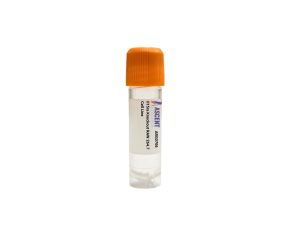
In Stock Cell Lines
Homo sapiens (Human)
Blood (peripheral blood)
Suspension
The RRAGC Knockout THP-1 Cell Line is a CRISPR/Cas9-edited human monocyte-derived macrophage-like suspension cell line with targeted disruption of the RRAGC gene. RRAGC encodes a Rag GTPase that, as part of the lysosomal Ragulator complex, mediates amino acid-dependent mTORC1 recruitment and activation, controlling key downstream targets such as S6K1. This knockout model enables precise dissection of mTORC1 signaling, autophagy regulation, and immunometabolism in a macrophage context. It is ideal for studies in cancer, metabolic syndrome, and neurodegenerative disease research, with applications including phospho-signaling analysis, autophagy flux assays, and cytokine profiling.
 CHST14 Knockout NCI-H1975 Polyclonal Cells
Cat. No. ARG16549
CDKN2C Knockout SK-HEP-1 Polyclonal Cells
Cat. No. ARG15855
NFKBIL1 Knockout HT29 Polyclonal Cells
Cat. No. ARG13879
CREG1 Knockout A549 Polyclonal Cells
Cat. No. ARG10479
KHDRBS2 Knockout Hela Polyclonal Cells
Cat. No. ARG37285
CYTH1 Knockout 786-O Polyclonal Cells
Cat. No. ARG5478
CHST14 Knockout NCI-H1975 Polyclonal Cells
Cat. No. ARG16549
CDKN2C Knockout SK-HEP-1 Polyclonal Cells
Cat. No. ARG15855
NFKBIL1 Knockout HT29 Polyclonal Cells
Cat. No. ARG13879
CREG1 Knockout A549 Polyclonal Cells
Cat. No. ARG10479
KHDRBS2 Knockout Hela Polyclonal Cells
Cat. No. ARG37285
CYTH1 Knockout 786-O Polyclonal Cells
Cat. No. ARG5478
The RRAGC Knockout THP-1 Cell Line is a CRISPR/Cas9-edited knockout cell line engineered for loss-of-function studies of the RRAGC gene in a human monocyte-derived macrophage-like cellular context. This suspension cell line provides a stable and tractable model system for dissecting the molecular mechanisms of amino acid-sensing and mTORC1 signaling. By disrupting the endogenous RRAGC locus, researchers can interrogate the functional consequences of impaired Rag GTPase activity on downstream anabolic and catabolic programs without confounding pharmacological interventions.
Derived from the peripheral blood of an acute monocytic leukemia patient, the THP-1 host cell line exhibits a non-adherent, suspension growth pattern and retains key characteristics of monocyte-macrophage lineages, including robust phagocytic capacity, cytokine secretion profiles, and inducible differentiation into adherent macrophage-like cells. THP-1 cells are widely employed as a model to investigate monocyte and macrophage biology, immune signaling cascades, and cancer-related inflammation. Their genetic manipulability and homogeneous growth make them an ideal chassis for generating targeted knockouts for pathway deconvolution.
The RRAGC gene encodes a small GTPase that heterodimerizes with RRAGA or RRAGB to form the active Rag GTPase module within the lysosomal Ragulator complex. Upon stimulation by amino acids such as leucine and arginine, and facilitated by sensor proteins including SLC38A9 and SESN2, the Ragulator complex tethers mTORC1 to the lysosomal surface. This process is tightly regulated by the GATOR1 and GATOR2 complexes. Active mTORC1 then phosphorylates downstream effectors like S6K1 and 4E-BP1 to promote protein synthesis, while simultaneously inhibiting catabolic processes such as autophagy by regulating ULK1 and the transcription factor TFEB. Therefore, RRAGC functions as a critical molecular switch that couples nutrient availability to cell growth and metabolism.
In the THP-1 macrophage model, RRAGC-dependent mTORC1 signaling is pivotal for coordinating immunometabolic responses, including glycolytic reprogramming upon activation, phagocytosis, and inflammatory cytokine production. Loss of RRAGC is expected to impair mTORC1 lysosomal recruitment and attenuate anabolic outputs, providing a powerful tool to investigate how amino acid sensing influences macrophage polarization, autophagy-mediated pathogen clearance, and lysosomal biogenesis. This knockout cell line therefore enables dissection of the intersection between metabolic state and immune function in a disease-relevant cellular background.
This product is well-suited for a breadth of experimental applications: investigating mTORC1 signaling dynamics via western blotting for phospho-S6K1 or phospho-4E-BP1, monitoring autophagy flux with LC3 turnover assays, visualizing mTORC1 lysosomal localization by immunofluorescence, quantifying secreted cytokines under various stimulation conditions, performing phagocytosis assays, and conducting genome-wide transcriptomic analyses such as RNA-seq to uncover metabolic reprogramming signatures. The model supports drug target validation efforts for mTORC1-related diseases including follicular lymphoma, acute myeloid leukemia, metabolic syndrome, and neurodegeneration. For additional information or to discuss application-specific inquiries, please contact Ascent Research.