Genome-edited Cells
Embryo
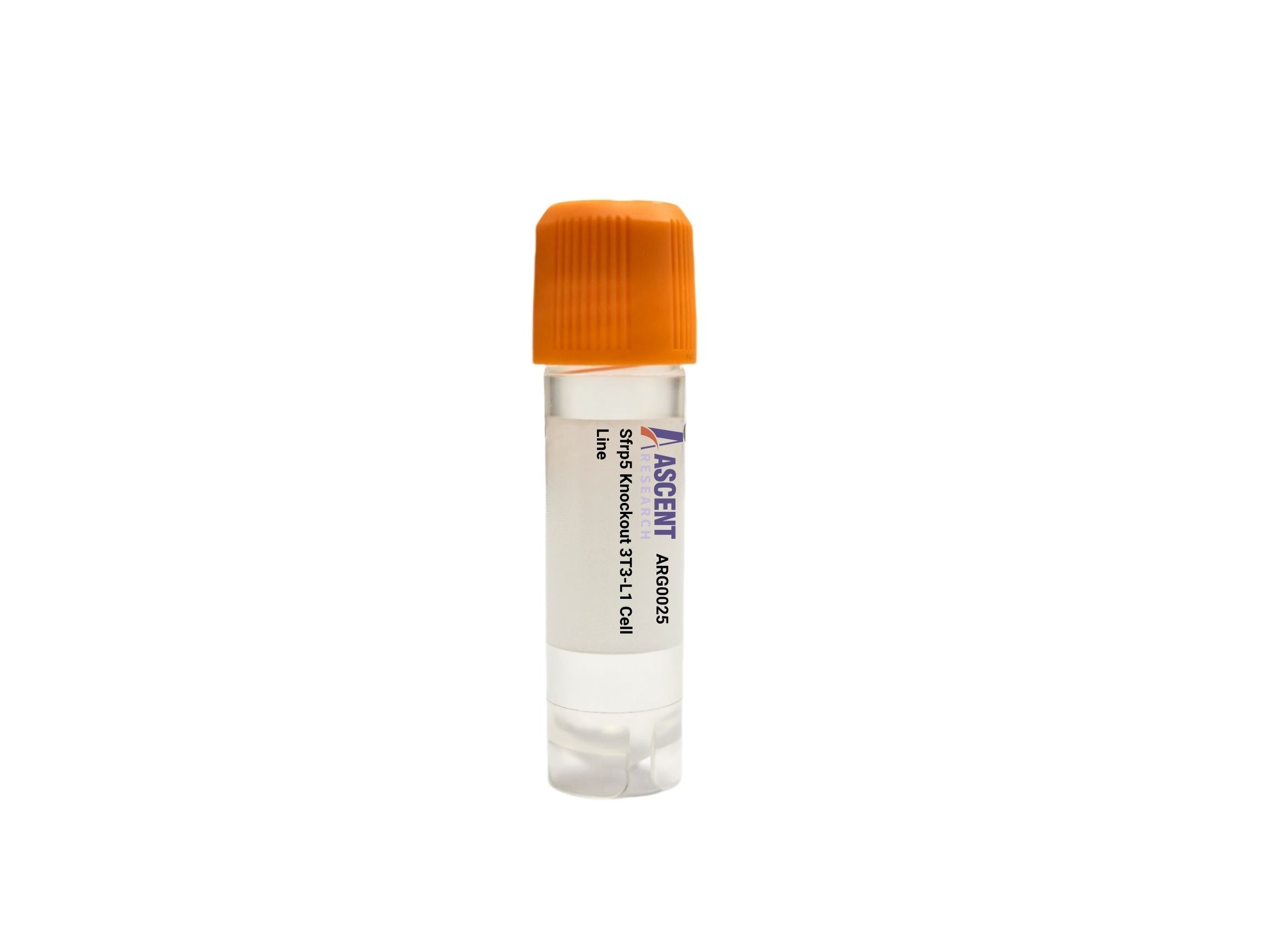
Sfrp5 Knockout 3T3-L1 is a CRISPR/Cas9-edited mouse preadipocyte cell line with disruption of the Sfrp5 gene in the widely used 3T3-L1 adipogenesis model. SFRP5 is a secreted modulator of WNT signaling that interacts with WNT5A-associated pathways and influences JNK/c-JUN activity, inflammatory cytokine expression, adipogenic regulators such as PPARG and CEBPA, and insulin-responsive phenotypes. This knockout model is useful for adipogenesis studies, inflammatory-metabolic signaling analysis, obesity and insulin resistance research, and mechanistic assays including RT-qPCR, western blotting, Oil Red O staining, phospho-JNK analysis, RNA-seq, and glucose uptake or insulin-stimulated AKT assays.
 FOXRED1 Knockout NCI-H1975 Polyclonal Cells
Cat. No. ARG17090
ENHO Knockout 143B Polyclonal Cells
Cat. No. ARG11796
HMGN3 Knockout Raji Polyclonal Cells
Cat. No. ARG23716
KLF13 Knockout Hela Polyclonal Cells
Cat. No. ARG26375
MND1 Knockout 786-O Polyclonal Cells
Cat. No. ARG5357
CLMP Knockout AGS Polyclonal Cells
Cat. No. ARG2359
FOXRED1 Knockout NCI-H1975 Polyclonal Cells
Cat. No. ARG17090
ENHO Knockout 143B Polyclonal Cells
Cat. No. ARG11796
HMGN3 Knockout Raji Polyclonal Cells
Cat. No. ARG23716
KLF13 Knockout Hela Polyclonal Cells
Cat. No. ARG26375
MND1 Knockout 786-O Polyclonal Cells
Cat. No. ARG5357
CLMP Knockout AGS Polyclonal Cells
Cat. No. ARG2359
The Sfrp5 Knockout 3T3-L1 Cell Line is a CRISPR/Cas9-engineered mouse cell model in which the Sfrp5 gene has been disrupted to eliminate functional SFRP5 expression. This stable gene-edited in vitro system is generated in the 3T3-L1 host line, a well-established murine preadipocyte model. Because SFRP5 is a secreted frizzled-related protein that modulates WNT ligand-dependent signaling, this knockout cell line provides a defined platform for studying how loss of extracellular WNT antagonism influences adipocyte-lineage signaling and phenotype.
3T3-L1 cells are fibroblast-like preadipocytes that undergo hormone-induced differentiation into lipid-accumulating adipocytes and are widely used to investigate adipogenesis, insulin responsiveness, adipokine biology, and inflammatory-metabolic crosstalk. Their robust differentiation program and tractable response to metabolic and inflammatory stimuli make them a standard model for adipose tissue-related research. In this context, 3T3-L1 cells are particularly useful for examining molecular events linked to obesity, insulin resistance, type 2 diabetes, metabolic syndrome, adipose tissue inflammation, and nonalcoholic fatty liver disease.
At the molecular level, SFRP5 functions as a secreted WNT antagonist that interacts with WNT ligands, particularly WNT5A-associated signaling, and modulates signaling through frizzled receptors such as FZD2 and FZD5 as well as co-receptors and related factors including ROR2, LRP5, and LRP6. Through these interactions, SFRP5 influences the balance between non-canonical WNT/JNK signaling and beta-catenin pathway regulation involving DVL2, CTNNB1, and GSK3beta. In adipocyte-related settings, Sfrp5 expression is regulated by adipocyte differentiation cues and transcriptional programs associated with PPARG and CEBPA, and can also be influenced by inflammatory stimuli, TNF-alpha, metabolic stress, and nutrient excess. Loss of Sfrp5 is therefore relevant for examining signaling events downstream of WNT5A, including JNK1/2 phosphorylation, c-JUN activity, inflammatory cytokine expression such as IL6, TNF-alpha, and CCL2, as well as effects on adipogenic markers including PPARG, CEBPA, and adiponectin.
Within the 3T3-L1 background, Sfrp5 knockout is a biologically meaningful model for defining how extracellular regulation of WNT signaling shapes adipocyte differentiation and metabolic function. This system enables investigation of how altered WNT5A-ROR2/FZD signaling affects adipogenesis, insulin-stimulated signaling responsiveness, and inflammatory output in adipocyte precursor cells and differentiated adipocytes. It is also relevant for studying how perturbation of adipokine-regulated signaling contributes to disease-associated phenotypes linked to obesity and insulin resistance.
This cell line can be applied in adipogenic differentiation assays combined with Oil Red O staining to quantify lipid accumulation, RT-qPCR or RNA-seq to profile adipogenic and inflammatory gene-expression programs, and western blotting for phospho-JNK, c-JUN, PPARG, CEBPA, or insulin-stimulated AKT phosphorylation. Investigators may also use ELISA or cytokine profiling to assess secreted inflammatory mediators, TOPFlash/FOPFlash reporter assays to examine beta-catenin-related pathway modulation, immunofluorescence to monitor differentiation-associated markers, co-immunoprecipitation to study pathway-associated protein interactions, and glucose uptake assays to evaluate metabolic responsiveness. Researchers may contact Ascent Research for additional technical information, product details, or related gene-edited cell models.