Genome-edited Cells
Liver
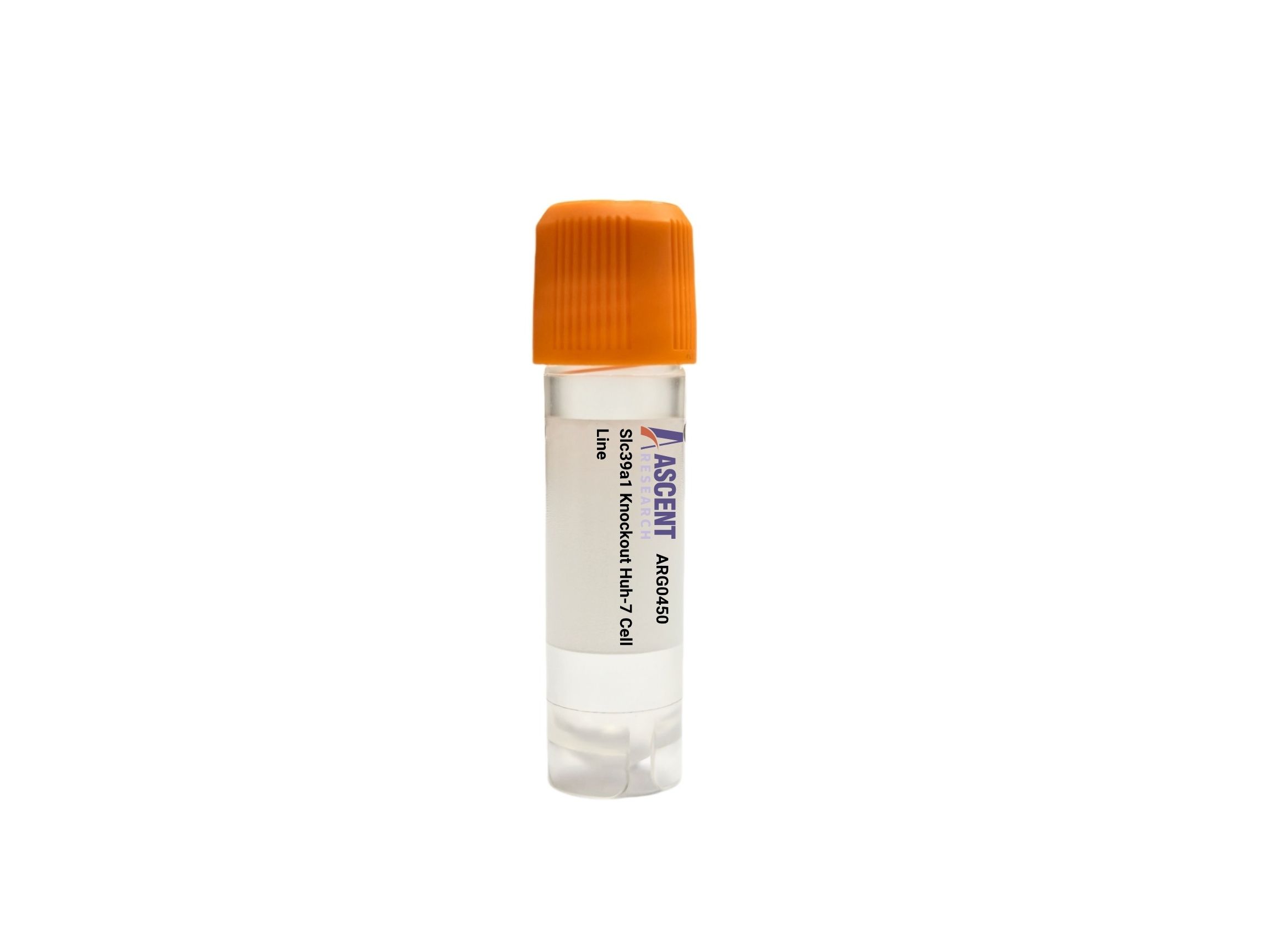
The Slc39a1 Knockout Huh-7 Cell Line is a CRISPR/Cas9-edited cell line designed for loss-of-function analysis of the SLC39A1 gene, which encodes the ZIP1 zinc importer. Derived from Huh-7 hepatocellular carcinoma cells, this model enables investigation of zinc homeostasis and its disruption in liver cancer. ZIP1 functions downstream of MTF-1 and regulates intracellular zinc, affecting metallothioneins and zinc-dependent enzymes. This knockout line is suitable for assays including zinc uptake, viability, western blotting for ZIP1 and MTF-1, and flow cytometry of labile zinc. It supports research on metal ion transport, HCC progression, and stress response pathways in an HBV-integrated background.
 DCTD Knockout jurkat Polyclonal Cells
Cat. No. ARG13379
CORO1C Knockout A549 Polyclonal Cells
Cat. No. ARG10832
IQSEC1 Knockout A2780 Polyclonal Cells
Cat. No. ARG29233
CRLF3 Knockout MES-OV Polyclonal Cells
Cat. No. ARG5938
CENPF Knockout Raji Polyclonal Cells
Cat. No. ARG1654
DCTD Knockout jurkat Polyclonal Cells
Cat. No. ARG13379
CORO1C Knockout A549 Polyclonal Cells
Cat. No. ARG10832
IQSEC1 Knockout A2780 Polyclonal Cells
Cat. No. ARG29233
CRLF3 Knockout MES-OV Polyclonal Cells
Cat. No. ARG5938
CENPF Knockout Raji Polyclonal Cells
Cat. No. ARG1654
 Hs 865.Sk Luciferase Stable Cell Line
Cat. No. ARG0428
Hs 865.Sk Luciferase Stable Cell Line
Cat. No. ARG0428
The Slc39a1 Knockout Huh-7 Cell Line is a CRISPR/Cas9-edited knockout cell line derived from Huh-7 human hepatocellular carcinoma cells. This product features targeted disruption of the SLC39A1 gene, encoding the ZIP1 zinc transporter, establishing a stable loss-of-function model for zinc homeostasis research in a liver cancer context. The cell line provides a genetically defined system for investigating ZIP1-dependent cellular processes without pharmacological intervention.
The parental Huh-7 cell line originated from a liver tumor of a 57-year-old Japanese male, displays epithelial morphology, and contains integrated hepatitis B virus sequences. As a well-characterized hepatoma model, Huh-7 cells are extensively used to examine liver function, hepatitis, and hepatocellular carcinoma pathogenesis, offering reproducible in vitro conditions for cancer and metabolic studies.
SLC39A1 encodes the ZIP1 zinc transporter, a plasma membrane protein that mediates zinc influx, thereby controlling intracellular labile zinc. ZIP1 expression is regulated by cellular zinc status and the transcription factor MTF-1. Imported zinc serves as a cofactor for enzymes such as superoxide dismutase and matrix metalloproteinases, binds to metallothioneins (MT1, MT2), and activates MTF-1-mediated transcription of genes involved in zinc buffering and stress adaptation. ZIP1 functions in concert with other SLC39A and SLC30A family transporters. Disruption of SLC39A1 by CRISPR/Cas9 thus impairs zinc uptake, which can dampen MTF-1 transcriptional responses, alter metallothionein levels, and compromise zinc-dependent proliferation signaling.
In the Huh-7 hepatocellular carcinoma setting, ZIP1 knockout enables dissection of zinc transporter roles in liver cancer. The liver is central to systemic zinc metabolism, and zinc dysregulation is implicated in hepatic pathology. This model allows researchers to probe how zinc influx disruption influences cancer-relevant phenotypes such as cell survival, migration, and colony formation within the context of HBV-integrated hepatoma cells.
This knockout line supports diverse assay formats. Zinc uptake can be measured with FluoZin-3, viability assessed by MTT, and protein expression (ZIP1, MTF-1, MT) analyzed by western blotting and RT-qPCR. Flow cytometry with zinc probes quantifies the labile zinc pool, and immunocytochemistry visualizes protein localization. Functional studies employ scratch wound and colony formation assays. Together, these tools facilitate investigations of zinc homeostasis in liver cancer, metal ion transporter functions, and liver disease modeling. For further information, contact Ascent Research.