Genome-edited Cells
Liver
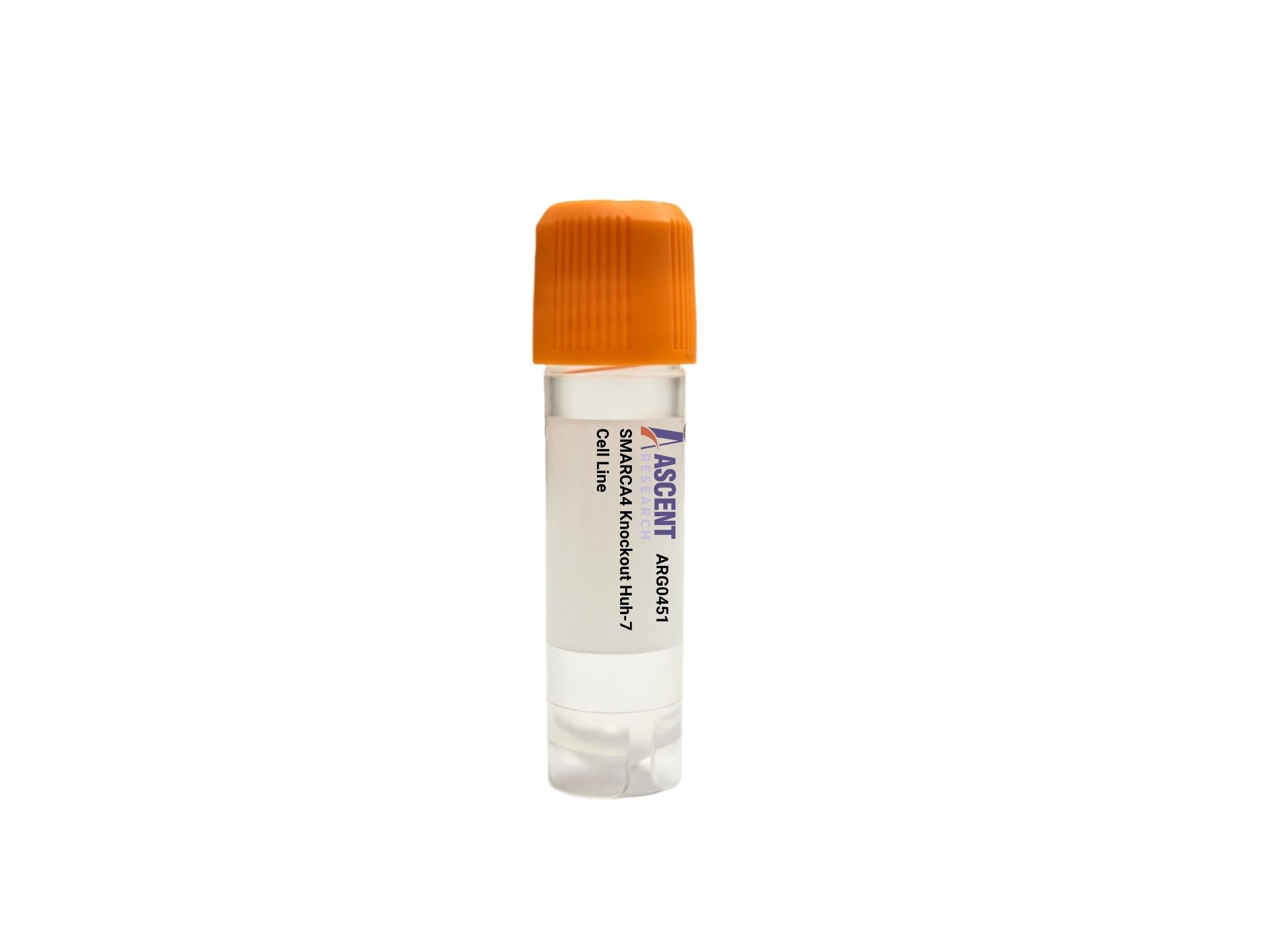
The SMARCA4 Knockout Huh-7 Cell Line is a CRISPR/Cas9-edited knockout model disrupting BRG1, the catalytic ATPase of the SWI/SNF chromatin remodeling complex, in the Huh-7 hepatocellular carcinoma background. BRG1 interacts with BAF subunits SMARCB1 and ARID1A and transcription factors MYC and CTNNB1 to regulate Wnt/??-catenin, TGF-??, and DNA damage pathways, thereby controlling gene expression and tumor suppression. Validated for SMARCA4 ablation, this cell line supports ATAC-seq, ChIP-qPCR, RNA-seq, Western blotting, and cell-based functional assays to probe chromatin dynamics, transcriptomic changes, and drug sensitivity in SMARCA4-deficient liver cancer.
 COL4A2 Knockout A2780 Polyclonal Cells
Cat. No. ARG18968
LRRC8E Knockout SK-HEP-1 Polyclonal Cells
Cat. No. ARG15328
CMSS1 Knockout HT29 Polyclonal Cells
Cat. No. ARG13957
Cul5 Knockout 143B Polyclonal Cells
Cat. No. ARG11803
ASRGL1 Knockout CaSki Polyclonal Cells
Cat. No. ARG35909
EFNA5 Knockout A2780 Polyclonal Cells
Cat. No. ARG40672
COL4A2 Knockout A2780 Polyclonal Cells
Cat. No. ARG18968
LRRC8E Knockout SK-HEP-1 Polyclonal Cells
Cat. No. ARG15328
CMSS1 Knockout HT29 Polyclonal Cells
Cat. No. ARG13957
Cul5 Knockout 143B Polyclonal Cells
Cat. No. ARG11803
ASRGL1 Knockout CaSki Polyclonal Cells
Cat. No. ARG35909
EFNA5 Knockout A2780 Polyclonal Cells
Cat. No. ARG40672
The SMARCA4 Knockout Huh-7 Cell Line is a CRISPR/Cas9-edited knockout cell line designed for targeted disruption of the SMARCA4 gene in the Huh-7 hepatocellular carcinoma background. This loss-of-function model allows systematic investigation of SMARCA4-dependent chromatin remodeling and gene regulatory functions without predefined mutations, providing a stable genetic platform for comparative studies alongside isogenic wild-type controls. The cell line is validated for SMARCA4 ablation at the genomic and transcript levels, ensuring reproducible interrogation of SWI/SNF complex biology.
The host Huh-7 cell line is a well-characterized human hepatocellular carcinoma model established from a liver tumor of a 57-year-old Japanese male. These cells retain hepatocyte and liver epithelial cell characteristics and exhibit active Wnt/??-catenin signaling, TGF-?? responsiveness, and a partial epithelial-to-mesenchymal transition (EMT) gene signature. This background makes Huh-7 an ideal system for studying epigenetic mechanisms underlying liver cancer progression, metastasis, and therapy resistance.
SMARCA4 encodes BRG1, the catalytic ATPase subunit of the SWI/SNF chromatin remodeling complex, which uses ATP hydrolysis to slide nucleosomes and regulate DNA accessibility. BRG1 physically interacts with BAF complex members SMARCB1, SMARCC1, SMARCD1, and ARID1A, and functionally cooperates with transcription factors such as MYC, TP53, BRCA1, and CTNNB1. Its activity is modulated by upstream regulators including AKT1, MAPK1, CDK9, and STAT3, and it transcriptionally controls downstream targets like CDH1, CDKN1A, MYC, VIM, SNAI1, and CCND1. Through these interactions, SMARCA4 integrates chromatin state with Wnt/??-catenin, TGF-??, and DNA damage response pathways, thereby coordinating proliferation, EMT, and genome stability.
In hepatocellular carcinoma, frequent dysregulation of SWI/SNF subunits such as SMARCA4 and ARID1A drives oncogenic transcription and tumor maintenance. This knockout model recapitulates the epigenetic vulnerability found in SMARCA4-deficient liver cancers and related malignancies including SCCOHT, non-small cell lung cancer, and SMARCA4-deficient thoracic sarcomas. The Huh-7 background provides a liver-specific context to dissect how loss of BRG1 ATPase activity alters nucleosome positioning, disrupts enhancer?Cpromoter contacts, and compromises tumor-suppressive gene expression, enabling studies of synthetic lethality and targeted therapeutic strategies.
Typical research applications include Western blotting and RT-qPCR to confirm protein depletion and downstream target changes, ChIP-qPCR and ATAC-seq to profile chromatin accessibility, RNA-seq for transcriptome analysis, and cell viability or Transwell migration assays to assess proliferation, invasion, and drug sensitivity. These methods support mechanistic studies of epigenetic regulation in HCC, high-throughput drug screening for SWI/SNF-directed compounds, and identification of context-dependent regulatory networks. For additional technical information, please contact Ascent Research.