Genome-edited Cells
Kidney
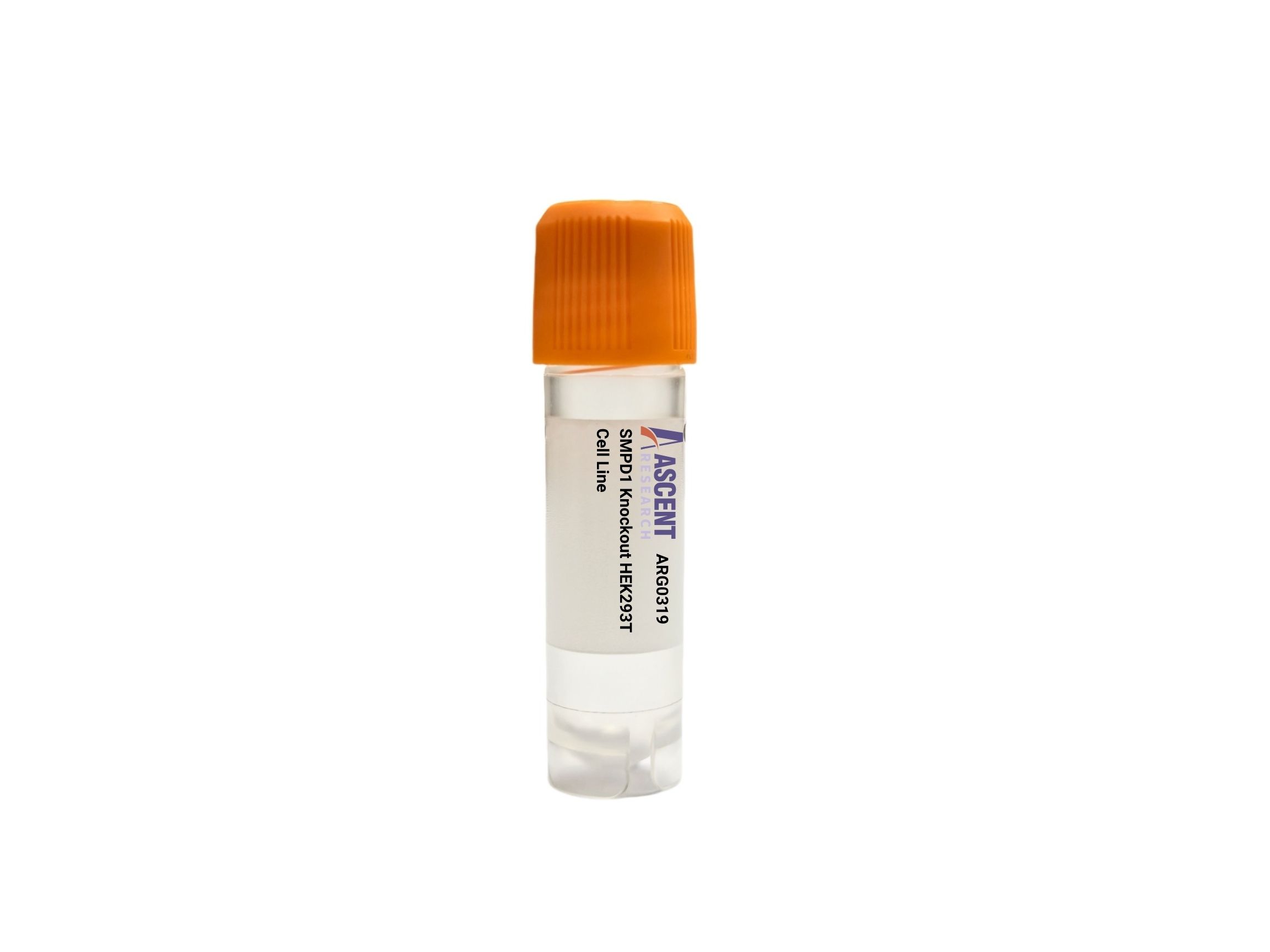
The SMPD1 Knockout HEK293T Cell Line is a CRISPR/Cas9-edited cell line lacking functional acid sphingomyelinase (SMPD1). Generated on the HEK293T background, this knockout model disrupts sphingomyelin-to-ceramide conversion, impacting ceramide-mediated apoptosis and signaling. Key upstream regulators include TNF-?? and Fas ligand; downstream targets include caspase-3 and JNK. Applications encompass Niemann-Pick disease modeling, lysosomal storage disorder research, and drug screening for SMPD1 modulators. Standard assays include enzyme activity measurements, ceramide quantification by LC-MS, and apoptosis detection by Annexin V staining. The line retains HEK293T??s high transfectability and is suitable for detailed sphingolipid metabolism studies.
 ESRRA Knockout HK-2 Cell Line
Cat. No. ARG43843
ESRRA Knockout HK-2 Cell Line
Cat. No. ARG43843
 OGFOD2 Knockout NCI-H1975 Polyclonal Cells
Cat. No. ARG17077
LRRFIP1 Knockout A549 Polyclonal Cells
Cat. No. ARG10685
ABHD12 Knockout HT29 Polyclonal Cells
Cat. No. ARG32805
GOLIM4 Knockout HT29 Polyclonal Cells
Cat. No. ARG33253
CAP2 Knockout MES-OV Polyclonal Cells
Cat. No. ARG42143
OGFOD2 Knockout NCI-H1975 Polyclonal Cells
Cat. No. ARG17077
LRRFIP1 Knockout A549 Polyclonal Cells
Cat. No. ARG10685
ABHD12 Knockout HT29 Polyclonal Cells
Cat. No. ARG32805
GOLIM4 Knockout HT29 Polyclonal Cells
Cat. No. ARG33253
CAP2 Knockout MES-OV Polyclonal Cells
Cat. No. ARG42143
The SMPD1 Knockout HEK293T Cell Line is a CRISPR/Cas9-edited human cell line featuring targeted disruption of the SMPD1 gene in HEK293T cells. This knockout model abolishes acid sphingomyelinase (ASMase) expression, providing a clean genetic system to study sphingolipid metabolism and ceramide signaling. The line is supplied as a characterized cell population suitable for functional genomics, disease modeling, and drug discovery.
HEK293T cells are human embryonic kidney cells transformed with adenovirus 5 DNA and stably express the SV40 large T antigen. This host supports high-efficiency transient transfection, robust protein production, and reliable lentivirus generation, making it a workhorse for cell biology and molecular biology laboratories. The SMPD1 knockout line retains these key attributes, enabling straightforward integration into existing assay protocols.
The SMPD1 gene encodes acid sphingomyelinase, which hydrolyzes sphingomyelin into ceramide??a central lipid second messenger??within lysosomes and at the plasma membrane. Enzyme activity is stimulated by TNF-??, Fas ligand, reactive oxygen species, and ionizing radiation. Ceramide subsequently activates protein phosphatase 2A, cathepsin D, caspase-3, and JNK to propagate apoptotic and stress signals. Interacting factors including saposin B, progranulin, sortilin, and annexin A2 modulate ASMase localization and activity. Thus, SMPD1 occupies a pivotal position linking extracellular cues to ceramide-driven cell fate decisions.
In the HEK293T context, SMPD1 knockout disrupts the sphingomyelin?Cceramide pathway, causing sphingomyelin accumulation and ceramide deficiency. This recapitulates molecular hallmarks of Niemann-Pick disease types A/B, rendering the line an accessible in vitro model for lysosomal storage disorders. HEK293T cells are particularly useful because they activate TNF-???C and Fas-induced apoptosis pathways, allowing dissection of ceramide??s role in cell death without confounding endogenous ASMase activity. The line therefore serves as a valuable platform for studying lysosomal dysfunction, lipid raft remodeling, and stress signaling.
Researchers can employ this knockout line in a variety of assays, including acid sphingomyelinase enzyme activity measurements, quantitative LC-MS?Cbased ceramide profiling, Western blot analysis of apoptotic markers, and immunofluorescence for lysosomal membrane permeabilization. Applications extend from basic sphingolipid biology to translational investigations of Niemann-Pick disease, atherosclerosis, depression, and diabetes. Drug screening efforts targeting SMPD1 or bypass pathways also benefit from the defined genetic background. For additional information or technical inquiries, please contact Ascent Research.