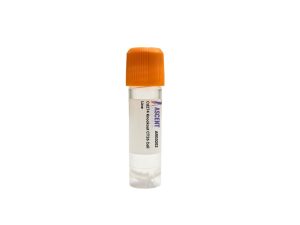
In Stock Cell Lines
Homo sapiens (Human)
Stomach
Adherent
The SORCS2 Knockout HGC-27 Cell Line is a CRISPR/Cas9-edited knockout cell line enabling targeted disruption of SORCS2, a VPS10 domain sorting receptor that regulates cell adhesion and migration. Derived from a human gastric carcinoma cell line of lymph node metastasis origin, this model is ideal for studying epithelial-mesenchymal transition (EMT) and metastatic mechanisms. SORCS2 loss promotes ??-catenin and STAT3 signaling, enhancing invasiveness. This cell line supports applications in gastric cancer research, protein trafficking studies, and drug target validation through assays such as Transwell migration, Western blotting, and co-immunoprecipitation.
 COX19 Knockout jurkat Polyclonal Cells
Cat. No. ARG12805
HMGA2 Knockout HAP1 Polyclonal Cells
Cat. No. ARG22552
C12orf29 Knockout HGC-27 Polyclonal Cells
Cat. No. ARG29758
B4GALT7 Knockout HGC-27 Polyclonal Cells
Cat. No. ARG29686
MOSPD1 Knockout 786-O Polyclonal Cells
Cat. No. ARG5550
PCIF1 Knockout HEK293T Polyclonal Cells
Cat. No. ARG4349
COX19 Knockout jurkat Polyclonal Cells
Cat. No. ARG12805
HMGA2 Knockout HAP1 Polyclonal Cells
Cat. No. ARG22552
C12orf29 Knockout HGC-27 Polyclonal Cells
Cat. No. ARG29758
B4GALT7 Knockout HGC-27 Polyclonal Cells
Cat. No. ARG29686
MOSPD1 Knockout 786-O Polyclonal Cells
Cat. No. ARG5550
PCIF1 Knockout HEK293T Polyclonal Cells
Cat. No. ARG4349
The SORCS2 Knockout HGC-27 Cell Line is a CRISPR/Cas9-edited knockout cell line that provides targeted disruption of SORCS2 in the HGC-27 background. This stable loss-of-function model enables precise investigation of SORCS2-dependent cellular processes without the introduction of exogenous reporters or selection markers that could confound phenotypic interpretation. As a gene-edited tool, it serves as a critical resource for dissecting the molecular mechanisms controlled by SORCS2 in gastric cancer biology.
The HGC-27 cell line is a widely used human gastric carcinoma model derived from a lymph node metastasis, exhibiting an undifferentiated and aggressive phenotype. These cells display robust in vitro migration, invasion, and altered cell adhesion properties, recapitulating key features of metastatic disease. This background is inherently suited for studying epithelial-mesenchymal transition (EMT) and provides a physiologically relevant context for evaluating SORCS2 function in advanced gastric cancer.
SORCS2 encodes a VPS10 domain-containing sorting receptor that mediates intracellular trafficking of cell adhesion molecules and signaling receptors. It interacts with APP, p75NTR, and SORT1, and is recruited to membranes by GGA1 and GGA2 adaptor proteins. SORCS2 functions downstream of ligands such as BDNF, NGF, pro-neurotrophins, EGF, and TGF-??, and its activity impacts multiple pathways. Notably, SORCS2 regulates E-cadherin and ??-catenin stability, Rho GTPase function, and STAT3 phosphorylation. SORCS2 also associates with BACE1 and influences JNK and NF-??B signaling, linking neurotrophin pathways to cell adhesion dynamics. Loss of SORCS2 disrupts this balance, leading to enhanced ??-catenin/TCF/LEF transcriptional activity and STAT3 signaling, which together promote EMT and cell migration.
SORCS2 knockout in HGC-27 cells enhances the mesenchymal and invasive traits characteristic of metastatic gastric cancer, offering a model to study how loss of this sorting receptor accelerates EMT and tumor dissemination. This system allows dissection of the signaling rewiring that drives metastasis, including aberrant protein trafficking and transcriptional reprogramming. The cell line thus provides a controlled platform for evaluating the role of SORCS2 in maintaining epithelial integrity and the consequences of its loss during tumor progression.
This knockout model is suited for a broad spectrum of applications, including gene function studies, metastatic mechanism analysis, protein trafficking dissection, and drug target validation. Representative assays encompass Western blotting, RT-qPCR, Transwell migration/invasion, cell adhesion, co-immunoprecipitation, immunofluorescence, ??-catenin/TCF reporter assays, STAT3 phosphorylation analysis, RNA-seq, and apoptosis assays. Researchers can employ these techniques to interrogate signaling pathways and test therapeutic hypotheses. For further technical information or support, please contact Ascent Research.