Genome-edited Cells
Breast (mammary gland)
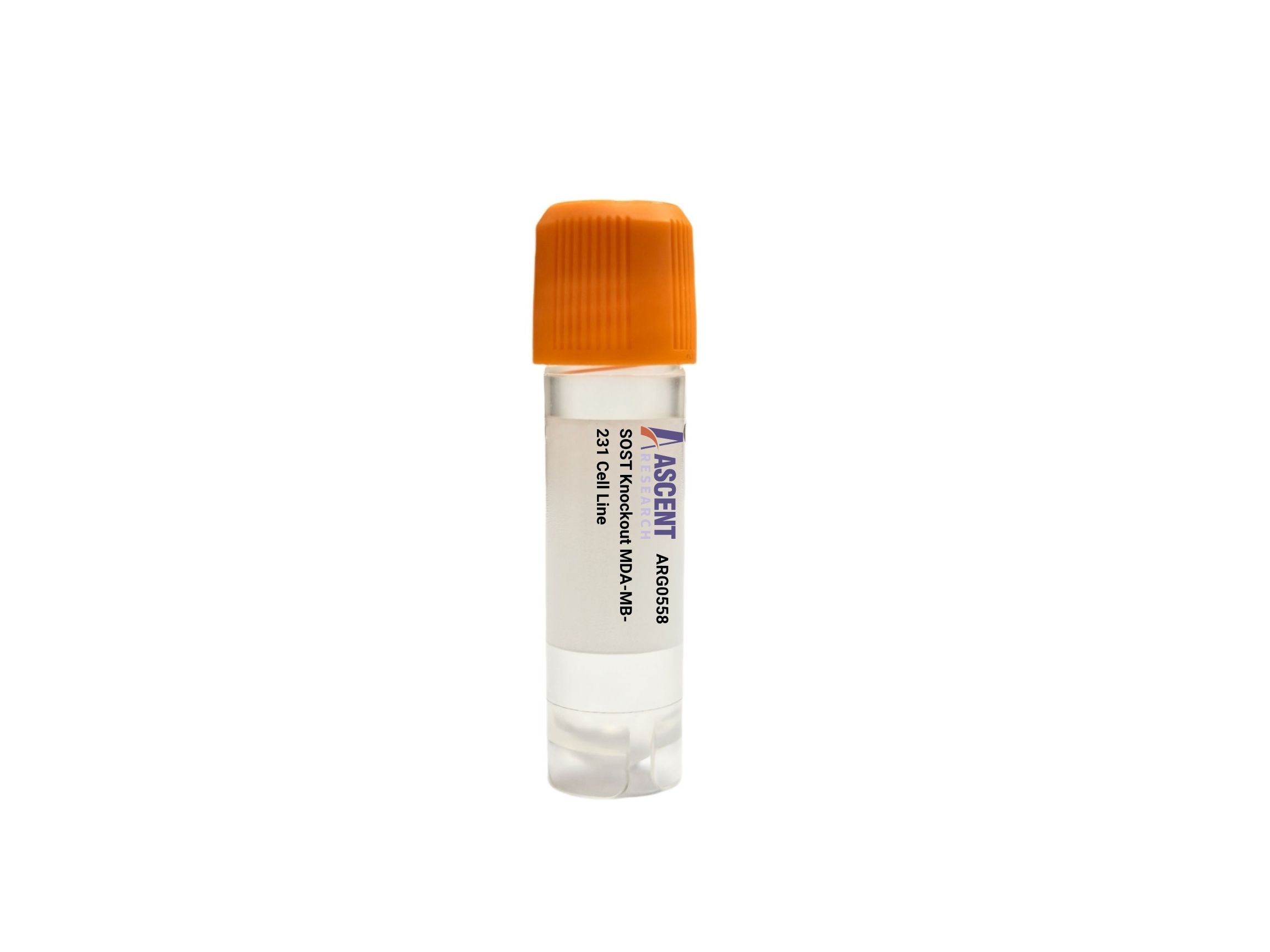
The SOST Knockout MDA-MB-231 Cell Line is a CRISPR/Cas9-edited human breast cancer cell line in which the sclerostin gene has been disrupted. Derived from the triple?negative MDA?MB?231 line??a model for invasive and metastatic breast cancer??this knockout eliminates a key inhibitor of Wnt/???catenin signaling, enabling unrestricted activation of the pathway. Loss of sclerostin, which normally binds LRP5/6 co?receptors, enhances ???catenin?dependent transcription of targets such as AXIN2 and CCND1, and promotes osteomimetic properties relevant to bone metastasis studies. Applications include Wnt pathway analysis, migration/invasion assays, ALP activity measurement, and sclerostin inhibitor screening.
The SOST Knockout MDA-MB-231 Cell Line is a CRISPR/Cas9-edited human knockout cell line in which the SOST gene has been disrupted to ablate sclerostin protein expression. Derived from the MDA-MB-231 parental line, this knockout model provides a stable loss-of-function system for studying sclerostin-mediated regulation of Wnt/??-catenin signaling. The genetic disruption was introduced using CRISPR/Cas9 technology, yielding a defined and consistent knockout that eliminates the need for transient knockdown approaches.
MDA-MB-231 cells are a triple?negative breast cancer line (ER?/PR?/HER2?) isolated from a metastatic pleural effusion. They display an invasive, mesenchymal?like phenotype and are widely used as a model for aggressive, metastatic breast cancer. Their basal?like molecular profile and robust tumorigenic capacity make them especially suited for examining mechanisms of cancer cell migration, invasion, and metastasis.
Sclerostin, encoded by SOST, is a secreted glycoprotein that binds to LRP5 and LRP6 co?receptors, blocking the formation of active Wnt?CFrizzled receptor complexes and thereby suppressing Wnt/???catenin signaling. By disrupting SOST, this knockout cell line removes a critical inhibitory constraint, allowing Wnt ligands such as Wnt1 and Wnt3a to engage Frizzled receptors and LRP5/6, stabilize ???catenin, and activate TCF/LEF?dependent transcription of target genes including AXIN2, CCND1, and MYC. The knockout also impacts GSK3???mediated ???catenin degradation and osteogenic marker expression (ALP, RUNX2), thereby shifting the signaling equilibrium toward enhanced Wnt pathway activity.
In the MDA-MB-231 background, loss of sclerostin is anticipated to potentiate Wnt/???catenin signaling and may foster an osteomimetic phenotype, a feature important for bone metastasis. This makes the cell line a valuable tool for investigating the molecular basis of bone metastasis and for studying crosstalk between Wnt and TGF???/BMP pathways. It also connects directly to human skeletal disorders such as sclerosteosis and Van Buchem disease, where SOST loss?of?function leads to high bone mass.
Typical research applications include Western blot analysis of ???catenin and its target proteins, TOPFlash luciferase reporter assays to quantify TCF/LEF transcriptional activity, and RT?qPCR profiling of Wnt?responsive genes. Migration and invasion assays can evaluate metastatic behavior, while alkaline phosphatase (ALP) activity serves as an osteogenic differentiation readout. The knockout line is also suitable for sclerostin inhibitor screening. For further information, please contact Ascent Research.