Genome-edited Cells
Stomach
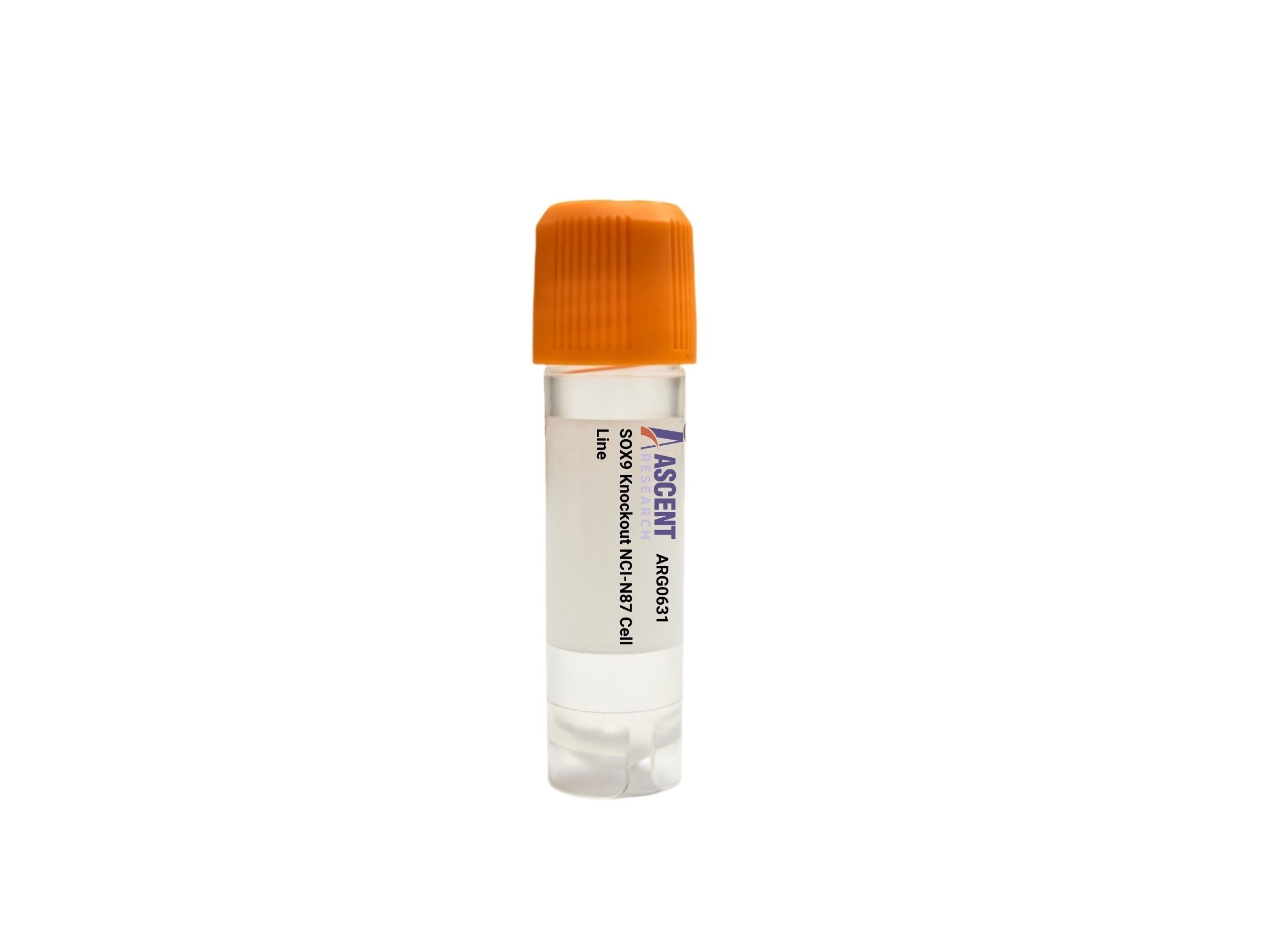
The SOX9 Knockout NCI-N87 Cell Line is a CRISPR/Cas9-edited gastric carcinoma model in which the SOX9 gene has been disrupted. SOX9, a transcription factor critical for epithelial-mesenchymal transition and cancer stemness, is activated by Wnt3a and TGF-??1 and drives expression of SNAI1 and MMP9. Derived from the metastatic NCI-N87 cell line, this knockout enables precise functional studies of SOX9 in gastric adenocarcinoma. Applications include Wnt/??-catenin pathway interrogation, EMT marker detection (SNAI1, ZEB1), drug sensitivity profiling, and functional assays such as proliferation, migration, and sphere formation, supporting gastric cancer mechanistic and translational research.
The SOX9 Knockout NCI-N87 Cell Line is a CRISPR/Cas9-edited human gastric carcinoma cell line in which the SOX9 gene has been disrupted, providing a loss-of-function tool for dissecting SOX9-mediated regulatory mechanisms. Derived from the widely used NCI-N87 gastric adenocarcinoma model, these engineered cells maintain the epithelial morphology and oncogenic characteristics of the parental line, enabling direct comparative studies between wild-type and knockout contexts. This model is particularly suited for investigating the transcriptional programs under SOX9 control in gastric cancer progression.
NCI-N87 is a well-characterized human gastric adenocarcinoma cell line isolated from a liver metastasis, making it a relevant model for studying metastatic gastric cancer. The cells harbor dysregulated PI3K/AKT signaling and exhibit robust proliferative and invasive properties. As an epithelial gastric tumor line, NCI-N87 is routinely employed in preclinical research to examine tumor biology and therapeutic responses. The SOX9 knockout version extends this platform by allowing the specific interrogation of SOX9-dependent phenotypes in a disease-relevant setting.
SOX9 is a master transcription factor essential for chondrogenesis, sex determination, and stem cell maintenance, and its aberrant activation in cancer promotes epithelial-mesenchymal transition (EMT) and tumorigenesis. In gastric cancer cells, SOX9 receives inputs from Wnt3a, TGF-??1, IL-6, and hypoxia (via HIF-1??), and functionally cooperates with SOX5, SOX6, SMAD3, CTNNB1, and EP300. Activated SOX9 transcriptionally upregulates MMP9, VEGFA, CCND1, SNAI1, and ZEB1, driving matrix remodeling, angiogenesis, proliferation, and EMT. Signaling cascades such as Wnt3a/FZD/LRP/??-catenin/TCF-LEF/SOX9 and TGF-??1/TGFBR/SMAD2/3-SMAD4/SOX9 converge on this transcriptional node to integrate growth and morphogenic signals.
In the NCI-N87 background, SOX9 sustains malignant properties including enhanced proliferation, invasion, and stemness. Knockout of SOX9 attenuates these traits, offering a system to probe the dependency of gastric adenocarcinoma on SOX9-driven transcription. This model is especially valuable for EMT research, as SOX9 directly induces SNAI1 and ZEB1, and for exploring crosstalk between Wnt/??-catenin and PI3K/AKT pathways that are often co-opted in gastric cancer.
The knockout line supports diverse assays: western blotting and RT-qPCR for SOX9 confirmation; CCK-8 for proliferation; Transwell and wound healing for migration/invasion; immunofluorescence for EMT markers SNAI1 and ZEB1; TOP/FOP Flash reporters for Wnt/??-catenin activity; sphere formation for stem cell capacity; and drug sensitivity profiling for therapeutic assessment. This versatility makes it a powerful resource for gastric cancer research and drug target validation. For technical inquiries, please contact Ascent Research.