Genome-edited Cells
Pancreas
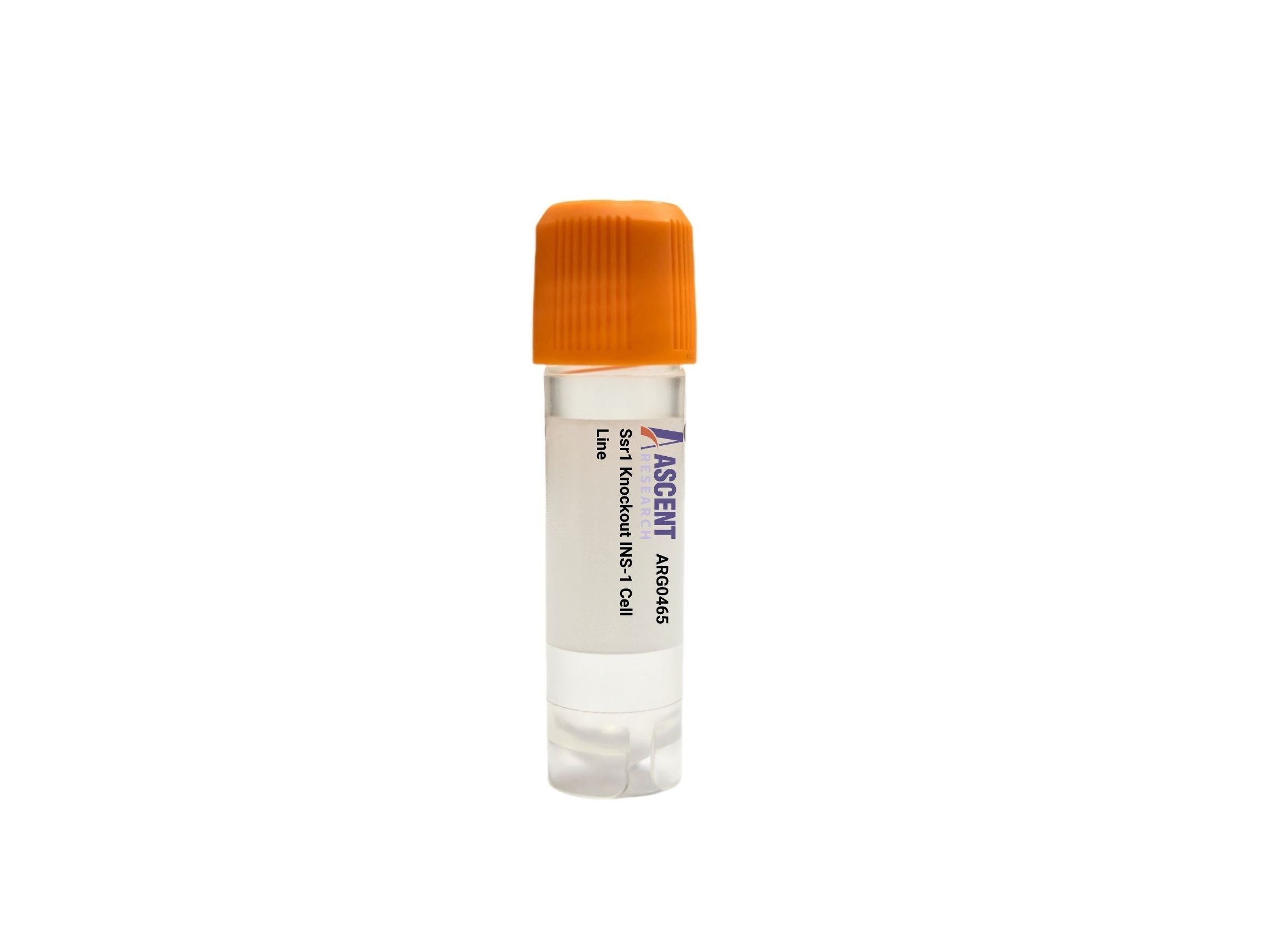
The Ssr1 Knockout INS-1 Cell Line is a CRISPR/Cas9-edited knockout cell line derived from the INS-1 rat pancreatic beta cell model, featuring targeted disruption of the Ssr1 gene, which encodes the TRAP?? subunit of the translocon-associated protein complex essential for ER protein translocation. In beta cells, SSR1 facilitates proinsulin entry into the ER; its knockout impairs insulin processing and glucose-stimulated secretion, modeling ER stress-related diabetic pathology. This line is ideal for studying ER translocation, unfolded protein response, insulin secretion, and ER stress modulator screening, with key interacting factors including SEC61 translocon and SRP receptor.
 DHFR Knockout Jurkat Polyclonal Cells
Cat. No. ARG12808
NSD2 Knockout A549 Polyclonal Cells
Cat. No. ARG10845
ATG7 Knockout HT29 Polyclonal Cells
Cat. No. ARG33079
DNAJC1 Knockout HT29 Polyclonal Cells
Cat. No. ARG39168
ECH1 Knockout jurkat Polyclonal Cells
Cat. No. ARG40334
PGM5 Knockout Raji Polyclonal Cells
Cat. No. ARG1288
DHFR Knockout Jurkat Polyclonal Cells
Cat. No. ARG12808
NSD2 Knockout A549 Polyclonal Cells
Cat. No. ARG10845
ATG7 Knockout HT29 Polyclonal Cells
Cat. No. ARG33079
DNAJC1 Knockout HT29 Polyclonal Cells
Cat. No. ARG39168
ECH1 Knockout jurkat Polyclonal Cells
Cat. No. ARG40334
PGM5 Knockout Raji Polyclonal Cells
Cat. No. ARG1288
The Ssr1 Knockout INS-1 Cell Line is a CRISPR/Cas9-edited knockout cell line engineered to disrupt the Ssr1 gene in the INS-1 rat pancreatic beta cell background. This loss-of-function model enables investigation of translocon-associated protein (TRAP) complex function in ER protein translocation and insulin secretion. The product is provided as a viable knockout cell line, offering a consistent platform for studying the molecular consequences of Ssr1 deletion in a beta-cell context relevant to diabetes research.
INS-1 cells were originally derived from an X-ray-induced rat insulinoma and serve as a widely employed model for pancreatic beta-cell function, particularly glucose-stimulated insulin secretion (GSIS). These cells retain key features of primary beta cells, including high-level insulin expression and regulated secretory pathways. The INS-1 background thus provides a physiologically relevant platform for dissecting the molecular machinery underlying insulin biosynthesis and secretion in the context of metabolic disorders such as diabetes mellitus.
Ssr1 encodes the TRAP?? subunit of the translocon-associated protein complex, a critical component that couples ribosome-nascent chain complexes to the SEC61 ER translocon to facilitate cotranslational import of nascent polypeptides into the endoplasmic reticulum. Within the ER protein translocation network, SSR1 interacts directly with SEC61?? and other TRAP subunits (SSR2, SSR3, SSR4), along with the signal recognition particle (SRP) and its receptor. The TRAP complex functions downstream of SRP-dependent targeting and acts upstream of ER chaperones such as BiP (HSPA5) and calnexin, as well as signal peptidase. Under high glucose or unfolded protein accumulation, Ssr1 expression is regulated by unfolded protein response (UPR) sensors including IRE1??, PERK, and ATF6, while its activity impacts downstream targets such as proinsulin processing enzymes (PC1/3, PC2, CPE) and UPR target genes like HSPA5 and DDIT3 (CHOP). Disruption of Ssr1 thus impairs ER translocation, triggering ER stress and altering insulin secretory pathway dynamics.
In the INS-1 beta-cell context, Ssr1 knockout disrupts efficient ER translocation of proinsulin, leading to defective proinsulin processing and reduced glucose-stimulated insulin secretion. This mimics aspects of ER stress-related beta-cell dysfunction observed in diabetes mellitus and metabolic syndrome, where chronic elevation of unfolded protein response pathways compromises insulin output. The model therefore facilitates dissection of how impaired cotranslational translocation contributes to beta-cell failure and provides a tool to study the interplay between ER homeostasis and insulin secretory granule biogenesis.
This Ssr1 knockout cell line supports a range of experimental applications, including mechanistic studies of ER protein translocation and the UPR in pancreatic beta cells, screening of pharmacological agents that modulate ER stress, and evaluation of translational control mechanisms governing secretory protein expression. Researchers can validate SSR1 disruption using western blotting or RT-qPCR, assess functional outcomes via insulin ELISA, proinsulin-to-insulin ratio measurement, and glucose-stimulated insulin secretion assays, and monitor ER stress markers such as BiP and CHOP. Additional assays include co-immunoprecipitation of TRAP complex components, pulse-chase labeling to track proinsulin processing, and flow cytometric viability analysis. For further details or to discuss custom applications, please contact Ascent Research.