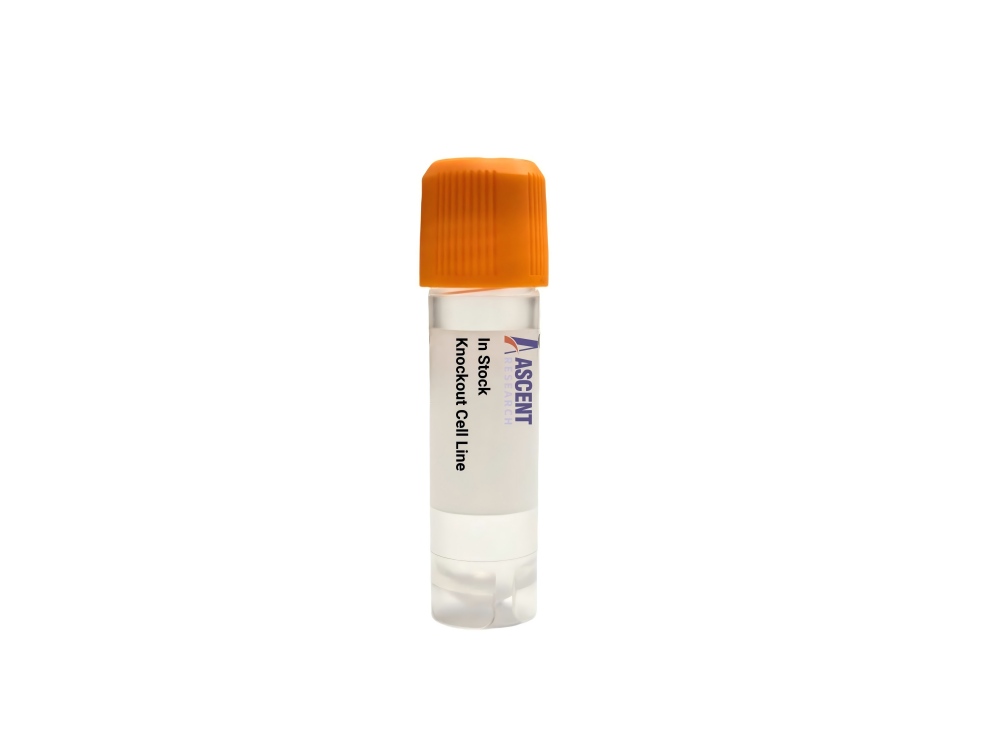
In Stock Cell Lines
Homo sapiens (Human)
Kidney
Adherent
The STC2 Knockout HEK293T Cell Line is a CRISPR/Cas9-edited human embryonic kidney cell line with targeted disruption of the STC2 gene, encoding the secreted glycoprotein stanniocalcin-2. STC2 modulates cell survival and proliferation through GRP78-mediated activation of PI3K/AKT and MAPK/ERK pathways and regulates endoplasmic reticulum stress responses. This loss-of-function model enables precise dissection of STC2??s roles in cancer biology, calcium homeostasis, and stress adaptation. Key applications include signal transduction analysis via phospho-AKT/ERK western blotting, apoptosis and proliferation assays, drug target validation, and investigation of unfolded protein response dynamics. The HEK293T background provides high transfection efficiency and robust expression for complementary overexpression studies.
 PHF20L1 Knockout SK-HEP-1 Polyclonal Cells
Cat. No. ARG15793
PHF20L1 Knockout SK-HEP-1 Polyclonal Cells
Cat. No. ARG15793
 Human Osteoblasts
Cat. No. ARP1118
PDLIM2 Knockout HT29 Polyclonal Cells
Cat. No. ARG14632
GMPPA Knockout A549 Polyclonal Cells
Cat. No. ARG10460
PDP1 Knockout Hela Polyclonal Cells
Cat. No. ARG8052
DKK1 Knockout 143B Polyclonal Cells
Cat. No. ARG38822
Human Osteoblasts
Cat. No. ARP1118
PDLIM2 Knockout HT29 Polyclonal Cells
Cat. No. ARG14632
GMPPA Knockout A549 Polyclonal Cells
Cat. No. ARG10460
PDP1 Knockout Hela Polyclonal Cells
Cat. No. ARG8052
DKK1 Knockout 143B Polyclonal Cells
Cat. No. ARG38822
The STC2 Knockout HEK293T Cell Line is a CRISPR/Cas9-edited human cell line derived from HEK293T, featuring targeted gene disruption of the STC2 locus. This loss-of-function model provides a genetically defined system for investigating stanniocalcin-2 biology, enabling precise dissection of its contributions to cellular signaling and homeostasis. The cell line is supplied in a ready-to-use format suitable for diverse in vitro assays, from routine biochemical studies to advanced pathway analysis.
HEK293T cells are human embryonic kidney epithelial cells that stably express the SV40 large T antigen, derived from the parental HEK293 line. Their high transfectability and robust capacity for protein expression make them a cornerstone in molecular biology for virus production, recombinant protein generation, and gene function studies. Adherent growth and a well-characterized genetic background ensure reproducible experimental outcomes, particularly for signaling and expression-based applications.
STC2 encodes stanniocalcin-2, a secreted glycoprotein hormone that functions as a paracrine and autocrine regulator of calcium and phosphate metabolism, cell proliferation, and stress responses. Mechanistically, STC2 binds to cell-surface receptors including GRP78 and integrins (e.g., ITGB1), activating downstream PI3K/AKT and MAPK/ERK signaling cascades. This activation leads to phosphorylation of AKT and ERK, promoting cell survival through upregulation of anti-apoptotic factors such as BCL2. Simultaneously, STC2 localizes to the endoplasmic reticulum, where it interacts with GRP78/BiP to modulate the unfolded protein response (UPR). By inhibiting Caspase-3 activation, STC2 attenuates ER stress-induced apoptosis. Upstream regulation of STC2 is driven by HIF1A under hypoxia, estrogen signaling, and ER stress, linking it to adaptive cellular programs.
In the HEK293T background, STC2 knockout offers a powerful tool to isolate its specific roles in signaling networks without confounding endogenous expression. The kidney epithelial origin is particularly relevant for studying calcium-dependent pathways and stress responses central to renal biology. Moreover, STC2’s established roles in cancer??including breast cancer and hepatocellular carcinoma??make this model valuable for therapeutic target validation. The SV40 T antigen also facilitates rescuing experiments via viral vector transduction to confirm genotype-phenotype relationships.
Researchers can employ this cell line for quantitative analysis of PI3K/AKT and MAPK/ERK pathway activity through phospho-specific western blotting, apoptosis assessment via Annexin V staining, and cell proliferation measurements using MTT or BrdU incorporation. It is also suited for investigating ER stress dynamics through RNA-seq profiling of UPR genes, probing STC2?CGRP78 interactions by co-immunoprecipitation, and measuring calcium flux with fluorescent indicators. These applications support drug target validation, signal transduction studies, and exploration of mechanisms underlying metabolic syndrome and neurodegeneration. For further details or specific applications, please contact Ascent Research.