Genome-edited Cells
Lung
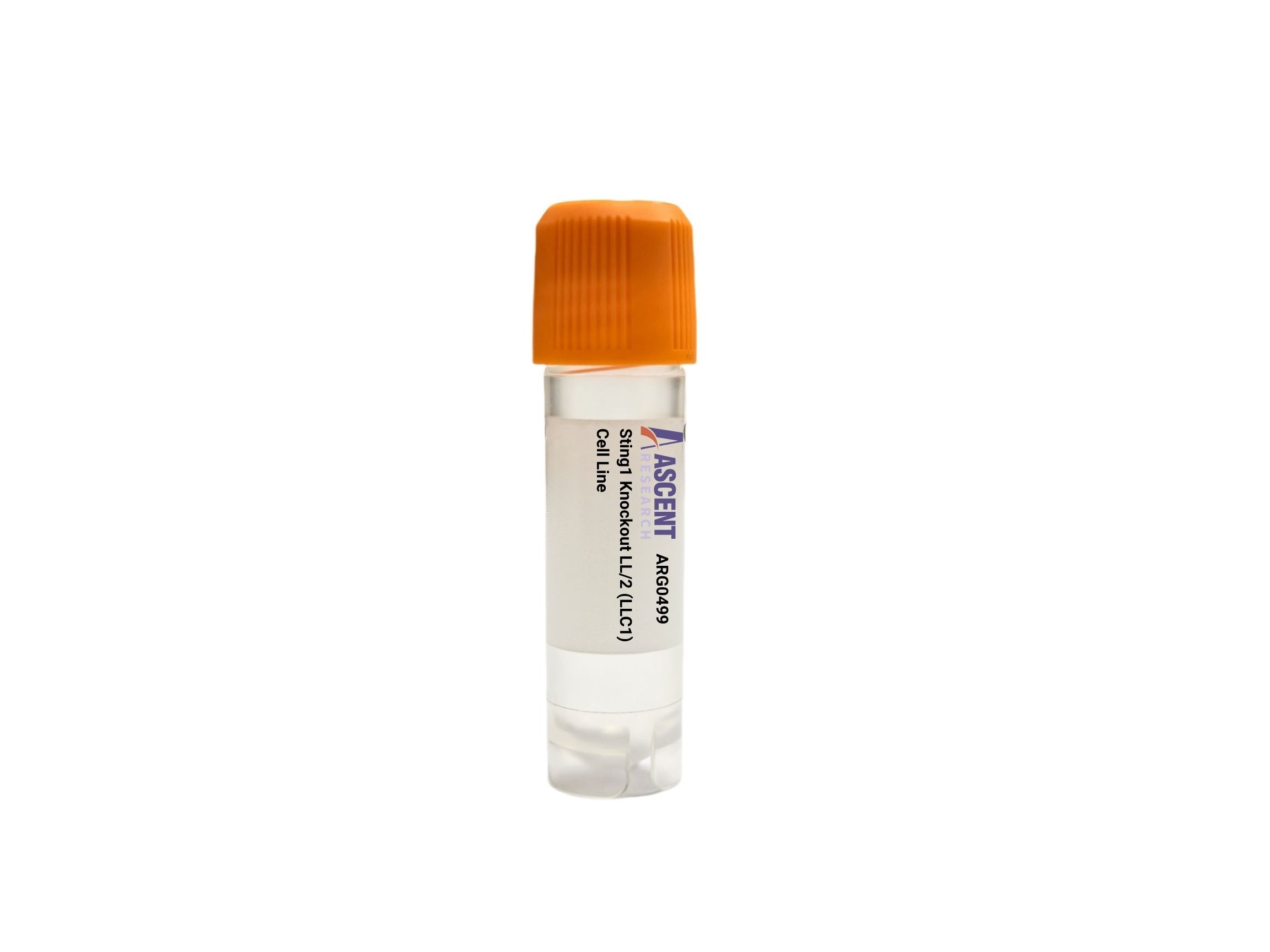
The Sting1 Knockout LL/2 (LLC1) Cell Line is a CRISPR/Cas9-edited knockout cell line derived from the mouse Lewis lung carcinoma LL/2 (LLC1) line. This model disrupts the Sting1 gene, which encodes the STING adaptor protein, a critical mediator of cytosolic DNA sensing and type I interferon induction via the cGAS?STING pathway. The knockout abrogates downstream signaling through TBK1 and IRF3, enabling dissection of STING?dependent innate immune responses in a syngeneic NSCLC background. Ideal for cancer immunotherapy research, this cell line supports studies of STING agonist efficacy, tumor microenvironment immune profiling, and combination therapy strategies. Representative assays include RT?qPCR for interferon?stimulated genes, ELISA for IFN???, and syngeneic tumor growth models.
 COPS7B Knockout A2780 Polyclonal Cells
Cat. No. ARG18500
CLTB Knockout SK-HEP-1 Polyclonal Cells
Cat. No. ARG15275
CCDC22 Knockout HGC-27 Polyclonal Cells
Cat. No. ARG42991
HNRNPUL1 Knockout HEK293T Polyclonal Cells
Cat. No. ARG38102
DPP9 Knockout A549 Polyclonal Cells
Cat. No. ARG39699
COPS7B Knockout A2780 Polyclonal Cells
Cat. No. ARG18500
CLTB Knockout SK-HEP-1 Polyclonal Cells
Cat. No. ARG15275
CCDC22 Knockout HGC-27 Polyclonal Cells
Cat. No. ARG42991
HNRNPUL1 Knockout HEK293T Polyclonal Cells
Cat. No. ARG38102
DPP9 Knockout A549 Polyclonal Cells
Cat. No. ARG39699
 SHP-77
Cat. No. ARC0815
SHP-77
Cat. No. ARC0815
The Sting1 Knockout LL/2 (LLC1) Cell Line is a CRISPR/Cas9-edited knockout cell line derived from the mouse Lewis lung carcinoma LL/2 (LLC1) parental line. This product features targeted disruption of the Sting1 gene, generating a loss-of-function model for STING-dependent innate immune signaling. As a stable knockout cell line, it provides a consistent background for interrogating STING??s role in cancer biology, immune recognition, and therapeutic response. This engineered cell line enables robust, reproducible dissection of STING-mediated pathways in vitro and in syngeneic tumor models.
The LL/2 (LLC1) host cell line was established from a spontaneous lung carcinoma in a C57BL/6 mouse and is a widely used syngeneic model for non?small cell lung cancer (NSCLC). These adherent cells are highly tumorigenic and metastatic, ideal for studying tumor progression, metastasis, and the tumor?Cimmune interface. The immunocompetent background allows evaluation of immune?mediated tumor control following implantation. LL/2 cells are well-characterized for their response to immunomodulatory agents, including STING agonists, and form tumors with a microenvironment resembling human NSCLC.
STING (stimulator of interferon genes), encoded by Sting1, is an ER?resident adaptor central to cytosolic DNA sensing. The enzyme cGAS generates 2??3???cGAMP upon DNA detection, activating STING. Activated STING translocates to the Golgi, recruiting and activating TBK1, which phosphorylates IRF3, driving nuclear translocation and induction of type I interferons and ISGs such as Ifit1, Cxcl10, and Isg15. STING also signals to NF???B, upregulating pro?inflammatory cytokines including IL?6 and TNF???. Regulatory factors like TRIM56, RNF5, and PPP6C modulate STING activity.
Knockout of Sting1 in the LL/2 (LLC1) background abrogates STING-dependent innate immune signaling, rendering cells unresponsive to cytosolic DNA and STING agonists such as DMXAA or c?di?AMP. Consequently, downstream activation of TBK1, IRF3, and NF???B is disrupted, eliminating type I interferon and ISG induction. In vivo, Sting1?deficient tumors are expected to show altered immune cell infiltration, reduced dendritic cell activation, and impaired CD8+ T cell priming, fostering an immunosuppressive microenvironment. This line serves as a critical control for dissecting cancer cell?intrinsic STING signaling in NSCLC.
Researchers can employ this cell line in RT?qPCR for ISG expression, western blotting for phospho?TBK1 and phospho?IRF3, and ELISA for IFN??? secretion. Flow cytometry profiles tumor?infiltrating immune populations, while cytokine multiplex assays quantify secretome changes. Syngeneic tumor growth studies in C57BL/6 mice assess STING agonist efficacy, checkpoint inhibitor combinations, and the role of tumor STING in anti?tumor immunity. Immunofluorescence can track STING trafficking in wild?type controls. For further details, please contact Ascent Research.