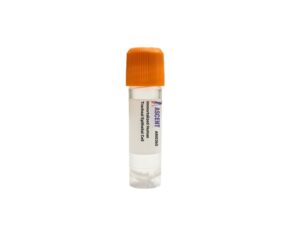
In Stock Cell Lines
Homo sapiens (Human)
Bone
Adherent
The STING1 Knockout SW1353 Cell Line is a CRISPR/Cas9-edited knockout model in the human SW1353 chondrosarcoma cell background, which endogenously expresses cartilaginous matrix and exhibits fibroblast-like morphology. Disruption of STING1 (STING) eliminates the key adaptor protein responsible for sensing cytosolic DNA and activating TBK1-IRF3 and NF-??B signaling cascades, thereby abrogating type I interferon and pro-inflammatory cytokine induction. This cell line provides a defined loss-of-function system for dissecting STING-dependent innate immune pathways in chondrosarcoma, including antiviral responses, inflammation, autophagy, and DNA damage?Cdriven senescence. It is well-suited for stimulation-based assays (e.g., cGAMP), phospho-TBK1/IRF3 analysis, cytokine ELISA, and live-cell imaging of STING trafficking, supporting research in oncology, immunology, and skeletal biology.
 GRIPAP1 Knockout NCI-H1299 Polyclonal Cells
Cat. No. ARG30674
IL27 Knockout Hela Polyclonal Cells
Cat. No. ARG36098
AP5S1 Knockout AGS Polyclonal Cells
Cat. No. ARG26591
NKD2 Knockout AGS Polyclonal Cells
Cat. No. ARG2561
GDI1 Knockout Raji Polyclonal Cells
Cat. No. ARG925
GRIPAP1 Knockout NCI-H1299 Polyclonal Cells
Cat. No. ARG30674
IL27 Knockout Hela Polyclonal Cells
Cat. No. ARG36098
AP5S1 Knockout AGS Polyclonal Cells
Cat. No. ARG26591
NKD2 Knockout AGS Polyclonal Cells
Cat. No. ARG2561
GDI1 Knockout Raji Polyclonal Cells
Cat. No. ARG925
 Mouse Adipocytes
Cat. No. ARP0577
Mouse Adipocytes
Cat. No. ARP0577
The STING1 Knockout SW1353 Cell Line is a CRISPR/Cas9-edited human knockout cell line with disrupted STING1 (STING) expression in the SW1353 chondrosarcoma background. This loss-of-function tool enables investigation of STING-dependent innate immune signaling in a tumor-derived cellular context that endogenously produces cartilaginous matrix. By eliminating STING, the model offers a clean system for comparative studies with parental SW1353 cells, retaining fibroblast-like morphology and matrix synthesis capabilities.
SW1353 cells were established from a grade II chondrosarcoma of the humerus of a 72-year-old female and display a fibroblast-like adherent morphology. They express cartilage-specific extracellular matrix proteins, making them a relevant in vitro model for chondrosarcoma pathogenesis and cartilage biology. This knockout in the SW1353 background enables the study of STING-mediated pathways in a cellular environment that mimics both malignant transformation and normal chondrocyte functions.
STING1 is an endoplasmic reticulum-resident adaptor that senses cytosolic double-stranded DNA via cGAS-generated cyclic dinucleotides. Ligand binding triggers STING translocation to the Golgi, where it recruits TBK1 and IKK complexes, leading to phosphorylation of IRF3 and NF-??B. These transcription factors induce type I interferons (e.g., IFN-??) and pro-inflammatory cytokines (TNF, IL-6, IL-1??). STING also interacts with autophagy proteins LC3 and ATG5, linking innate immunity to cellular degradation. Additional regulators include IFI16, DDX41, MAVS, and STIM1, underscoring STING’s central role in antiviral and inflammatory responses.
Knocking out STING in SW1353 cells provides a defined system to examine innate immune signaling in chondrosarcoma, where inflammation and DNA damage responses are often dysregulated. This model is particularly suited for dissecting STING-dependent effects on senescence, cytokine secretion, and extracellular matrix remodeling. It enables discrimination between STING-mediated and independent pathways in tumor-intrinsic immunity and may reveal therapeutic vulnerabilities in cartilage tumors.
The knockout cell line is applicable to a wide array of assays, including Western blotting for STING and phospho-TBK1/IRF3, cGAMP-stimulated interferon reporter assays, co-immunoprecipitation of STING-TBK1 complexes, and immunofluorescence tracking of STING trafficking. Flow cytometry, cytokine ELISA, and functional assays for migration, invasion, or metabolism further expand its utility. These experimental approaches support mechanistic studies in innate immunity, cancer immunotherapy, and autoimmune disease research. For additional information or to request a quote, please contact Ascent Research.