Genome-edited Cells
Bone (bone marrow)
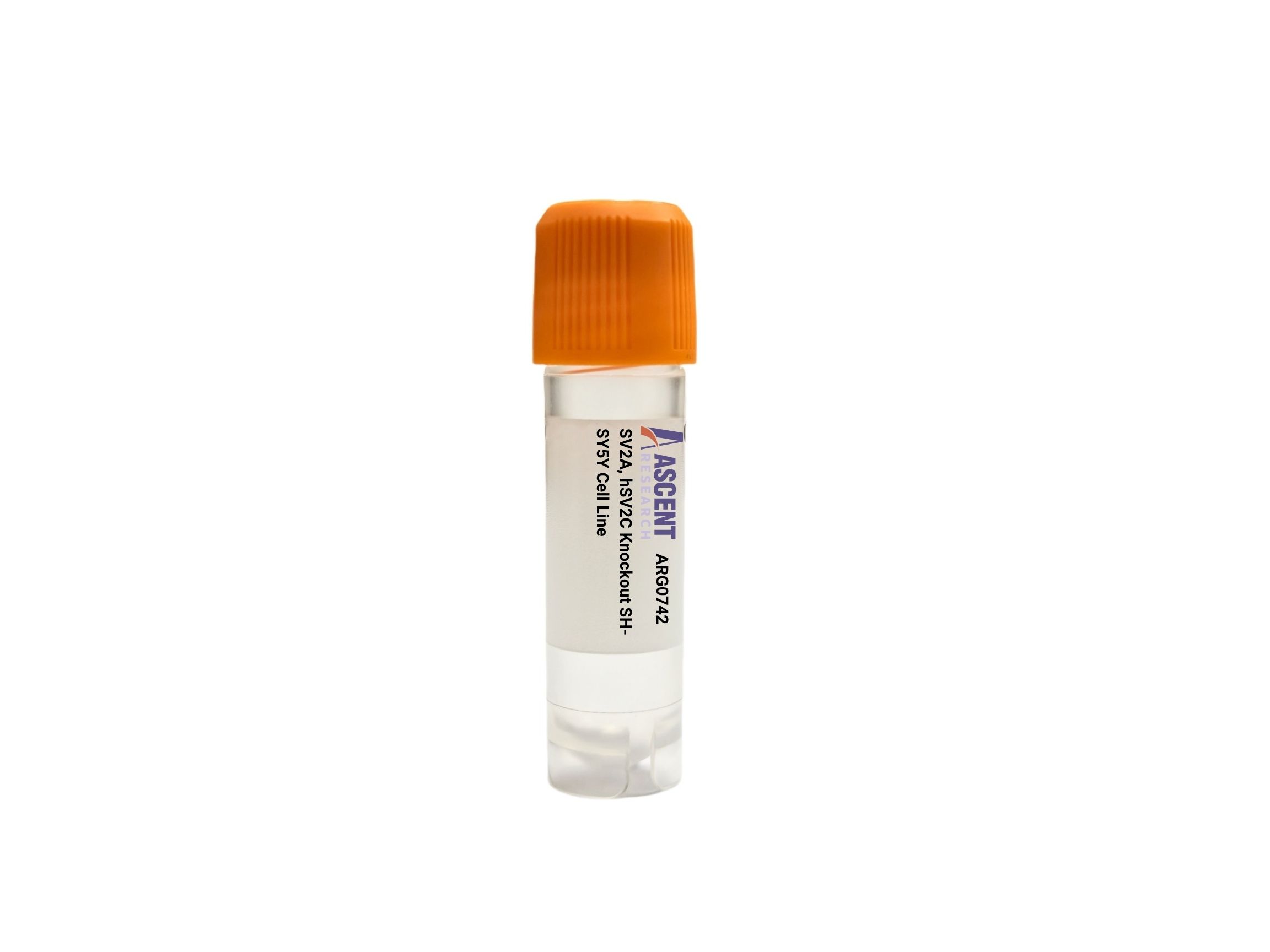
The SV2A, hSV2C Knockout SH-SY5Y Cell Line is a CRISPR/Cas9-edited human neuroblastoma cell line with dual disruption of the SV2A and hSV2C genes. This model eliminates expression of synaptic vesicle glycoproteins 2A and 2C, which are key regulators of neurotransmitter release through their interactions with synaptotagmin-1 and the SNARE complex. By impairing synaptic vesicle endocytosis and evoked secretion, the knockout line enables mechanistic studies of epilepsy, Alzheimer??s disease, and other neurological disorders. It supports levetiracetam target validation, botulinum neurotoxin research, and high-throughput screening for SV2A ligands using assays such as dopamine release and electrophysiology. For further information, contact Ascent Research.
 LIMK1 Knockout SK-HEP-1 Polyclonal Cells
Cat. No. ARG16022
Coq8b Knockout RAW 264.7 Polyclonal Cells
Cat. No. ARG12537
KIAA1522 Knockout MES-OV Polyclonal Cells
Cat. No. ARG24717
MGST2 Knockout 786-O Polyclonal Cells
Cat. No. ARG5629
PHF10 Knockout 786-O Polyclonal Cells
Cat. No. ARG5294
LAMP2 Knockout Raji Polyclonal Cells
Cat. No. ARG2050
LIMK1 Knockout SK-HEP-1 Polyclonal Cells
Cat. No. ARG16022
Coq8b Knockout RAW 264.7 Polyclonal Cells
Cat. No. ARG12537
KIAA1522 Knockout MES-OV Polyclonal Cells
Cat. No. ARG24717
MGST2 Knockout 786-O Polyclonal Cells
Cat. No. ARG5629
PHF10 Knockout 786-O Polyclonal Cells
Cat. No. ARG5294
LAMP2 Knockout Raji Polyclonal Cells
Cat. No. ARG2050
The SV2A, hSV2C Knockout SH-SY5Y Cell Line is a CRISPR/Cas9-mediated gene-disrupted neuronal model in which both the SV2A and human SV2C (hSV2C) genes have been functionally inactivated within the SH-SY5Y human neuroblastoma background. This engineered cell line provides a stable, loss-of-function system for investigating the coordinated roles of synaptic vesicle glycoprotein 2A and 2C in neurotransmitter release and synaptic vesicle cycling without the need for transient knockdown reagents.
SH-SY5Y is a widely used human neuroblastoma cell line originally subcloned from the parental SK-N-SH line, which was derived from a bone marrow metastasis of a neuroblastoma patient. These cells display a dopaminergic phenotype and retain the capacity to differentiate into neuron-like cells upon treatment with agents such as retinoic acid. As a result, the SH-SY5Y model supports studies of neuronal differentiation, neurotransmitter release, and neurodegenerative disease mechanisms in a human cellular context.
SV2A and SV2C are integral synaptic vesicle membrane proteins that modulate neurotransmitter exocytosis by interacting directly with the SNARE complex protein synaptotagmin-1 and influencing the core SNARE complex (syntaxin-1, SNAP-25, VAMP2) to control fusion pore dynamics. Additionally, SV2A acts as the pharmacological target of levetiracetam and a receptor for botulinum neurotoxin type A, while SV2C forms hetero-oligomers with SV2B and is upregulated by synaptic activity and calcium influx. In the knockout cells, disruption of SV2A and SV2C impairs vesicle endocytosis and evoked neurotransmitter secretion, altering network excitability.
In the SH-SY5Y background, double knockout of SV2A and SV2C disrupts the normal synaptic vesicle cycle, providing a physiologically relevant platform to dissect how these glycoproteins govern neurotransmitter release kinetics and synaptic homeostasis. This model recapitulates key deficits observed in loss-of-function studies, such as diminished evoked dopamine secretion and reduced sensitivity to levetiracetam. It thus enables investigation of synaptic dysfunction underlying epilepsy, Alzheimer??s disease, schizophrenia, Huntington??s disease, and neurodevelopmental disorders in a human neuronal cell context.
The SV2A, hSV2C Knockout SH-SY5Y Cell Line is amenable to a broad range of mechanistic and pharmacological assays. Researchers can use Western blotting and RT-qPCR to confirm targeted gene disruption, immunofluorescence to assess synaptic vesicle localization, and [3H]-dopamine release assays or patch-clamp electrophysiology to measure functional neurotransmitter secretion. The line is also compatible with levetiracetam binding studies for drug target validation and with high-throughput screening formats for identifying novel SV2A ligands. For technical details or to request this model, contact Ascent Research.