Genome-edited Cells
Bone (bone marrow)
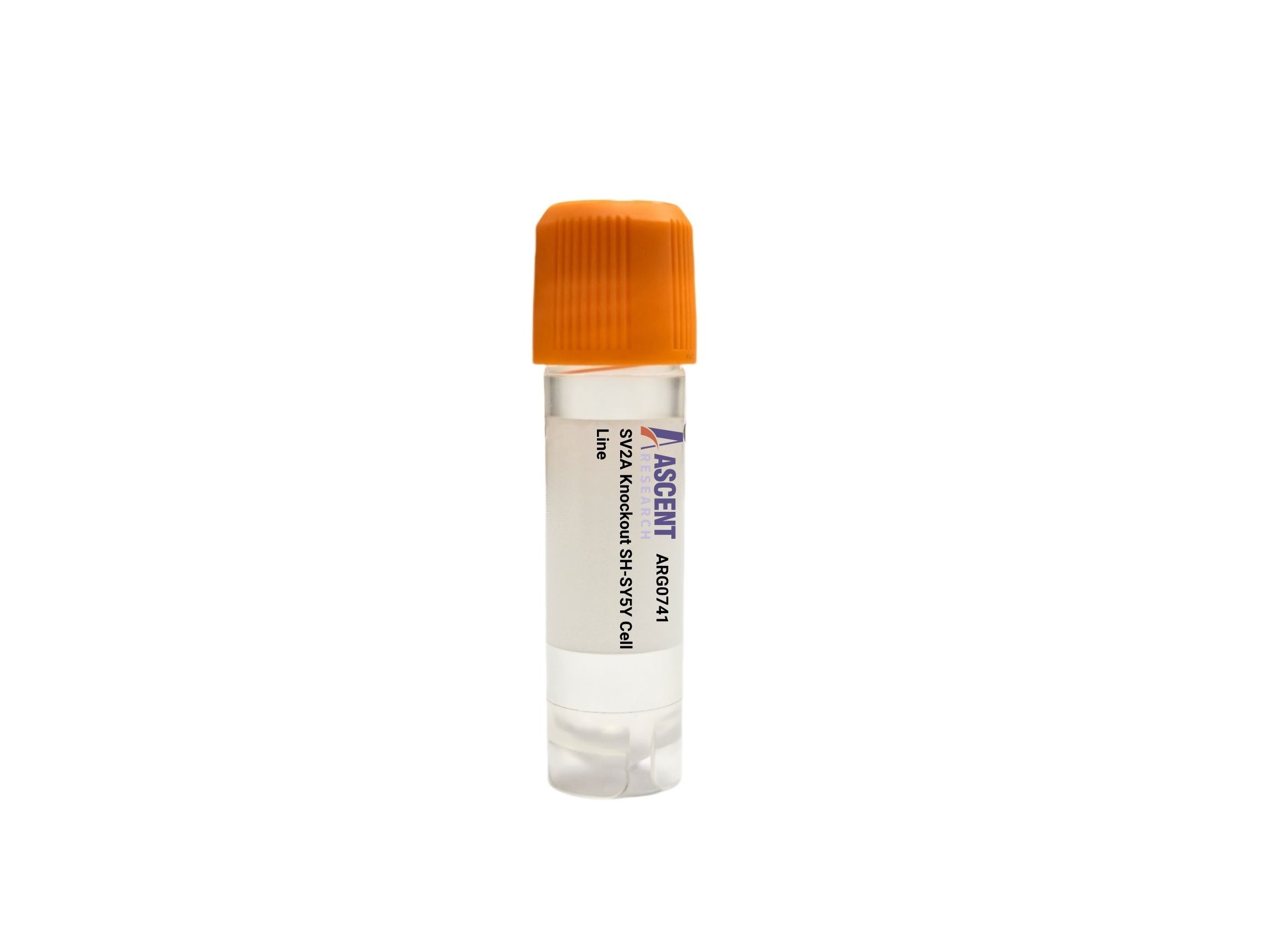
The SV2A Knockout SH-SY5Y Cell Line is a CRISPR/Cas9-edited knockout cell line derived from the human neuroblastoma SH-SY5Y cell line. This model disrupts the SV2A gene, which encodes a synaptic vesicle glycoprotein critical for neurotransmitter release modulation and serves as the molecular target of levetiracetam. SV2A interacts with SYT1 and regulates SNARE complex function; its loss impairs synaptic vesicle priming and fusion. The cell line is ideal for studying synaptic transmission, epilepsy drug discovery, and synaptic dysfunction in Alzheimer's disease using techniques such as calcium imaging and neurotransmitter release assays.
 ENOSF1 Knockout SK-HEP-1 Polyclonal Cells
Cat. No. ARG15761
PDIK1L Knockout HT29 Polyclonal Cells
Cat. No. ARG14031
ITGB1BP1 Knockout HEK293T Polyclonal Cells
Cat. No. ARG26168
ALG9 Knockout jurkat Polyclonal Cells
Cat. No. ARG33804
CASP6 Knockout UMUC-3 Polyclonal Cells
Cat. No. ARG42501
CNPY3 Knockout 786-O Polyclonal Cells
Cat. No. ARG5221
ENOSF1 Knockout SK-HEP-1 Polyclonal Cells
Cat. No. ARG15761
PDIK1L Knockout HT29 Polyclonal Cells
Cat. No. ARG14031
ITGB1BP1 Knockout HEK293T Polyclonal Cells
Cat. No. ARG26168
ALG9 Knockout jurkat Polyclonal Cells
Cat. No. ARG33804
CASP6 Knockout UMUC-3 Polyclonal Cells
Cat. No. ARG42501
CNPY3 Knockout 786-O Polyclonal Cells
Cat. No. ARG5221
The SV2A Knockout SH-SY5Y Cell Line is a CRISPR/Cas9-edited knockout cell line generated from the SH-SY5Y human neuroblastoma cell line, designed to disrupt the SV2A gene encoding synaptic vesicle glycoprotein 2A. This loss-of-function model provides a controlled genetic background for investigating the roles of SV2A in neurotransmitter release and synaptic vesicle dynamics. The cell line serves as a reliable tool for studying synaptic transmission mechanisms, drug target validation, and disease modeling in a human neuronal context.
The host SH-SY5Y cell line is a subclone of SK-N-SH, originally established from a bone marrow biopsy of a 4-year-old female with neuroblastoma. SH-SY5Y cells exhibit a sympathetic nervous system origin and can be differentiated into a neuronal-like state using agents such as retinoic acid, making them a widely used model for neuronal differentiation, neurodegeneration, and synaptic function studies. The adherent cell line retains key neuronal features, including expression of synaptic proteins and the ability to form neurites upon differentiation, providing a physiologically relevant background for SV2A knockout.
SV2A is a synaptic vesicle glycoprotein that modulates neurotransmitter release by interacting with synaptotagmin-1 (SYT1) and regulating SNARE complex function, including VAMP2, STX1A, and SNAP25, during synaptic vesicle priming and fusion. Its activity is regulated upstream by neuronal activity and the transcription factors CREB and REST, while downstream events involve calcium-triggered exocytosis and SNARE-mediated vesicle fusion. SV2A also serves as the molecular target of the antiepileptic drug levetiracetam, linking it to seizure control. The protein forms complexes with SV2B, SV2C, and the adaptor protein AP2M1, and operates within a pathway that includes CPLX1 and RAB3A to coordinate the synaptic vesicle cycle.
In the SH-SY5Y background, SV2A knockout impairs synaptic vesicle priming and fusion, leading to diminished neurotransmitter release and altered synaptic transmission. Differentiated SH-SY5Y cells expressing neuronal markers allow researchers to study how loss of SV2A affects activity-dependent synaptic vesicle recycling and calcium-regulated exocytosis. This model is particularly valuable for exploring synaptic dysfunction in disorders such as epilepsy and Alzheimer’s disease, where SV2A expression or function may be compromised. The isogenic nature of the knockout line facilitates direct comparison with wild-type SH-SY5Y cells in phenotypic assays.
The SV2A Knockout SH-SY5Y Cell Line supports a broad range of research applications, including studies of synaptic vesicle biology, levetiracetam mechanism of action, and epilepsy drug discovery. Researchers can employ techniques such as western blotting and immunofluorescence to confirm SV2A depletion, neurotransmitter release assays and calcium imaging to assess functional deficits, and co-immunoprecipitation to probe SV2A interactions with SYT1 or SNARE components. The line is also suitable for synaptic vesicle recycling assays, RT-qPCR analysis of synaptic gene expression, and levetiracetam binding assays under loss-of-function conditions. For additional details or technical inquiries, please contact Ascent Research.