Genome-edited Cells
Brain
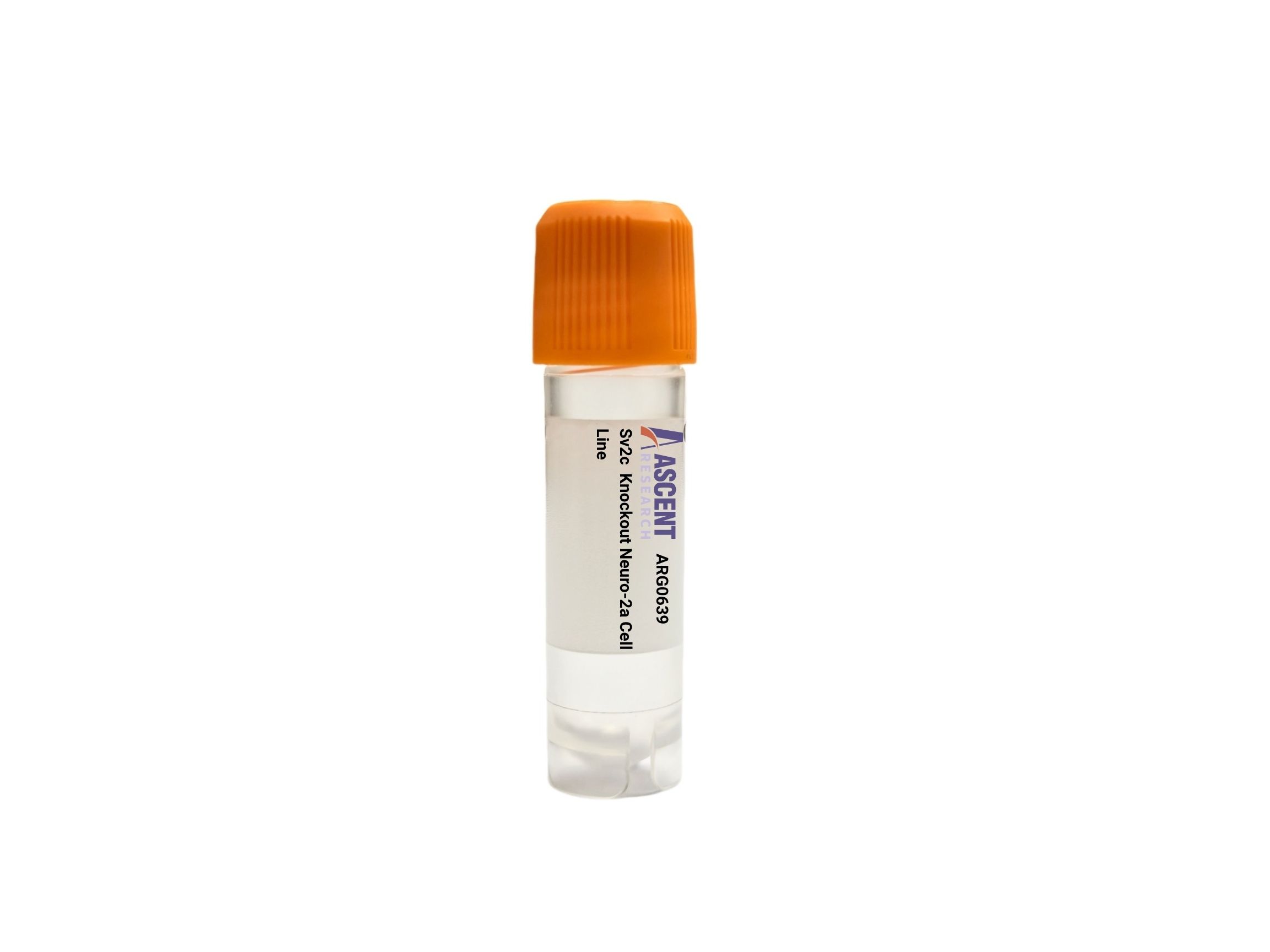
The Sv2c Knockout Neuro-2a Cell Line is a CRISPR/Cas9-edited knockout mouse neuroblastoma cell model with targeted disruption of the Sv2c gene. SV2C, a synaptic vesicle protein, regulates neurotransmitter release by modulating synaptotagmin?CSNARE complex interactions downstream of calcium influx and kinases such as PKA/PKC. This loss-of-function line provides a physiologically relevant system for studying synaptic vesicle trafficking and neurotransmitter release. Applications include investigating synaptic dysfunction in neurological disease models, screening for modulators of synaptic proteins, and evaluating neurotoxin mechanisms such as botulinum neurotoxin action. The line supports assays including electrophysiology, FM dye uptake, co-immunoprecipitation, and immunofluorescence. For further details, contact Ascent Research.
 CEACAM7 Knockout SK-Hep-1 Polyclonal Cells
Cat. No. ARG16303
EML3 Knockout HT29 Polyclonal Cells
Cat. No. ARG14313
ALAS1 Knockout Hela Polyclonal Cells
Cat. No. ARG20728
ANKRD10 Knockout NCI-H1975 Polyclonal Cells
Cat. No. ARG31123
ACTR1B Knockout CAL27 Polyclonal Cells
Cat. No. ARG35328
DTWD2 Knockout NCI-H1975 Polyclonal Cells
Cat. No. ARG39943
CEACAM7 Knockout SK-Hep-1 Polyclonal Cells
Cat. No. ARG16303
EML3 Knockout HT29 Polyclonal Cells
Cat. No. ARG14313
ALAS1 Knockout Hela Polyclonal Cells
Cat. No. ARG20728
ANKRD10 Knockout NCI-H1975 Polyclonal Cells
Cat. No. ARG31123
ACTR1B Knockout CAL27 Polyclonal Cells
Cat. No. ARG35328
DTWD2 Knockout NCI-H1975 Polyclonal Cells
Cat. No. ARG39943
The Sv2c Knockout Neuro-2a Cell Line is a CRISPR/Cas9-edited knockout cell line designed to disrupt the Sv2c gene in the mouse neuroblastoma Neuro-2a background. This cell line provides a loss-of-function model for studying the role of the synaptic vesicle glycoprotein SV2C in neurotransmitter release and synaptic physiology. Gene disruption is achieved through CRISPR/Cas9-mediated genome editing, generating a stable Sv2c-null cell line suitable for a wide range of functional assays. The knockout model enables precise interrogation of SV2C-dependent molecular mechanisms without the confounding effects of residual protein expression.
Neuro-2a cells are a mouse neuroblastoma line isolated from a spontaneous tumor in strain A mice, capable of differentiating into neuron-like cells. This line endogenously expresses synaptic vesicle proteins such as SV2 isoforms, providing a relevant neuronal context for Sv2c knockout studies. Its rapid proliferation and ease of manipulation enable efficient functional and biochemical assays.
SV2C is a transmembrane glycoprotein localized to synaptic vesicles, modulating calcium-dependent neurotransmitter release by regulating synaptotagmin?CSNARE complex interactions. Activated by neuronal activity and calcium influx, and phosphorylated by PKA and PKC, SV2C interacts with synaptotagmin, SV2A, and SV2B, and is a target of botulinum neurotoxin. Disruption of Sv2c alters SNARE complex (VAMP, SNAP-25, syntaxin) assembly, impairing synaptic vesicle fusion and reducing calcium sensitivity and neurotransmission. Synapsin and Rab3 further coordinate vesicle cycling within this presynaptic network.
In Neuro-2a cells, Sv2c knockout enables dissection of isoform-specific synaptic functions without SV2A/B interference. Upon differentiation, the knockout allows study of activity-dependent neurotransmitter release, vesicle recycling, and calcium signaling. This model is relevant to epilepsy, Parkinson??s, Alzheimer??s, and anxiety disorders, where altered SV2C is implicated, and facilitates neurotoxin susceptibility studies, including botulinum neurotoxin action.
This Sv2c knockout cell line supports diverse applications: mechanistic studies of synaptic vesicle trafficking, neurotransmitter release assays (electrophysiology, FM dye uptake), and pharmacological screening for SV2C modulators. It enables co-immunoprecipitation with synaptotagmin, FRET-based interaction studies, and immunofluorescence localization. The model also aids disease research by evaluating SV2C loss effects on neuronal viability and signaling in neurodegenerative or neuropsychiatric contexts. For further details, please contact Ascent Research.