Genome-edited Cells
Blood (peripheral blood)
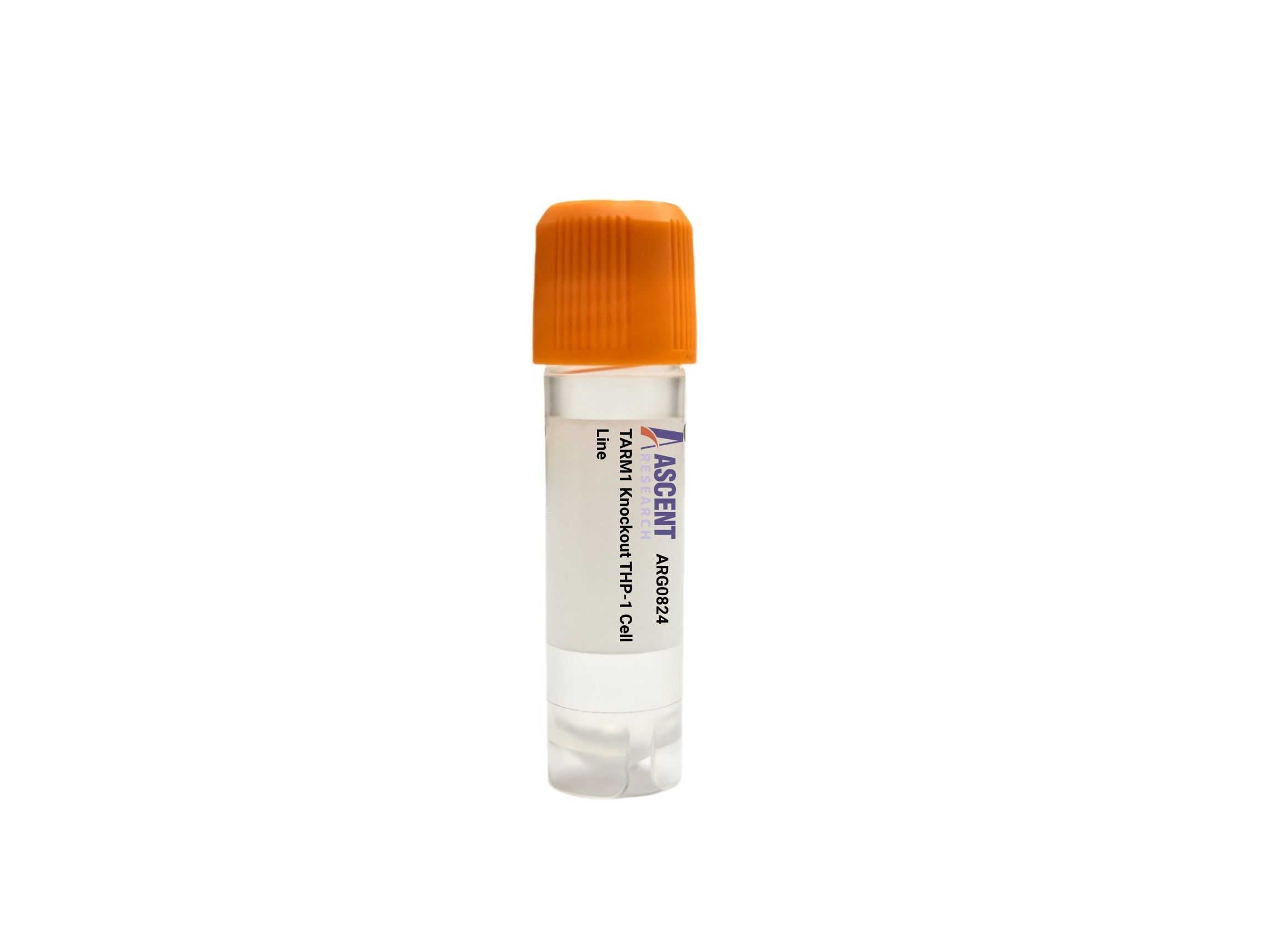
CRISPR/Cas9-edited knockout of TARM1 in THP-1 human monocytic leukemia cells provides a loss-of-function model for studying myeloid cell activation. TARM1 is a myeloid receptor that signals via DAP12 and SYK to promote NF-??B and MAPK-driven proinflammatory cytokine production, mediating interactions with activated T cells. This cell line enables dissection of innate immune pathways, screening for TARM1 ligands, and validation of therapeutic targets in inflammatory diseases. Applications include cytokine ELISA, phospho-protein analysis, and co-culture assays to examine myeloid-T cell crosstalk.
 HNRNPLL Knockout K562 Polyclonal Cells
Cat. No. ARG20582
CENPV Knockout NCI-H1975 Polyclonal Cells
Cat. No. ARG16581
FBXW9 Knockout Hela Polyclonal Cells
Cat. No. ARG8637
C9orf64 Knockout MES-OV Polyclonal Cells
Cat. No. ARG41605
DNAJB4 Knockout HEK293T Polyclonal Cells
Cat. No. ARG39134
HNRNPLL Knockout K562 Polyclonal Cells
Cat. No. ARG20582
CENPV Knockout NCI-H1975 Polyclonal Cells
Cat. No. ARG16581
FBXW9 Knockout Hela Polyclonal Cells
Cat. No. ARG8637
C9orf64 Knockout MES-OV Polyclonal Cells
Cat. No. ARG41605
DNAJB4 Knockout HEK293T Polyclonal Cells
Cat. No. ARG39134
 COLO 320HSR Luciferase Stable Cell Line
Cat. No. ARG0198
COLO 320HSR Luciferase Stable Cell Line
Cat. No. ARG0198
The TARM1 Knockout THP-1 Cell Line is a CRISPR/Cas9-edited knockout cell line derived from the THP-1 human acute monocytic leukemia line, offering a loss-of-function model for studying TARM1 in myeloid biology. This ready-to-use resource, generated through CRISPR/Cas9-mediated gene disruption, eliminates the need for in-house editing, ensuring consistent and reproducible experiments in innate immunity research.
THP-1 cells were originally isolated from a pediatric acute monocytic leukemia patient and serve as a well-established model for monocyte/macrophage differentiation and function. Treatment with phorbol myristate acetate (PMA) induces macrophage-like properties, including adhesion, phagocytosis, and cytokine production. Their monocytic origin and retention of key signaling pathways make them ideal for investigating myeloid-specific receptors and innate immune responses.
TARM1 is an activating receptor expressed on myeloid cells that mediates innate immune activation upon interaction with as-yet-unidentified ligands on activated T cells. The receptor signals through the ITAM-bearing adaptor DAP12 (TYROBP), which upon engagement recruits and activates Src family kinases, leading to phosphorylation of SYK. Activated SYK initiates a cascade involving PI3K and AKT, as well as the IKK complex, resulting in NF-??B nuclear translocation. Parallel MAPK pathways, including ERK, JNK, and p38, activate AP-1. Together, these events promote transcription of proinflammatory cytokines, including TNF-??, IL-6, and IL-1??.
In THP-1 cells, which endogenously express DAP12 and the relevant signaling components, TARM1 knockout provides a precise tool to delineate receptor-specific contributions to myeloid activation and cytokine production, without interference from other ITAM-coupled receptors. This model is particularly suited to investigate how TARM1 modulates innate immune responses at distinct differentiation stages, as THP-1 cells can be differentiated into macrophage-like cells with PMA. It holds significant relevance for studying inflammatory diseases, autoimmune disorders, and sepsis, where dysregulated myeloid-T cell crosstalk contributes to pathogenesis.
The knockout cell line enables a range of experimental approaches: co-culture with activated T cells to probe ligand-receptor interactions and functional consequences; ELISA for quantification of TNF-??, IL-6 secretion; luciferase-based assays to assess NF-??B or AP-1 activity; and western blotting to monitor phosphorylation of SYK, AKT, and ERK1/2. Flow cytometry verifies TARM1 expression ablation, and macrophage differentiation assays extend analysis to matured cells. It is amenable to drug target validation and screening for modifiers of myeloid activation. For further information, please contact Ascent Research.