Genome-edited Cells
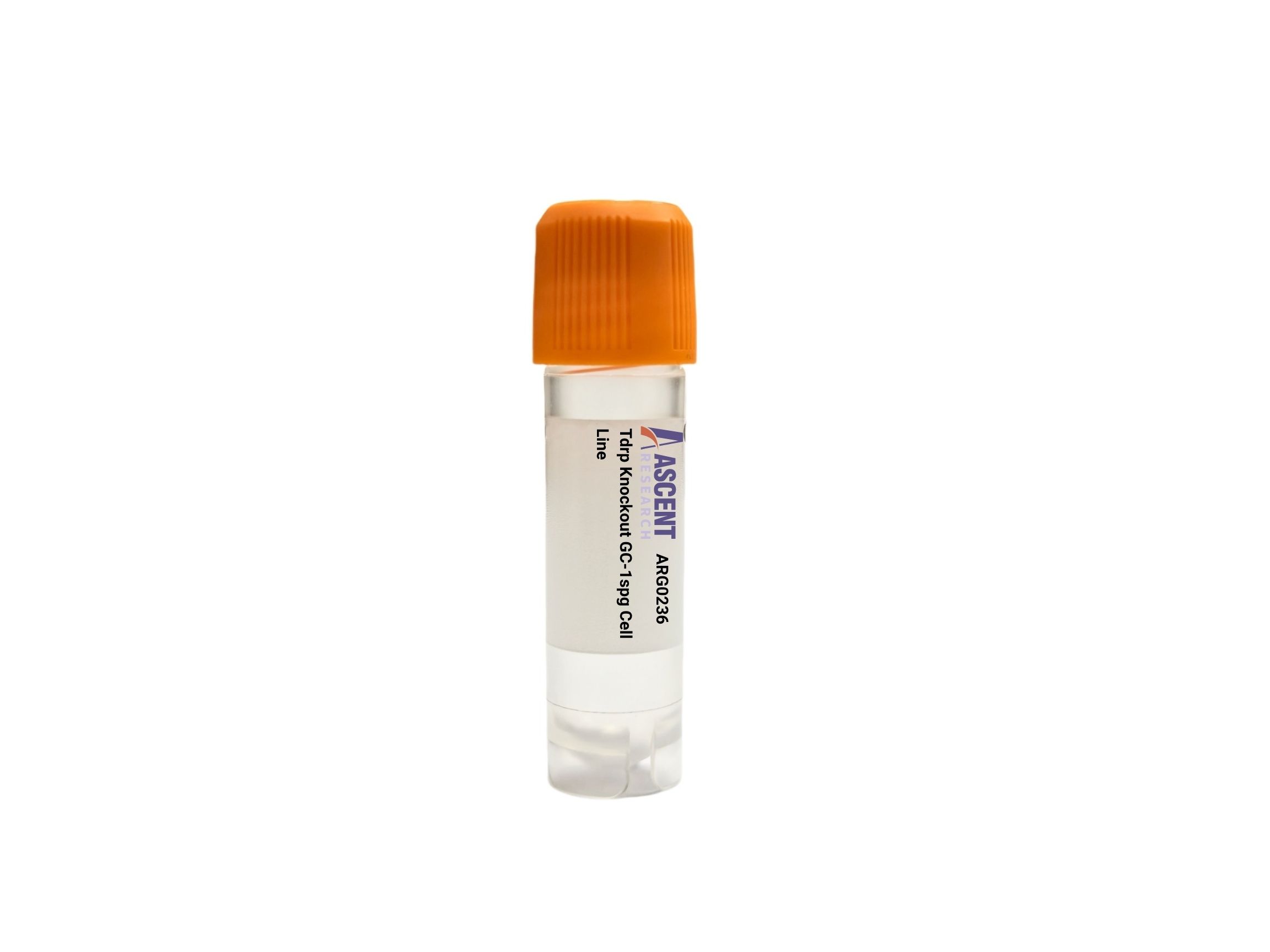
The Tdrp Knockout GC-1spg Cell Line offers a CRISPR/Cas9-mediated loss-of-function model of the Testis Development Related Protein (TDRP) in a mouse spermatogonial background. Derived from the GC-1spg line, these knockout cells provide a relevant platform for studying spermatogenesis, acrosome biogenesis, and male fertility mechanisms. TDRP functions downstream of CREM and SOX9 transcription factors and regulates acrosomal proteins such as acrosin and SP-10. Key applications include immunofluorescence detection of acrosomal proteins, RT-qPCR, Western blotting, and acrosome reaction assays, supporting male fertility drug screening and acrosome biogenesis research.
 GPRC5A Knockout K562 Polyclonal Cells
Cat. No. ARG20490
GPRC5A Knockout K562 Polyclonal Cells
Cat. No. ARG20490
 C5AR1 Knockout THP-1 Cell Line
Cat. No. ARG43768
LDHB Knockout HEK293 Polyclonal Cells
Cat. No. ARG12738
GTF2IRD1 Knockout HAP1 Polyclonal Cells
Cat. No. ARG22428
CD300ld Knockout Hela Polyclonal Cells
Cat. No. ARG43490
C5AR1 Knockout THP-1 Cell Line
Cat. No. ARG43768
LDHB Knockout HEK293 Polyclonal Cells
Cat. No. ARG12738
GTF2IRD1 Knockout HAP1 Polyclonal Cells
Cat. No. ARG22428
CD300ld Knockout Hela Polyclonal Cells
Cat. No. ARG43490
 CCF-STTG1
Cat. No. ARC0123
CCF-STTG1
Cat. No. ARC0123
The Tdrp Knockout GC-1spg Cell Line is a CRISPR/Cas9-edited knockout cell line derived from the mouse spermatogonial GC-1spg cell line, providing a targeted disruption of the Testis Development Related Protein (TDRP) coding gene. This loss-of-function model enables precise investigation of TDRP’s role in spermatogenesis and acrosome biogenesis without reliance on transient gene silencing.
The parental GC-1spg line originates from B6D2F1 mouse spermatogonia and represents a well-established type B spermatogonial model capable of undergoing differentiation toward spermatids. This cellular background retains key germline stem/progenitor characteristics, making it relevant for studying early spermatogenic events and acrosome development in a physiologically meaningful context.
TDRP functions within a regulatory network governed by the transcription factors CREM and SOX9, which are known upstream regulators in male germ cells. Downstream, the protein promotes the expression and proper localization of acrosomal matrix components such as acrosin and SP-10. TDRP also interacts with Spaca1 and other acrosomal structural proteins, while additional pathway members including ACRV1 and PCSK4 contribute to acrosome formation. Together, these interactions position TDRP as a central coordinator of acrosome biogenesis and sperm maturation.
Knocking out Tdrp in the GC-1spg spermatogonial context disrupts acrosome vesicle assembly and impairs the differentiation program required for functional sperm production. Loss of TDRP activity is anticipated to alter the distribution of acrosomal markers, destabilize critical protein complexes, and potentially trigger differentiation stress responses. The cell line thus provides a tractable model for dissecting the molecular requirements for acrosome formation at pre-spermiogenic stages that are otherwise inaccessible in animal models.
This model supports diverse experimental workflows, including immunofluorescence detection of SP-10 and other acrosomal proteins, RT-qPCR analysis of differentiation gene expression, Western blotting for acrosomal markers, and acrosome reaction capacity assays under induced differentiation conditions. The system is also applicable to proliferation, apoptosis, and drug-screening studies focused on male fertility targets. For further details or custom applications, please contact Ascent Research.