In Stock Cell Lines
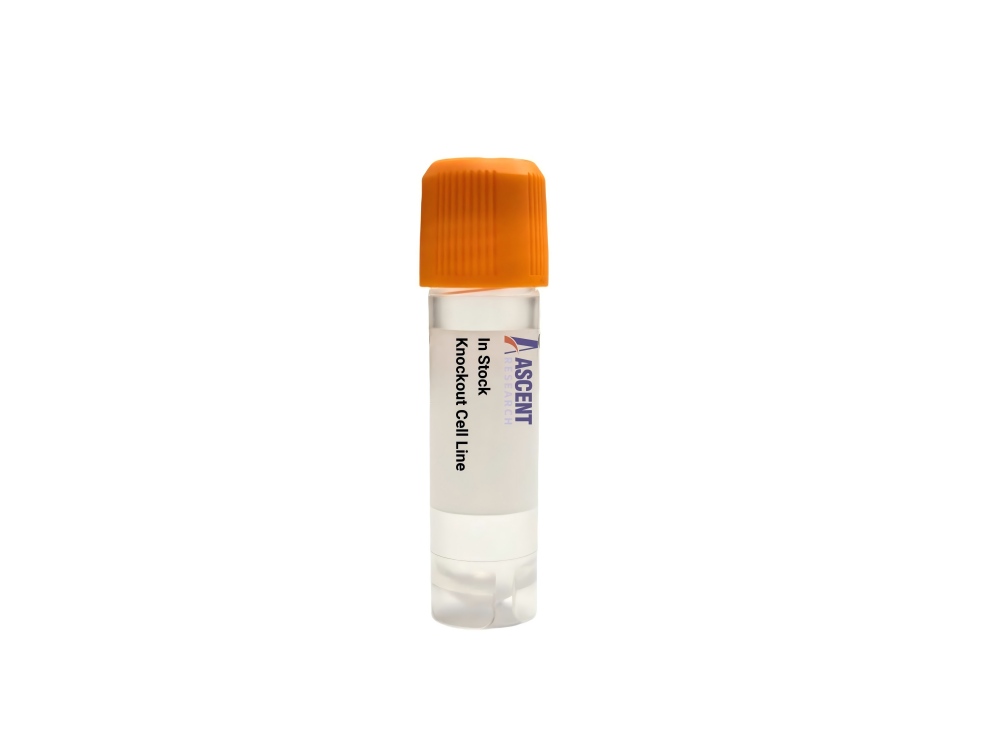
The TET2 Knockout K-562 Cell Line is a CRISPR/Cas9-edited knockout model in BCR-ABL-positive K-562 chronic myeloid leukemia cells, enabling loss-of-function studies of the TET2 dioxygenase that mediates DNA demethylation. TET2, activated by ??-ketoglutarate and inhibited by 2-hydroxyglutarate, regulates hematopoietic differentiation through targets such as GATA2 and RUNX1. This knockout cell line is ideal for modeling TET2-mutant myeloid malignancies, investigating epigenetic dysregulation in leukemogenesis, and screening therapeutic agents targeting DNA methylation abnormalities. Applications include global 5hmC quantification, RNA-seq transcriptomics, and flow cytometry for differentiation markers.
 CTAG2 Knockout SK-HEP-1 Polyclonal Cells
Cat. No. ARG15810
FBXL8 Knockout HT29 Polyclonal Cells
Cat. No. ARG14491
DCAF11 Knockout 786-O Polyclonal Cells
Cat. No. ARG5564
LMBRD2 Knockout HEK293T Polyclonal Cells
Cat. No. ARG3750
CTAG2 Knockout SK-HEP-1 Polyclonal Cells
Cat. No. ARG15810
FBXL8 Knockout HT29 Polyclonal Cells
Cat. No. ARG14491
DCAF11 Knockout 786-O Polyclonal Cells
Cat. No. ARG5564
LMBRD2 Knockout HEK293T Polyclonal Cells
Cat. No. ARG3750
 Immortalized Mouse Bone Marrow Mesenchymal Stromal Cells
Cat. No. ARI0251
Immortalized Mouse Bone Marrow Mesenchymal Stromal Cells
Cat. No. ARI0251
 Pig Skeletal Muscle Cell Medium
Cat. No. ARM0915
Pig Skeletal Muscle Cell Medium
Cat. No. ARM0915
The TET2 Knockout K-562 Cell Line is a CRISPR/Cas9-edited knockout cell line engineered to disrupt the TET2 gene in the K-562 chronic myelogenous leukemia (CML) cell line. This loss-of-function model enables investigation of TET2-dependent epigenetic regulation and its role in hematopoietic malignancy without specifying the precise editing pattern or clonal origin.
The K-562 parental cell line originates from the pleural effusion of a female patient with chronic myeloid leukemia in blast crisis. These BCR-ABL-positive suspension cells display bipotential differentiation capacity along erythroid and granulocytic lineages, making them a well-established model for studying BCR-ABL signaling, hematopoietic transformation, and leukemogenesis.
TET2 encodes a dioxygenase that catalyzes the iterative oxidation of 5-methylcytosine to 5-hydroxymethylcytosine and further oxidized derivatives, promoting DNA demethylation and epigenetic gene regulation. TET2 is activated by ??-ketoglutarate and ascorbic acid, and is inhibited by the oncometabolite 2-hydroxyglutarate, with upstream signaling through STAT5 and NF-??B. The enzyme interacts with OGT, WT1, NANOG, SIN3A, and IDAX/CXXC4, and influences the expression of critical hematopoietic regulators including GATA2, RUNX1, HOXA cluster genes, CDKN2B, and SOCS3, functioning within a broader epigenetic network that includes DNMT1, DNMT3A, DNMT3B, TDG, UNG2, and APE1.
In K-562 cells, TET2 knockout disrupts the balance of DNA methylation and demethylation, leading to aberrant epigenetic silencing or activation of genes that govern myeloid lineage commitment. This in vitro model recapitulates molecular features observed in TET2-mutant myelodysplastic syndromes, acute myeloid leukemia, chronic myelomonocytic leukemia, and myeloproliferative neoplasms, facilitating dissection of epigenetic drivers in leukemogenesis and clonal hematopoiesis.
The TET2 Knockout K-562 Cell Line supports diverse research applications, including modeling clonal hematopoiesis and myeloid transformation, studying epigenetic regulation of hematopoietic differentiation, drug screening for TET2-mutant leukemias, investigating DNA methylation dynamics, and evaluating therapies targeting DNA methylation abnormalities. Relevant analytical approaches include Western blotting and RT-qPCR for TET2 expression, global 5hmC quantification, RNA-seq transcriptomics, ChIP-qPCR for histone modifications, flow cytometry for differentiation markers, proliferation and apoptosis assays, and DNA methylation profiling. For additional technical details or assay protocols, please contact Ascent Research.