Genome-edited Cells
Kidney
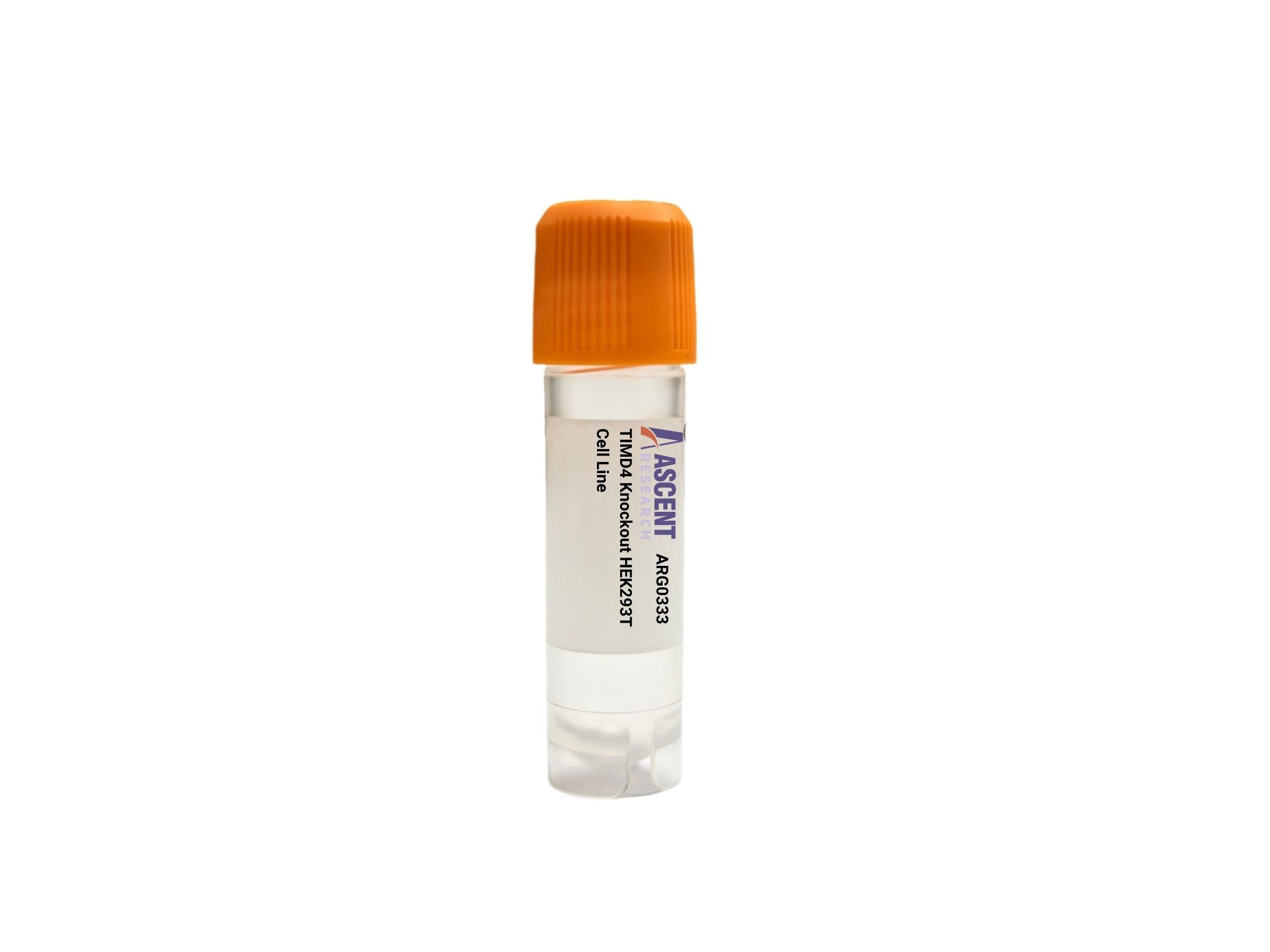
The TIMD4 Knockout HEK293T Cell Line is a CRISPR/Cas9-edited knockout cell line targeting TIMD4, which encodes TIM-4, a phosphatidylserine receptor essential for apoptotic cell clearance (efferocytosis) and immune tolerance. Derived from highly transfectable HEK293T cells, this model offers a stable loss-of-function background for studying TIMD4-mediated signaling, including its activation by IL-4/STAT6 and its cooperation with MerTK and integrin ??v??3. It is ideal for phagocytosis assays, co-immunoprecipitation, cytokine profiling (IL-10, TGF-??), and drug screening. Researchers can study TIMD4 in autoimmune disease, cancer immune evasion, and atherosclerosis without transient gene silencing variability.
 DENND4A Knockout K562 Polyclonal Cells
Cat. No. ARG19270
PAPOLA Knockout NCI-H1975 Polyclonal Cells
Cat. No. ARG17232
KDM2B Knockout NCI-H1975 Polyclonal Cells
Cat. No. ARG31824
INPP5F Knockout SK-HEP-1 Polyclonal Cells
Cat. No. ARG32679
AKR1C4 Knockout HAP1 Polyclonal Cells
Cat. No. ARG34595
DENND4A Knockout K562 Polyclonal Cells
Cat. No. ARG19270
PAPOLA Knockout NCI-H1975 Polyclonal Cells
Cat. No. ARG17232
KDM2B Knockout NCI-H1975 Polyclonal Cells
Cat. No. ARG31824
INPP5F Knockout SK-HEP-1 Polyclonal Cells
Cat. No. ARG32679
AKR1C4 Knockout HAP1 Polyclonal Cells
Cat. No. ARG34595
 CCD-1095Sk
Cat. No. ARC0122
CCD-1095Sk
Cat. No. ARC0122
The TIMD4 Knockout HEK293T Cell Line is a CRISPR/Cas9-edited knockout cell line that disrupts the TIMD4 gene in HEK293T cells. TIMD4 encodes TIM-4, a type I transmembrane protein that functions as a phosphatidylserine receptor. TIM-4 mediates recognition and engulfment of apoptotic cells by macrophages, a process known as efferocytosis, and is crucial for maintaining immune tolerance. This loss-of-function model provides a stable genetic background for investigating TIMD4-dependent signaling pathways without the variability of transient knockdown methods.
HEK293T cells are a clonal derivative of human embryonic kidney HEK293 cells transformed with sheared adenovirus 5 DNA and stably expressing the SV40 large T antigen. The large T antigen allows episomal replication of transfected plasmids containing the SV40 origin of replication, yielding high protein expression. These cells are widely recognized for their exceptional transfectability and are commonly employed for transient protein production, lentivirus generation, and retrovirus production. Their robust growth and well-characterized genome make them an optimal platform for generating CRISPR/Cas9-edited knockout lines for biochemical and cell biological investigations.
TIMD4 expression is induced by IL-4/STAT6 signaling and is additionally regulated by the transcription factors PPAR??, NF-??B, and TGF-??. Upon binding phosphatidylserine on apoptotic cells, TIMD4 cooperates with the co-receptor MerTK and integrin ??v??3 to initiate intracellular signaling. This leads to activation of the small GTPase RAC1, which drives actin cytoskeleton rearrangement and formation of the phagocytic cup. Downstream, PI3K/Akt signaling is triggered, resulting in the secretion of anti-inflammatory cytokines IL-10 and TGF-??, which promote immune tolerance. TIMD4 also interacts with TIMD1 (HAVCR1) and TLR4, thereby linking efferocytosis to innate immunity and T-cell regulation. Key pathway components include IL-4R, STAT6, TIMD4, phosphatidylserine, MerTK, RAC1, PI3K, and actin.
Although HEK293T cells are not professional phagocytes, the TIMD4 knockout cell line serves as a valuable isogenic negative control for ectopic expression studies. When TIMD4 and its partners are reconstituted, this system enables precise dissection of TIMD4-mediated signaling, trafficking, and protein?Cprotein interactions without interference from endogenous TIMD4. Researchers can investigate the kinetics of phagocytic receptor activation, the molecular requirements for phagocytic cup formation, and the interplay between TIMD4 and co-receptors such as MerTK and integrins in a controlled cellular environment.
This knockout line is suited for a range of functional assays. Phagocytosis can be quantified using pHrodo-conjugated apoptotic cells, while co-immunoprecipitation experiments reveal direct interactions between TIMD4 and MerTK or integrins. ELISA-based measurement of IL-10 and TGF-?? secretion assesses downstream anti-inflammatory signaling. Flow cytometry detection of phosphatidylserine binding and confocal microscopy visualization of engulfment provide complementary data. The line also supports high-throughput screening for small-molecule modulators of efferocytosis, with implications for autoimmune diseases, cancer immune evasion, atherosclerosis, and allergic inflammation. For further technical details, validation data, or ordering information, please contact Ascent Research.