In Stock Cell Lines
Homo sapiens (Human)
Blood (peripheral blood)
Suspension
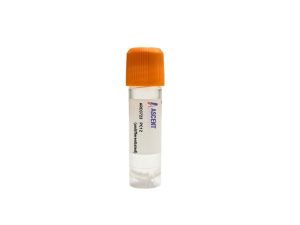
The TNFAIP3 Knockout THP-1 Cell Line is a CRISPR/Cas9-edited knockout of the TNFAIP3 gene in THP-1 monocytic cells. A20 is a ubiquitin-editing enzyme that terminates NF-??B signaling by deubiquitinating RIPK1 and TRAF6, functioning as a critical anti-inflammatory regulator. This loss-of-function model enables study of dysregulated NF-??B activation, cytokine overproduction, and inflammatory disease mechanisms. It is suitable for NF-??B pathway analysis, drug screening, and interaction studies, with THP-1 providing a human monocyte/macrophage platform for innate immune research.
 CAAP1 Knockout K562 Polyclonal Cells
Cat. No. ARG20367
CD164L2 Knockout HAP1 Polyclonal Cells
Cat. No. ARG43394
KHDRBS1 Knockout HAP1 Polyclonal Cells
Cat. No. ARG27675
CAMK2G Knockout MES-OV Polyclonal Cells
Cat. No. ARG42010
CAAP1 Knockout K562 Polyclonal Cells
Cat. No. ARG20367
CD164L2 Knockout HAP1 Polyclonal Cells
Cat. No. ARG43394
KHDRBS1 Knockout HAP1 Polyclonal Cells
Cat. No. ARG27675
CAMK2G Knockout MES-OV Polyclonal Cells
Cat. No. ARG42010
 Rat Pancreatic Acinar Epithelial Cell Medium
Cat. No. ARM0283
Rat Pancreatic Acinar Epithelial Cell Medium
Cat. No. ARM0283
 KATO III
Cat. No. ARC0385
KATO III
Cat. No. ARC0385
The TNFAIP3 Knockout THP-1 Cell Line is a CRISPR/Cas9-edited knockout cell line engineered to disrupt the TNFAIP3 gene in human THP-1 monocytic cells. This loss-of-function model enables precise genetic ablation of A20, a critical negative regulator of NF-??B signaling, providing a definitive tool to study inflammatory feedback mechanisms without pharmacological interference. It is particularly suited for dissecting ubiquitin-dependent control of innate immune responses.
THP-1 is a human acute monocytic leukemia cell line derived from the peripheral blood of a 1-year-old male. Widely used as a monocyte/macrophage model, THP-1 cells can be differentiated into macrophage-like cells and respond robustly to inflammatory agonists such as TNF-?? and LPS. Their human origin and amenability to genetic manipulation make them a physiologically relevant platform for studying signal transduction in innate immunity and inflammation.
TNFAIP3 encodes A20, a dual-function ubiquitin-editing enzyme with N-terminal deubiquitinase activity and C-terminal E3 ubiquitin ligase activity. A20 is recruited to activated receptor complexes, including TNFR1 and TLR4, where it deubiquitinates RIPK1 and TRAF6 to terminate pro-inflammatory signaling. By dismantling K63-linked polyubiquitin chains, A20 prevents sustained activation of the IKK complex, thereby blocking I??B?? phosphorylation and NF-??B p65/p50 nuclear translocation. A20 also interacts with adaptors such as TRAF1, TRAF2, ABIN-1, and TAX1BP1, and restricts NLRP3 inflammasome priming and necroptosis by modulating RIPK1 ubiquitination. Collectively, these mechanisms position A20 as a master brake on inflammatory and cell death pathways.
In the THP-1 background, TNFAIP3 knockout leads to hyperactivation of NF-??B and exaggerated secretion of IL-6, TNF, and IL-1?? upon stimulation with LPS or TNF-??. This phenotype mirrors features of chronic inflammatory diseases associated with A20 deficiency, including rheumatoid arthritis, systemic lupus erythematosus, inflammatory bowel disease, and psoriasis. Additionally, loss of A20??s anti-apoptotic and necroptosis-suppressive functions makes this model valuable for examining cell death decisions under inflammatory stress and for investigating A20??s tumor-suppressive role in B-cell lymphomas.
This knockout cell line supports multiple experimental readouts, including western blotting for phospho-IKK and I??B??, ELISA for cytokine secretion, and RT-qPCR for pro-inflammatory transcripts. It is also suited for NF-??B luciferase assays, co-immunoprecipitation of A20 interactors, and flow cytometric analysis of apoptosis or necroptosis upon TNF-?? stimulation. The line facilitates high-throughput drug screening and transcriptomic profiling by RNA-seq. For customized services or bulk orders, contact Ascent Research.