Genome-edited Cells
Skin
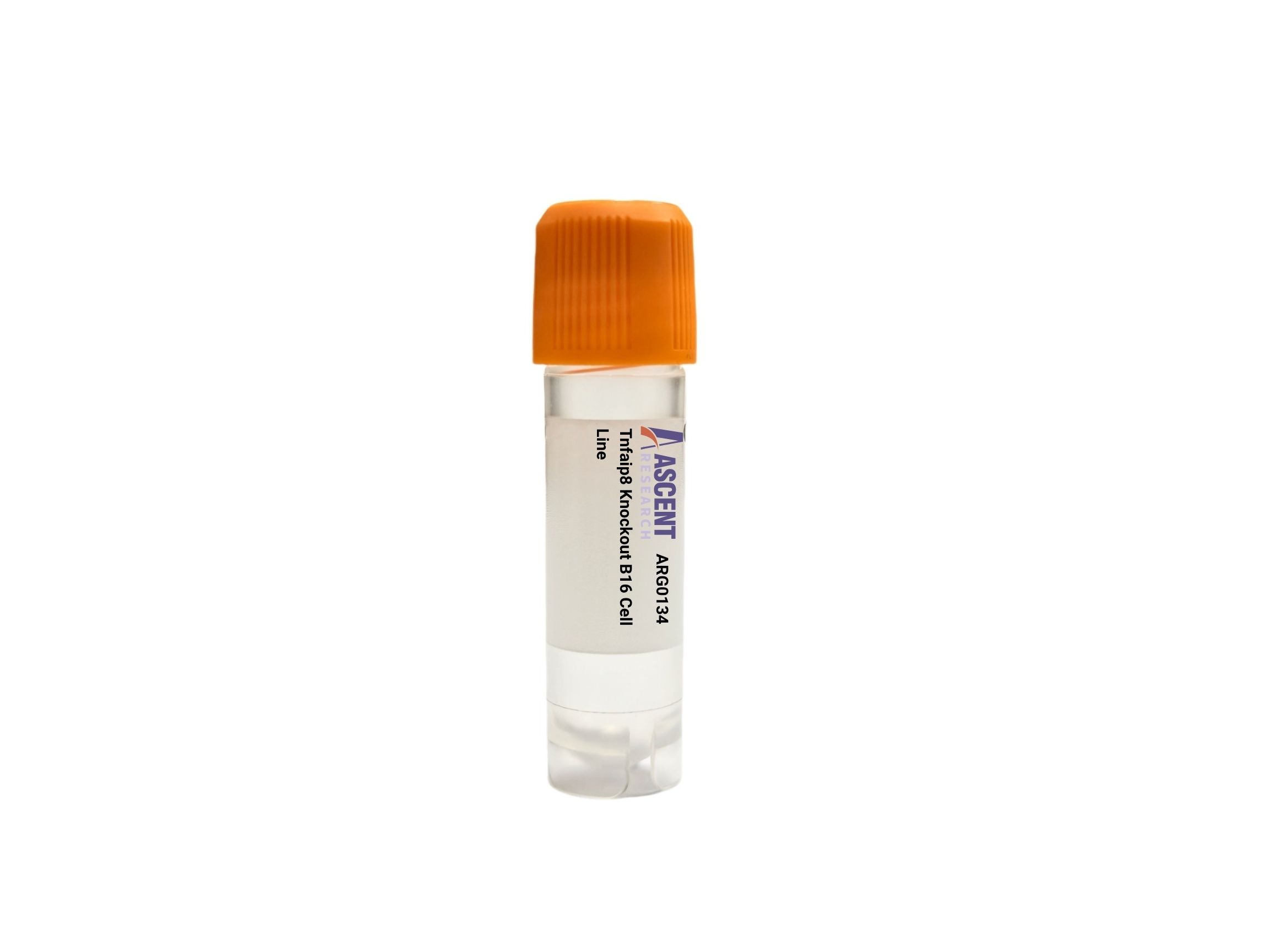
The Tnfaip8 Knockout B16 Cell Line is a CRISPR/Cas9-edited mouse melanoma model with disruption of Tnfaip8 in the B16 host background. B16 cells are widely used to study aggressive melanoma growth, invasion, metastasis, and tumor-immune interactions. TNFAIP8 is a TNF-alpha- and NF-kappaB-responsive TIPE family protein that supports cell survival, modulates CASP8/CASP3-linked apoptosis regulation, and contributes to PI3K-AKT- and RAC1-associated migration programs through phosphoinositide-dependent mechanisms. This knockout model is useful for apoptosis assays, phospho-AKT analysis, migration and invasion studies, RNA-seq, and drug response or sensitization studies in melanoma.
 AKR1E2 Knockout Hela Polyclonal Cells
Cat. No. ARG20673
ANKRD50 Knockout HGC-27 Polyclonal Cells
Cat. No. ARG29531
ARHGEF10 Knockout A549 Polyclonal Cells
Cat. No. ARG31598
KDM5C Knockout TE1 Polyclonal Cells
Cat. No. ARG36884
CCDC91 Knockout SK-HEP-1 Polyclonal Cells
Cat. No. ARG43128
NECAP1 Knockout HEK293T Polyclonal Cells
Cat. No. ARG4408
AKR1E2 Knockout Hela Polyclonal Cells
Cat. No. ARG20673
ANKRD50 Knockout HGC-27 Polyclonal Cells
Cat. No. ARG29531
ARHGEF10 Knockout A549 Polyclonal Cells
Cat. No. ARG31598
KDM5C Knockout TE1 Polyclonal Cells
Cat. No. ARG36884
CCDC91 Knockout SK-HEP-1 Polyclonal Cells
Cat. No. ARG43128
NECAP1 Knockout HEK293T Polyclonal Cells
Cat. No. ARG4408
The Tnfaip8 Knockout B16 Cell Line is a CRISPR/Cas9-engineered mouse melanoma cell model in which the Tnfaip8 gene has been disrupted to abolish functional gene expression. This stable knockout line is generated in the B16 host background, a tumor-derived melanocytic cell line, and provides an in vitro system for investigating TNFAIP8-dependent mechanisms in melanoma biology. The model is suited for studies requiring defined genetic loss of an inflammation-responsive survival factor within a well-established syngeneic murine tumor context.
B16 cells are widely used as an aggressive mouse melanoma model because they recapitulate key features of melanoma growth, pigmentation, invasive behavior, metastatic potential, and responsiveness to immune and pharmacologic perturbation. As a transplantable and experimentally tractable melanoma system, B16 supports investigation of tumor cell-intrinsic survival programs as well as processes linked to tumor-host interaction. This background is therefore highly relevant for studying pathways that integrate inflammatory stimuli with tumor progression, motility, and resistance to cell death.
TNFAIP8 is a TNF-alpha-inducible member of the TIPE family that functions downstream of inflammatory signaling to promote cell survival and tumor progression. It is regulated by TNF-alpha, NF-kappaB, inflammatory cytokines, TLR signaling, and cellular stress stimuli, and is mechanistically linked to TNFR1-proximal signaling, the IKK complex, and the RELA/p65 and NFKB1/p50 transcriptional machinery. TNFAIP8 has been associated with suppression of apoptosis through effects on caspase-regulatory pathways, including CASP8 and CASP3 activation status, and with BCL2 family-dependent survival outputs involving BCL2 and BAX. In parallel, TNFAIP8 interacts with phosphoinositides such as PIP2 and PIP3 and has been implicated in PI3K-AKT and RAC1-dependent migratory signaling, connecting inflammatory inputs to cell motility, chemotaxis, and invasion.
Loss of Tnfaip8 in B16 cells provides a relevant platform for defining how melanoma cells depend on TNFAIP8 to couple NF-kappaB-associated inflammatory signaling with anti-apoptotic and pro-migratory phenotypes. In this host-cell context, the knockout can be used to assess altered apoptosis sensitivity, changes in AKT signaling outputs, shifts in RAC1-associated movement, and broader effects on tumor-immune regulatory programs. Because B16 is frequently used to model melanoma progression and therapeutic response, this system is also useful for evaluating pathway dependency under inflammatory or stress-inducing conditions.
Applications include western blotting and RT-qPCR to profile TNF-alpha/NF-kappaB pathway responses; RNA-seq for gene-expression changes linked to survival, inflammation, or invasion; annexin V/propidium iodide flow cytometry, caspase activity assays, and apoptosis assays to quantify cell death susceptibility; and phospho-AKT analysis to examine PI3K-AKT pathway consequences of Tnfaip8 loss. Investigators may also apply immunofluorescence, migration assays, invasion assays, colony formation assays, co-immunoprecipitation, and drug sensitivity studies to dissect melanoma survival mechanisms, metastasis-related phenotypes, and response sensitization in a defined knockout background. Researchers may contact Ascent Research for additional technical information, product details, or related gene-edited cell models.