In Stock Cell Lines
Homo sapiens (Human)
Blood (peripheral blood)
Suspension
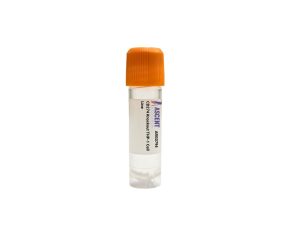
The TNFRSF1A Knockout Jurkat E6.1 Cell Line is a CRISPR/Cas9-edited knockout cell line derived from human Jurkat E6.1 T cells, lacking functional TNFR1 (encoded by TNFRSF1A). This model disrupts TNFR1-mediated TNF-?? signaling, including TRADD/TRAF2/RIPK1-dependent NF-??B activation and caspase-8-driven apoptosis, providing a clean background for pathway analysis. Ideal for studying TNF signaling, apoptosis mechanisms, and TRAPS-related signaling defects, this knockout cell line supports applications such as NF-??B reporter assays, caspase activity measurements, and drug screening. Researchers can elucidate TNFR1-specific contributions in T-cell biology without interference from endogenous receptor activity.
 C2CD2L Knockout Hela Polyclonal Cells
Cat. No. ARG37249
HOMEZ Knockout Raji Polyclonal Cells
Cat. No. ARG23724
ATPAF1 Knockout MES-OV Polyclonal Cells
Cat. No. ARG24282
CCL24 Knockout HAP1 Polyclonal Cells
Cat. No. ARG43173
DSG2 Knockout MES-OV Polyclonal Cells
Cat. No. ARG39832
MIER1 Knockout 786-O Polyclonal Cells
Cat. No. ARG4704
C2CD2L Knockout Hela Polyclonal Cells
Cat. No. ARG37249
HOMEZ Knockout Raji Polyclonal Cells
Cat. No. ARG23724
ATPAF1 Knockout MES-OV Polyclonal Cells
Cat. No. ARG24282
CCL24 Knockout HAP1 Polyclonal Cells
Cat. No. ARG43173
DSG2 Knockout MES-OV Polyclonal Cells
Cat. No. ARG39832
MIER1 Knockout 786-O Polyclonal Cells
Cat. No. ARG4704
The TNFRSF1A Knockout Jurkat E6.1 Cell Line is a CRISPR/Cas9-edited knockout cell line derived from the human T-cell leukemia Jurkat E6.1 line, engineered to disrupt the TNFRSF1A gene encoding tumor necrosis factor receptor 1 (TNFR1). This loss-of-function model enables precise dissection of TNFR1-mediated signaling pathways without altering other tumor necrosis factor receptor superfamily members. The knockout cell line provides a stable genetic background for studying TNF-??-dependent biological processes, including NF-??B activation, apoptosis, and necroptosis, in a well-characterized T-cell context.
Jurkat E6.1 is a subclone of the Jurkat T-cell leukemia line, widely used for T-cell activation, apoptosis, and cytokine response studies. These suspension-adapted cells exhibit robust signaling responses to TNF-?? stimulation, making them an ideal platform for investigating TNFR1 function. The E6.1 variant retains key features of T-cell receptor signaling and is particularly sensitive to extrinsic apoptotic stimuli, facilitating quantitative analysis of death receptor pathways.
Ligand-bound TNFR1 recruits TRADD, which assembles Complex I containing TRAF2, RIPK1, cIAP1, and NEMO to activate the IKK complex and NF-??B (p65/p50) nuclear translocation, promoting inflammatory gene expression. Alternatively, Complex II formation with FADD and caspase-8 triggers apoptosis via caspase-3 cleavage. TNFR1 also stimulates JNK and p38 MAPK cascades through TRAF2, and under caspase inhibition, RIPK1 mediates necroptosis.
In Jurkat E6.1 cells, TNFR1 signaling is integral to the balance between survival and apoptosis. Disruption of TNFRSF1A eliminates TNF-??-induced NF-??B activation and apoptotic priming, providing an isogenic system to discriminate TNFR1-dependent from TNFR2-mediated or alternative pathways. This knockout model is particularly valuable for delineating the contributions of TRADD, TRAF2, and RIPK1 to downstream events without confounding endogenous receptor expression. Researchers can reconstitute the knockout cells with mutant TNFR1 variants to study TRAPS-associated signaling defects or explore signalosome assembly dynamics.
The TNFRSF1A Knockout Jurkat E6.1 Cell Line supports a wide range of experimental applications, including TNF signaling pathway dissection, apoptosis mechanism studies, inflammatory disease modeling, and drug target validation. Representative assays compatible with this model include Western blot analysis of NF-??B p65 phosphorylation and caspase-3 cleavage, flow cytometric quantification of Annexin V/PI staining, caspase activity assays, and NF-??B luciferase reporter assays. High-throughput screening of TNFR1 antagonists or pathway modulators is facilitated by the homogeneous genetic background. This knockout cell line also serves as a critical tool for RNA-seq profiling of TNF-??-induced transcriptional programs and co-immunoprecipitation studies of TRADD interactome dynamics. For further details or inquiries about this product, please contact Ascent Research.