Genome-edited Cells
Pleural effusion
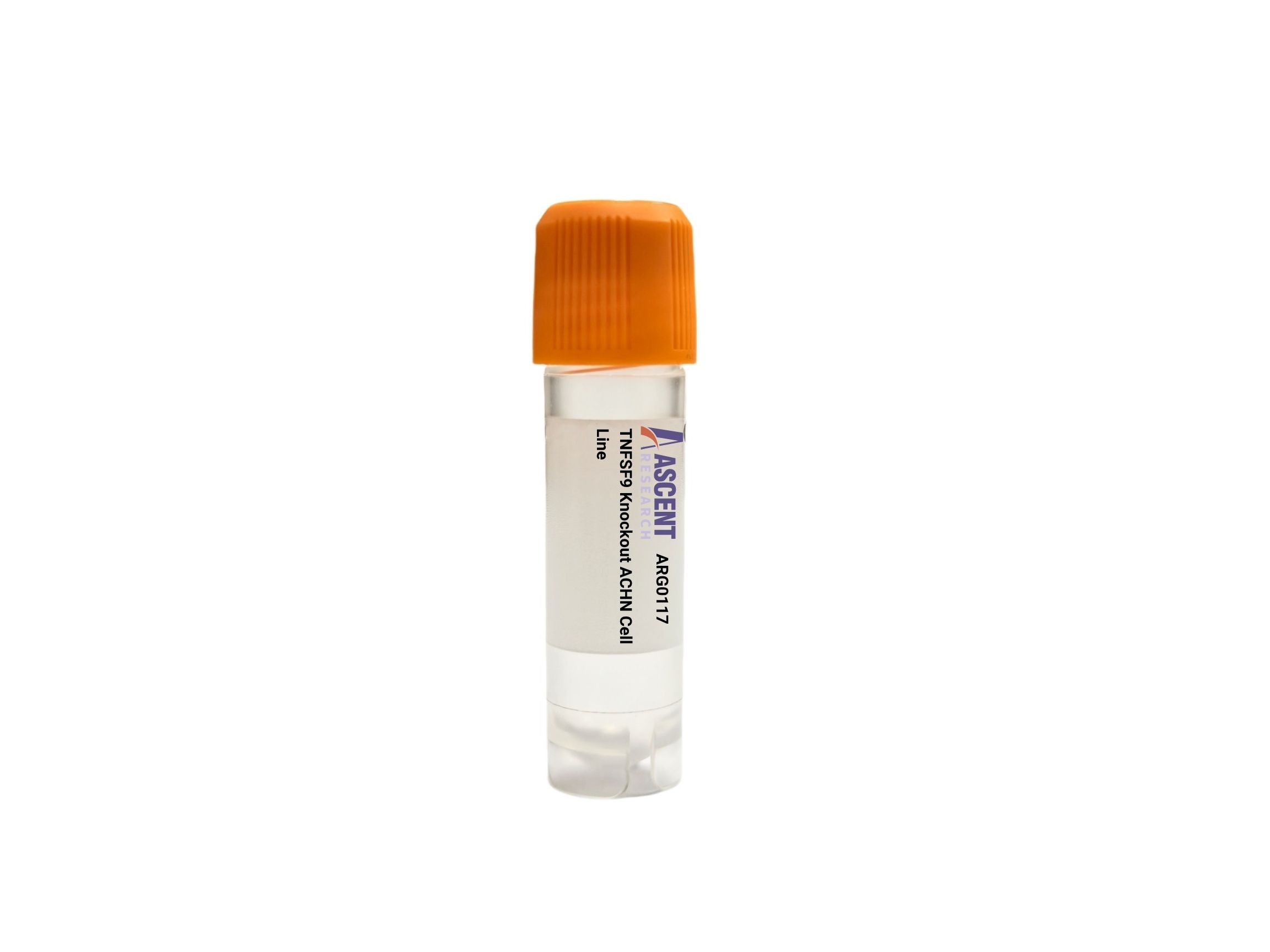
TNFSF9 Knockout ACHN is a CRISPR/Cas9-edited human renal cell adenocarcinoma epithelial cell line with disruption of TNFSF9, which encodes the costimulatory ligand 4-1BBL/CD137L. In ACHN kidney cancer cells, this model supports investigation of tumor-immune interactions, immune evasion, and inflammatory signaling relevant to renal cell carcinoma. TNFSF9 normally engages TNFRSF9/4-1BB and signals through TRAF1/TRAF2-associated NF-kB, MAPK, and PI3K-AKT pathways, influencing T-cell activation, IFNG and IL2 production, and cytokine regulation. Useful applications include co-culture T-cell activation assays, flow cytometry, RT-qPCR, western blotting, RNA-seq, ELISA, and pathway-focused drug response studies.
 CLIC1 Knockout NCI-H1975 Polyclonal Cells
Cat. No. ARG16343
CLIC1 Knockout NCI-H1975 Polyclonal Cells
Cat. No. ARG16343
 Human Renal Endothelial Cells
Cat. No. ARP1145
KNG1 Knockout Raji Polyclonal Cells
Cat. No. ARG23933
BCL9L Knockout SK-HEP-1 Polyclonal Cells
Cat. No. ARG32356
Human Renal Endothelial Cells
Cat. No. ARP1145
KNG1 Knockout Raji Polyclonal Cells
Cat. No. ARG23933
BCL9L Knockout SK-HEP-1 Polyclonal Cells
Cat. No. ARG32356
 Sheep Bronchial Epithelial Cell Medium
Cat. No. ARM0950
Sheep Bronchial Epithelial Cell Medium
Cat. No. ARM0950
 Mouse Endometrial Stromal Cell Medium
Cat. No. ARM0545
Mouse Endometrial Stromal Cell Medium
Cat. No. ARM0545
The TNFSF9 Knockout ACHN Cell Line is a CRISPR/Cas9-engineered human renal cell adenocarcinoma epithelial model in which the TNFSF9 locus has been disrupted to eliminate functional TNFSF9 expression. TNFSF9 encodes 4-1BB ligand (4-1BBL/CD137L), a membrane-bound member of the TNF superfamily that mediates costimulatory communication with immune cells through TNFRSF9/4-1BB. This edited ACHN derivative provides a stable in vitro system for examining TNFSF9-dependent signaling and tumor-associated immune regulatory mechanisms in a kidney cancer-relevant cellular background.
ACHN is a human renal cell adenocarcinoma line derived from metastatic pleural effusion and is broadly used as an epithelial tumor model for renal cell carcinoma biology. Its metastatic origin and epithelial characteristics make it useful for studying cancer cell signaling, inflammatory responsiveness, tumor-immune interactions, and pharmacologic response in vitro. In renal cancer research, ACHN is frequently applied to investigate how tumor cells respond to cytokine stimulation, regulate immune-related surface molecules, and engage with stromal or immune compartments under controlled culture conditions.
At the molecular level, TNFSF9 is regulated by inflammatory inputs including TNF-alpha, IFN-gamma, IL-1beta, and LPS/TLR-associated signaling, with transcriptional control linked to NF-kB and AP-1 activity. The encoded 4-1BBL protein interacts with TNFRSF9/4-1BB on activated T cells, NK cells, and myeloid cells, promoting signaling mediated by TRAF1 and TRAF2 and propagating downstream NF-kB, MAPK, and PI3K-AKT pathway outputs. Representative pathway components associated with this axis include NFKB1, RELA, MAPK8, MAPK14, and AKT1, with functional consequences that can include altered IFNG and IL2 production, T-cell proliferation, cytokine and chemokine secretion, and myeloid activation responses. Because TNFSF9 participates in bidirectional tumor-immune communication, its loss can be used to interrogate mechanisms relevant to immune evasion, inflammatory regulation, and immunotherapy response.
In the ACHN context, TNFSF9 knockout is particularly relevant for modeling how renal tumor cells shape costimulatory cues within the tumor microenvironment. Disruption of this ligand enables analysis of how cancer-cell-intrinsic inflammatory signaling intersects with immune-cell activation programs, and how loss of a surface costimulatory factor influences NF-kB-dependent transcriptional responses, MAPK activation outputs, and secreted immunoregulatory mediators in renal carcinoma cells.
This model is suitable for tumor-immune co-culture experiments evaluating T-cell activation, proliferation, and cytokine production in response to TNFSF9-deficient tumor cells, including flow cytometric analysis of surface CD137L/4-1BBL, ELISA-based measurement of IFN-gamma or IL-2, and functional co-culture readouts. It also supports mechanistic studies using RT-qPCR, western blotting, RNA-seq, NF-kB reporter assays, phospho-signaling analysis, co-immunoprecipitation, and immunofluorescence to define regulatory effects on TNFRSF9-associated signaling networks. In addition, the line can be incorporated into drug sensitivity studies and therapeutic antibody or immunomodulator evaluation to examine how TNFSF9 loss modifies inflammatory pathway dependence or tumor-immune phenotypes in renal cancer models. Researchers may contact Ascent Research for additional technical information, product details, or related gene-edited cell models.