Genome-edited Cells
Liver
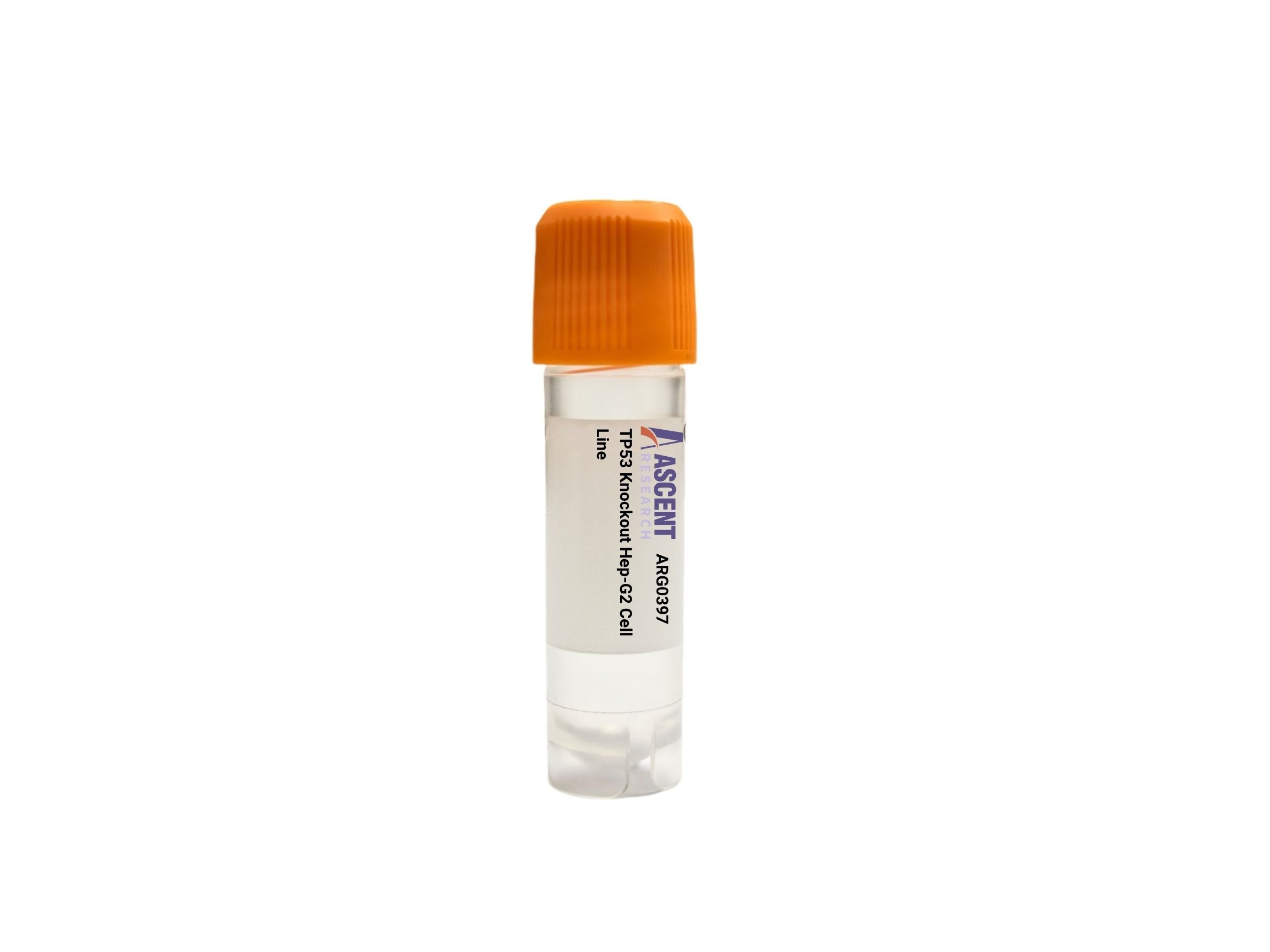
The TP53 Knockout Hep-G2 Cell Line is a CRISPR/Cas9-edited knockout model lacking the tumor suppressor p53 in a human hepatocellular carcinoma background. This cell line eliminates p53-dependent cell cycle arrest and apoptosis, enabling the study of DNA damage response and liver cancer biology. p53 normally acts as a transcription factor phosphorylated by ATM/ATR and negatively regulated by MDM2, controlling downstream targets like p21 and BAX. This product is ideal for drug screening, xenograft studies, and mechanistic research into p53 signaling in hepatic cells.
 DEK Knockout jurkat Polyclonal Cells
Cat. No. ARG13404
OSBPL11 Knockout A549 Polyclonal Cells
Cat. No. ARG10455
AMT Knockout HAP1 Polyclonal Cells
Cat. No. ARG34618
DNAH5 Knockout K562 Polyclonal Cells
Cat. No. ARG39047
ARPC5L Knockout A549 Polyclonal Cells
Cat. No. ARG38685
PARP9 Knockout 786-O Polyclonal Cells
Cat. No. ARG5201
DEK Knockout jurkat Polyclonal Cells
Cat. No. ARG13404
OSBPL11 Knockout A549 Polyclonal Cells
Cat. No. ARG10455
AMT Knockout HAP1 Polyclonal Cells
Cat. No. ARG34618
DNAH5 Knockout K562 Polyclonal Cells
Cat. No. ARG39047
ARPC5L Knockout A549 Polyclonal Cells
Cat. No. ARG38685
PARP9 Knockout 786-O Polyclonal Cells
Cat. No. ARG5201
The TP53 Knockout Hep-G2 Cell Line is a CRISPR/Cas9-edited knockout cell line that provides a stable loss-of-function model of the TP53 tumor suppressor gene. Through CRISPR/Cas9-mediated gene disruption, this product enables researchers to study the consequences of p53 ablation in a human hepatocellular carcinoma background. The cell line serves as a robust tool for investigating p53-dependent signaling pathways and their roles in cell cycle regulation, apoptosis, and DNA damage responses.
The Hep-G2 cell line, derived from the liver hepatocellular carcinoma of a 15-year-old Caucasian male, is a widely used hepatic parenchymal model that recapitulates many aspects of liver metabolism and hepatocyte function. These cells retain key features of hepatic tissue, making them suitable for studying liver-specific gene functions and disease mechanisms. The TP53 knockout in this context effectively eliminates tumor suppressor activity, providing a clinically relevant model for hepatocellular carcinoma research.
TP53 encodes the transcription factor p53, a central tumor suppressor that integrates diverse cellular stress signals. Under DNA damage, upstream kinases ATM and ATR phosphorylate and activate p53, which is negatively regulated by MDM2-mediated degradation. Activated p53 transcriptionally upregulates key target genes: CDKN1A (p21) for cell cycle arrest, BAX and BBC3 (PUMA) for apoptosis, and GADD45A for DNA repair. p53 also interacts with cofactors p300/CBP and ASPP proteins to modulate transcriptional specificity. This pathway, involving ATM, ATR, CHK2, p53, MDM2, p21, BAX, and PUMA, constitutes a critical tumor-suppressive network frequently disrupted in cancer.
In Hep-G2 cells, TP53 knockout abrogates DNA damage checkpoint control, leading to unchecked proliferation and apoptosis resistance??phenotypes that mirror the loss of p53 function in hepatocellular carcinoma. This model enables dissection of p53-dependent tumor suppressor mechanisms in a hepatic context and evaluation of therapeutic strategies such as MDM2 inhibitors (e.g., Nutlin-3a), which require functional p53. It also provides a platform for studying synthetic lethal interactions and signaling rewiring in the absence of p53, contributing to liver cancer biology and drug discovery.
The TP53 Knockout Hep-G2 Cell Line is suitable for studying p53-dependent tumor suppression, screening p53 pathway modulators, and conducting liver cancer research. Representative assays include western blotting for p53 and targets, RT-qPCR for p21 and BAX, flow cytometry for apoptosis and cell cycle analysis, and drug sensitivity assays with compounds like Nutlin-3a. This line also supports xenograft studies to assess tumorigenicity and drug response in vivo. For protocols or inquiries, contact Ascent Research.