Genome-edited Cells
Uterus (cervix)
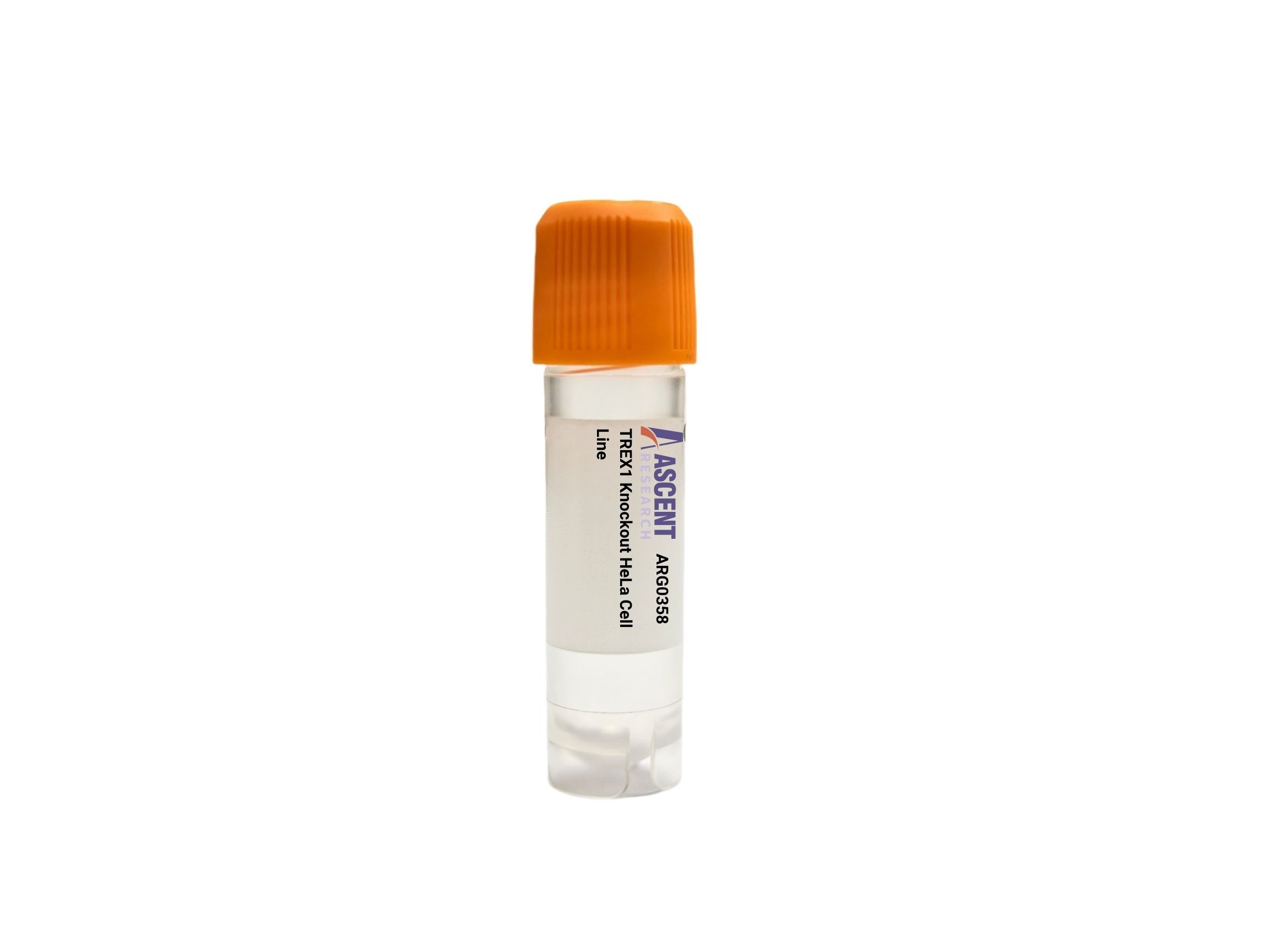
The TREX1 Knockout HeLa Cell Line is a CRISPR/Cas9-edited human cervical carcinoma line lacking functional TREX1, a cytosolic DNA exonuclease that prevents aberrant cGAS-STING pathway activation. Loss of TREX1 leads to accumulation of endogenous DNA species and constitutive type I interferon production, modeled on the HPV18-positive HeLa background with p53 and pRB inactivation. This model is valuable for investigating innate immune sensing of self-DNA, autoimmune disease mechanisms such as Aicardi-Gouti??res syndrome and lupus, and tumor-immune interactions. Applications include screening of cGAS-STING modulators, DNA damage response studies, and analysis of chronic interferon signaling via assays like STING phosphorylation and interferon-stimulated gene expression.
 Mavs Knockout RAW 264.7 Cell Line
Cat. No. ARG43956
Mavs Knockout RAW 264.7 Cell Line
Cat. No. ARG43956
 NFKBIB Knockout HT29 Polyclonal Cells
Cat. No. ARG14807
CMC2 Knockout A549 Polyclonal Cells
Cat. No. ARG10916
JPH1 Knockout jurkat Polyclonal Cells
Cat. No. ARG34387
ARPC5 Knockout Hela Polyclonal Cells
Cat. No. ARG37535
CES1 Knockout Hela Polyclonal Cells
Cat. No. ARG7552
NFKBIB Knockout HT29 Polyclonal Cells
Cat. No. ARG14807
CMC2 Knockout A549 Polyclonal Cells
Cat. No. ARG10916
JPH1 Knockout jurkat Polyclonal Cells
Cat. No. ARG34387
ARPC5 Knockout Hela Polyclonal Cells
Cat. No. ARG37535
CES1 Knockout Hela Polyclonal Cells
Cat. No. ARG7552
The TREX1 Knockout HeLa Cell Line is a genetically engineered loss-of-function model generated through CRISPR/Cas9-mediated disruption of the TREX1 gene. This stable knockout cell line enables investigation of cytosolic nucleic acid sensing and type I interferon-driven innate immunity in a human cervical carcinoma background. By abolishing TREX1 expression, the model permits study of chronic DNA-dependent immune activation and its roles in autoinflammation, cancer immune escape, and therapeutic modulation of the cGAS-STING pathway.
HeLa cells are an extensively characterized epithelial line originally isolated from an HPV18-positive cervical adenocarcinoma. The cell line carries inactivated p53 and pRB tumor suppressors due to viral oncoproteins E6 and E7, and displays an aneuploid karyotype with extensive chromosomal instability. This genetic context renders HeLa cells particularly susceptible to accumulation of endogenous DNA damage and cytosolic DNA species, making them an appropriate host for studying the consequences of TREX1 deficiency on innate immune signaling.
TREX1 encodes a 3??-5?? DNA exonuclease that degrades both single- and double-stranded DNA in the cytoplasm. It functions as a gatekeeper that prevents inappropriate activation of the cGAS-STING pathway. In wild-type cells, TREX1 limits the availability of DNA ligands for cGAS, thereby restraining STING-dependent phosphorylation of TBK1 and IRF3, NF-??B activation, and subsequent transcription of type I interferons and interferon-stimulated genes. TREX1 interacts with the SET complex and can be activated by granzyme A during apoptosis. TREX1 is transcriptionally induced by type I interferons through STAT1/STAT2 signaling, creating a negative feedback loop that resolves innate immune responses.
Disruption of TREX1 in HeLa cells leads to spontaneous accumulation of genomic DNA fragments in the cytosol, constitutive cGAS-dependent STING signaling, and sustained expression of type I interferons and pro-inflammatory cytokines. This chronic interferonopathy resembles molecular signatures observed in Aicardi-Gouti??res syndrome and systemic lupus erythematosus. Because HeLa cells are derived from an HPV-driven cancer with impaired DNA damage checkpoints, TREX1 knockout may further amplify genomic instability and inflammatory gene expression, providing a relevant platform to dissect the intersection of DNA repair deficiency and innate immune activation in malignant transformation.
Research applications of this knockout line include dissecting mechanisms of cytosolic DNA sensing, screening small-molecule modulators of the cGAS-STING axis, and evaluating effects of chronic interferon signaling on tumor cell biology and immune recognition. Representative assays include western blot analysis of STING and IRF3 phosphorylation, RT-qPCR for IFNB1 and ISG15, cGAS activity measurements, immunofluorescence imaging of cytoplasmic DNA foci, flow cytometric detection of phospho-STING, IFN-?? ELISA, and transcriptomic profiling of interferon signatures. The model is also suited for co-culture experiments with immune cells to study paracrine effects of sustained cytokine release. For further inquiries, please contact Ascent Research.