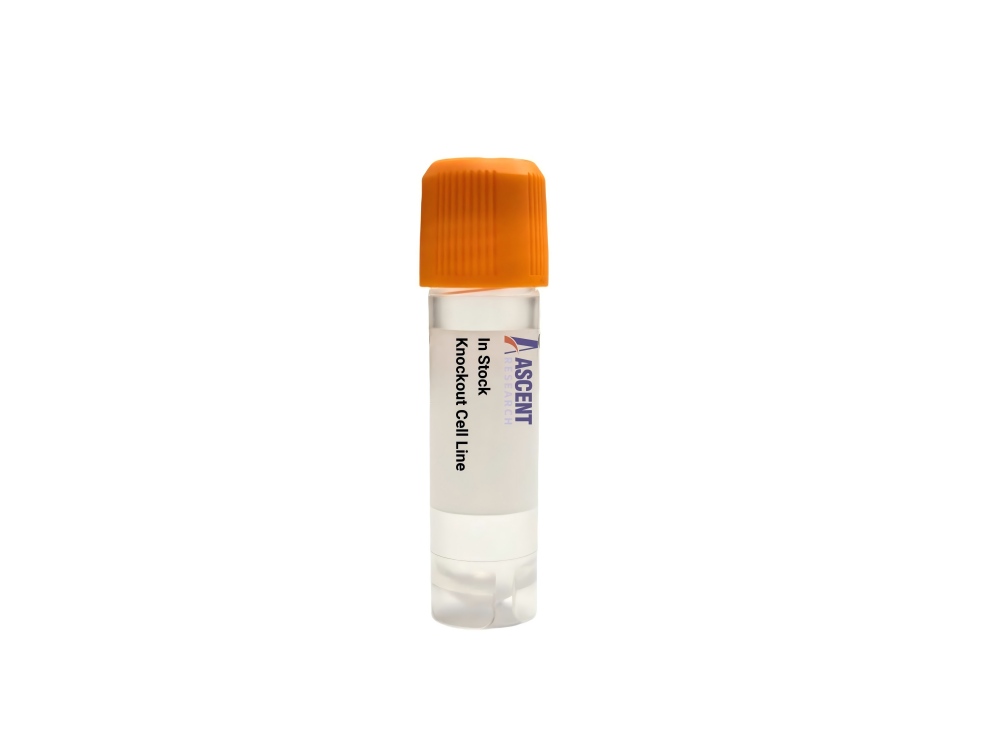
In Stock Cell Lines
Homo sapiens (Human)
Lung
Adherent
The TRIM7 Knockout A549 Cell Line is a CRISPR/Cas9-edited human lung adenocarcinoma cell line lacking functional TRIM7, an E3 ubiquitin ligase that targets STING and NEMO for proteasomal degradation. By removing TRIM7-mediated negative regulation, this model amplifies innate immune signaling downstream of nucleic acid sensors and cytokine receptors. Researchers use this knockout to study antiviral and inflammatory pathways, including NF-??B and interferon responses, in a lung cancer context. Key applications encompass immuno-oncology, target validation, and ubiquitin-proteasome system research, supported by assays such as RT-qPCR, Western blotting, and co-immunoprecipitation.
 FOXP4 Knockout NCI-H1299 Polyclonal Cells
Cat. No. ARG17992
CPNE1 Knockout Hela Polyclonal Cells
Cat. No. ARG7502
ANKRD26 Knockout HEK293T Polyclonal Cells
Cat. No. ARG25685
AP4B1 Knockout huh-7 Polyclonal Cells
Cat. No. ARG27924
IMPA1 Knockout HT29 Polyclonal Cells
Cat. No. ARG33446
FOXP4 Knockout NCI-H1299 Polyclonal Cells
Cat. No. ARG17992
CPNE1 Knockout Hela Polyclonal Cells
Cat. No. ARG7502
ANKRD26 Knockout HEK293T Polyclonal Cells
Cat. No. ARG25685
AP4B1 Knockout huh-7 Polyclonal Cells
Cat. No. ARG27924
IMPA1 Knockout HT29 Polyclonal Cells
Cat. No. ARG33446
 Rat Spinal Cord Microvascular Endothelial Cell Medium
Cat. No. ARM0358
Rat Spinal Cord Microvascular Endothelial Cell Medium
Cat. No. ARM0358
The TRIM7 Knockout A549 Cell Line is a genetically engineered human lung adenocarcinoma cell line in which the TRIM7 gene has been disrupted using CRISPR/Cas9-mediated genome editing. This knockout cell line, derived from the adherent A549 epithelial cell model, serves as a powerful loss-of-function tool for investigating the regulatory roles of TRIM7 in innate immune signaling and cancer biology. By abolishing TRIM7 expression, researchers can dissect its function as a negative regulator of key antiviral and inflammatory pathways.
The parental A549 cell line, established from a human lung adenocarcinoma, exhibits epithelial morphology and adherent growth characteristics. It is widely employed as an in vitro model for studying lung adenocarcinoma pathogenesis, drug responses, and host?Cpathogen interactions. Notably, A549 cells retain functional innate immune signaling pathways, including those mediated by RIG-I-like receptors, STING, and NF-??B, making them particularly suitable for examining TRIM7-dependent modulation of antiviral and inflammatory responses.
TRIM7 encodes an E3 ubiquitin ligase that catalyzes K48-linked polyubiquitination of downstream targets, directing them for proteasomal degradation. Mechanistically, upon stimulation by type I interferons (IFN-??/??), tumor necrosis factor (TNF), or viral nucleic acids sensed by RIG-I and MDA5, TRIM7 is recruited to STING (TMEM173) and NF-??B essential modulator (NEMO/IKBKG). It interacts with ubiquitin-conjugating enzyme E2 (UBE2D family) and TNF receptor-associated factor 6 (TRAF6) to attach K48-linked ubiquitin chains, thereby promoting degradation of STING and NEMO. This action attenuates downstream signaling cascades involving TAK1 (MAP3K7), the IKK complex (IKK??/IKK??/NEMO), TBK1, IKK??, and transcription factors IRF3 and p65/RelA, ultimately suppressing NF-??B and interferon-stimulated gene (ISG) expression.
In the A549 lung adenocarcinoma background, knockout of TRIM7 relieves negative regulation, leading to enhanced activation of the RIG-I/MAVS/STING/NF-??B axis and amplified production of antiviral cytokines and chemokines. This hyper-responsive state makes the model invaluable for studying how tumor cells modulate innate immunity, the interplay between inflammation and cancer progression, and the potential therapeutic targeting of E3 ligases. The cell line thus provides a relevant context for lung cancer research where inflammatory signaling often contributes to tumor microenvironment dynamics.
Researchers can employ this knockout cell line in diverse assays to study innate immunity and cancer biology. Typical applications include RT-qPCR for interferon-stimulated genes and cytokines, Western blotting for NF-??B activation, luciferase reporter assays for NF-??B and ISRE, and co-immunoprecipitation to analyze STING and NEMO ubiquitination. Further protocols encompass flow cytometry for immune markers, viral replication assays, MTT proliferation tests, and RNA-Seq transcriptome profiling. These methods facilitate drug discovery, immunotherapeutic target validation, and ubiquitin-proteasome system investigations. For further information, please contact Ascent Research.