In Stock Cell Lines
Mus musculus (Mouse)
Ovary
Adherent
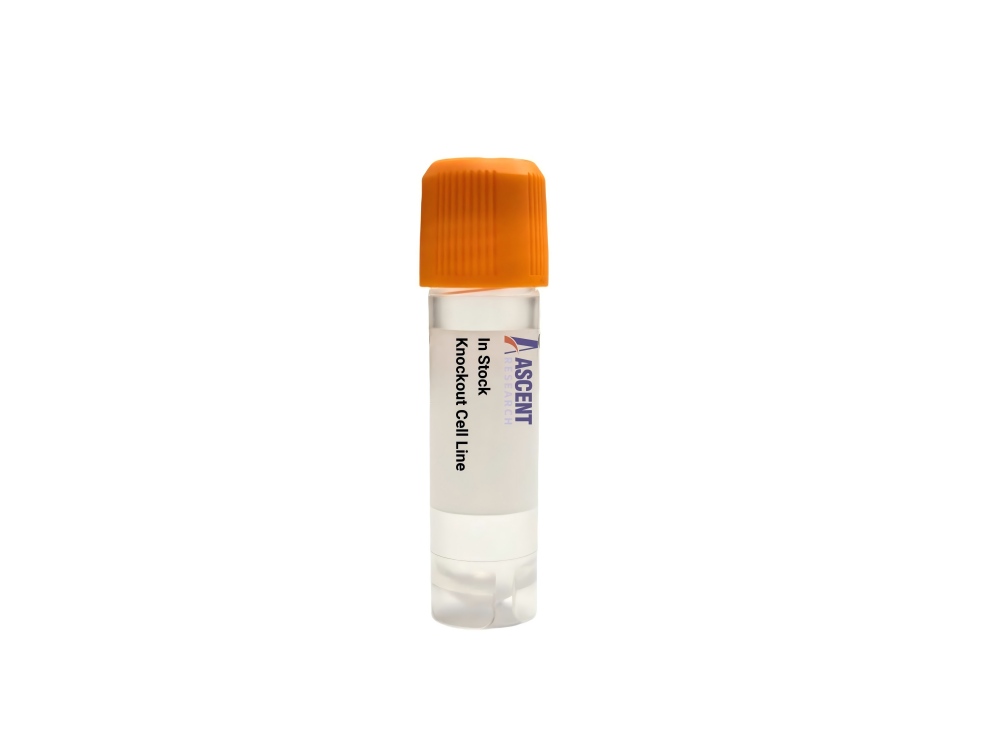
The Trp53 Knockout ID8 Cell Line is a CRISPR/Cas9-edited knockout cell line from the C57BL/6 mouse ovarian surface epithelial ID8 line, used for ovarian cancer research. It ablates p53, a transcription factor regulating targets like CDKN1A (p21) and BAX downstream of ATM/ATR, disrupting DNA damage checkpoints. This model enables investigation of ovarian tumorigenesis, metastasis, and p53-dependent therapy in a syngeneic immunocompetent background. Applications include in vitro and in vivo tumor progression assays, drug sensitivity testing (e.g., MDM2 inhibitors, cisplatin, olaparib), and molecular analysis. It is an essential tool for studying p53 tumor suppression and ovarian cancer therapy development.
 C1orf226 Knockout jurkat Polyclonal Cells
Cat. No. ARG34053
MAN2C1 Knockout A2780 Polyclonal Cells
Cat. No. ARG18550
FLCN Knockout 143B Polyclonal Cells
Cat. No. ARG11819
NRGN Knockout Hela Polyclonal Cells
Cat. No. ARG8236
ARHGAP35 Knockout A2780 Polyclonal Cells
Cat. No. ARG28785
C1orf226 Knockout jurkat Polyclonal Cells
Cat. No. ARG34053
MAN2C1 Knockout A2780 Polyclonal Cells
Cat. No. ARG18550
FLCN Knockout 143B Polyclonal Cells
Cat. No. ARG11819
NRGN Knockout Hela Polyclonal Cells
Cat. No. ARG8236
ARHGAP35 Knockout A2780 Polyclonal Cells
Cat. No. ARG28785
 Human Testicular Endothelial Cell Medium
Cat. No. ARM0080
Human Testicular Endothelial Cell Medium
Cat. No. ARM0080
The Trp53 Knockout ID8 Cell Line is a CRISPR/Cas9-edited murine ovarian surface epithelial cell line engineered for targeted disruption of the Trp53 tumor suppressor gene. This cell line provides a defined loss-of-function model for investigating p53-dependent mechanisms in ovarian cancer biology. The knockout eliminates functional p53 protein expression, enabling researchers to dissect p53-mediated tumor suppression pathways without relying on chemical inhibitors or siRNA approaches. The product is supplied as a validated cell line suitable for in vitro and in vivo experimental applications.
The ID8 parental line was originally established from C57BL/6 mouse ovarian surface epithelial cells and retains syngeneic compatibility with immunocompetent C57BL/6 hosts. These cells are widely recognized as a relevant model for studying high-grade serous ovarian carcinoma, the most lethal gynecologic malignancy. Their epithelial origin and molecular features make them a particularly suitable platform for interrogating oncogenic transformation, metastasis, and tumor?Cmicroenvironment interactions in a genetically defined background.
p53, encoded by Trp53, is a transcription factor that orchestrates cellular responses to genomic stress. It is activated by upstream kinases ATM and ATR upon DNA damage, leading to stabilization and transcriptional induction of target genes such as CDKN1A (p21), BAX, and BBC3 (PUMA), which control cell cycle arrest, apoptosis, and senescence respectively. MDM2 and MDM4 negatively regulate p53 via proteasomal degradation, forming an autoregulatory feedback loop. Additional interacting factors including EP300, CREBBP, and TP53BP1 modulate p53 transcriptional activity and chromatin association. Thus, Trp53 knockout disrupts a central hub of the DNA damage response and intrinsic apoptotic pathways.
In ID8 ovarian epithelial cells, loss of p53 abrogates critical checkpoints, permitting survival and proliferation in the presence of unrepaired DNA damage. This genomic instability accelerates malignant transformation and supports the development of invasive, metastatic ovarian tumors. The Trp53-null ID8 model therefore recapitulates key genetic events driving human ovarian carcinogenesis, particularly those involving p53 inactivation common in high-grade serous carcinoma. Consequently, this knockout cell line serves as a powerful tool for studying tumor initiation, progression, and dissemination in a syngeneic, immunocompetent context.
Research applications include ovarian cancer modeling, tumor progression studies, and metastasis assays, often employing techniques such as colony formation, Boyden chamber invasion/migration, and in vivo xenograft or syngeneic tumor growth. The line is also valuable for testing p53-dependent therapeutics, including MDM2 inhibitors, cisplatin, and PARP inhibitors like olaparib, with drug sensitivity assessed via viability or apoptosis assays. Molecular analyses such as Western blotting for p21 and BAX, cell cycle profiling by flow cytometry, and ??H2AX immunofluorescence for DNA damage foci further enable mechanistic dissection of p53 pathways. For additional technical details and ordering information, please contact Ascent Research.