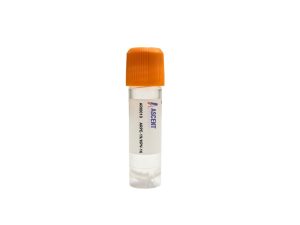
In Stock Cell Lines
Homo sapiens (Human)
Pancreas
Adherent
The TRPV6 Knockout PANC-1 Cell Line is a CRISPR/Cas9-edited knockout cell line in the PANC-1 human pancreatic ductal adenocarcinoma background. Disruption of TRPV6, a highly calcium-selective channel, eliminates apical calcium entry, perturbing calmodulin-dependent signaling via CaMKII and NFAT and impairing AKT phosphorylation. This model is designed for investigating TRPV6-mediated calcium signaling in pancreatic cancer, including proliferation, migration, and drug-response studies. Typical applications encompass western blotting for TRPV6, calcium imaging, proliferation (MTT) and Transwell migration assays, and phospho-AKT/ERK profiling. Interacting factors such as calmodulin, S100A10, and annexin A2 facilitate detailed mechanistic studies.
 LPCAT4 Knockout NCI-H1975 Polyclonal Cells
Cat. No. ARG16478
MAP4K2 Knockout Jurkat Polyclonal Cells
Cat. No. ARG13020
HDHD5 Knockout 769-P Polyclonal Cells
Cat. No. ARG35113
HAVCR1 Knockout KYSE30 Polyclonal Cells
Cat. No. ARG36300
KNDC1 Knockout HEK293T Polyclonal Cells
Cat. No. ARG37726
EIF2AK2 Knockout CaSki Polyclonal Cells
Cat. No. ARG40933
LPCAT4 Knockout NCI-H1975 Polyclonal Cells
Cat. No. ARG16478
MAP4K2 Knockout Jurkat Polyclonal Cells
Cat. No. ARG13020
HDHD5 Knockout 769-P Polyclonal Cells
Cat. No. ARG35113
HAVCR1 Knockout KYSE30 Polyclonal Cells
Cat. No. ARG36300
KNDC1 Knockout HEK293T Polyclonal Cells
Cat. No. ARG37726
EIF2AK2 Knockout CaSki Polyclonal Cells
Cat. No. ARG40933
The TRPV6 Knockout PANC-1 Cell Line is a CRISPR/Cas9-edited human knockout cell line featuring targeted disruption of the TRPV6 gene in the PANC-1 pancreatic ductal adenocarcinoma background. This loss-of-function model permits detailed investigation of TRPV6-mediated calcium signaling in a well-characterized cancer cell context.
Derived from a human pancreatic carcinoma, the parental PANC-1 cell line is a standard model for pancreatic cancer research. It harbors oncogenic KRAS and TP53 mutations, displays aggressive growth and migration in vitro, and recapitulates key features of pancreatic ductal adenocarcinoma, making it suitable for studying mechanisms of tumorigenesis and therapeutic resistance.
TRPV6 is a highly calcium-selective ion channel mediating apical Ca2? entry in epithelia. Channel expression is transcriptionally driven by 1,25-dihydroxyvitamin D3-activated vitamin D receptor (VDR) and modulated by the calcium-sensing receptor (CaSR). Upon activation, TRPV6 fluxes Ca2?, which is sensed by calmodulin and relayed to CaMKII and calcineurin/NFAT pathways. TRPV6 also engages PI3K/AKT and MAPK signaling via cross-regulation. Key interacting partners include calmodulin, S100A10, Rab11a, and annexin A2, which control channel trafficking and localization. Knockout of TRPV6 disrupts calcium homeostasis, impairing NFAT activation and AKT phosphorylation, and thereby attenuating proliferative and migratory signals in PANC-1 cells.
In pancreatic cancer, TRPV6-mediated calcium influx is implicated in driving malignant phenotypes. The TRPV6 knockout PANC-1 line enables direct phenotypic dissection of TRPV6 contributions to proliferation, migration, and apoptosis. It also facilitates exploration of the vitamin D receptor signaling axis and its intersection with oncogenic PI3K/AKT and MAPK cascades, providing a clean genetic system to isolate TRPV6-specific effects.
Applications include verification of knockout via western blot and RT-qPCR, calcium imaging with Fura-2 or Fluo-4, proliferation and migration assays (MTT, Transwell), apoptosis analysis (Annexin V/PI flow cytometry), and phospho-signaling profiling of AKT and ERK. The line is suitable for TRPV6 inhibitor screening and rescue experiments, accelerating drug discovery. For further information, contact Ascent Research.